Planning a trip to Japan 🇯🇵
I had wanted to visit Japan for a long time, particularly as an anime fan and, for almost two years, a student of Japanese.
At the beginning of 2024, I finally decided to do it, and at the end of April I spent two weeks in Japan.
Flights
Most people travelling to Japan buy a return ticket to Tokyo, but that is not necessarily the best option.
If you want to follow the classic route through Tokyo, Kyoto, Nara and Osaka, flying into Osaka and out of Tokyo may work better. It saves both the cost and time of one additional Shinkansen journey between Kyoto and Tokyo.

I chose my tickets based on the airline, the possibility of flying Prague–Osaka and Tokyo–Prague, and the arrival time. Arriving in an unfamiliar country late in the evening is not ideal.
The Prague–Dubai–Osaka and Tokyo–Dubai–Prague route with Emirates ultimately seemed the best, even though it was neither the shortest nor the cheapest option.
The cancelled flight
The timing of my Emirates flights turned out to be extremely unfortunate. Three days before departure, an unexpected storm in Dubai flooded the airport and caused widespread problems.
Flights were initially delayed, but on the day of my departure Emirates more or less collapsed and cancelled over 1,000 flights, including mine, of course.
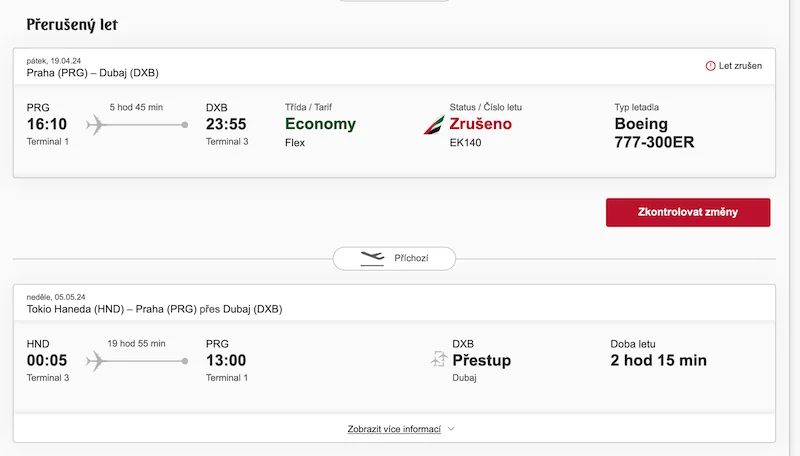
You have to be remarkably unlucky to spend perhaps six months planning a trip to Japan and choose the exact date of flooding in an arid desert.
It was all a question of timing. Had I flown one day earlier, I would have become stranded in Dubai and spent the night at the airport. Had I flown one day later, everything would have been fine.
After two days, I finally managed to contact Emirates and secure the final seats on a flight leaving two days later.
My stay in Japan was therefore shortened by two days.
Online entry registration
EU citizens can spend 90 days in Japan as tourists without a visa, although registration is required.
You can register by completing paper forms on the plane or after arrival, or do it online before departure.
When registering through Visit Japan Web, you provide basic information about yourself and your trip and receive a QR code to show at customs and passport control after arriving.
The generated QR code is static and does not change, so taking a screenshot is worthwhile in case you have no internet connection on arrival.
After entering the country, you receive a sticker in your passport covering the 90-day period. You should keep your passport with you throughout your stay in Japan.
Itinerary
I drew up a rough itinerary before buying the flights. The most important part was deciding where I needed accommodation and for how many days.
The original plan was:
- arrive in Osaka on the evening of the first day
- four days in Osaka, including a full-day trip to Hiroshima and a half-day trip to Nara
- four days in Kyoto
- six days in Tokyo with a trip to Kamakura and Yokohama
- fly home from Tokyo
Because the cancelled flight shortened my trip by two days, I had to adjust the itinerary and reduce my time in Osaka because all the accommodation had already been booked and paid for.
I cancelled Hiroshima and moved the visit to Nara to one of the days in Kyoto:
- arrive in Osaka on the evening of the first day
- two days in Osaka
- four days in Kyoto, including a trip to Nara
- six days in Tokyo with a trip to Kamakura
- fly home from Tokyo
I eventually cancelled Yokohama too because Gundam Factory Yokohama had closed less than a month before my arrival.
I will write separate articles about each destination over the coming weeks.
Japan · 2024
My journey through Japan
Mobile data and Wi-Fi
Mobile data is essential when travelling through Japan, particularly for navigation and maps.
You can buy a local SIM after arriving at the airport, rent one of the portable Wi-Fi routers popular in Japan or simply use an eSIM.
 |
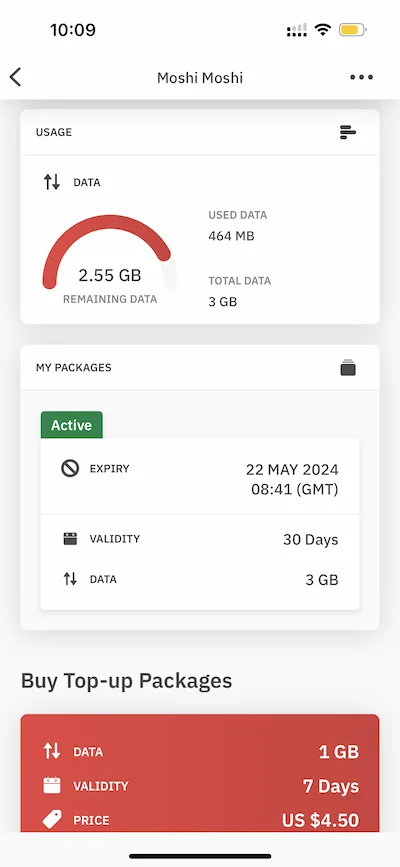 |
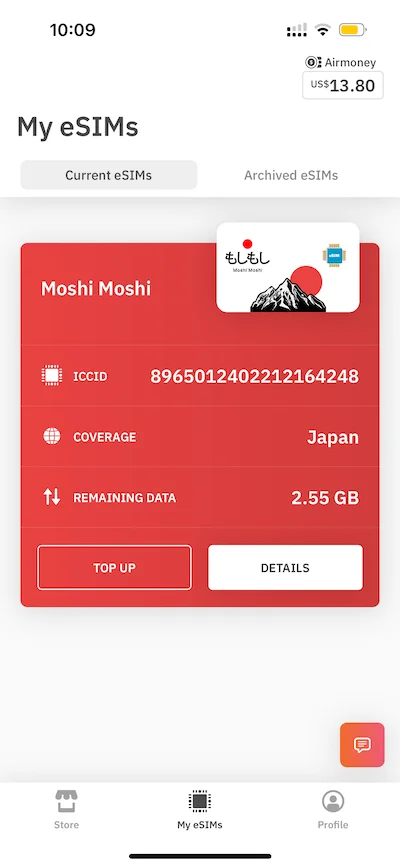
As on my trip to America, I chose an Airalo eSIM. Its advantage was that I could buy and configure it before leaving, giving me one less thing to handle after arrival.
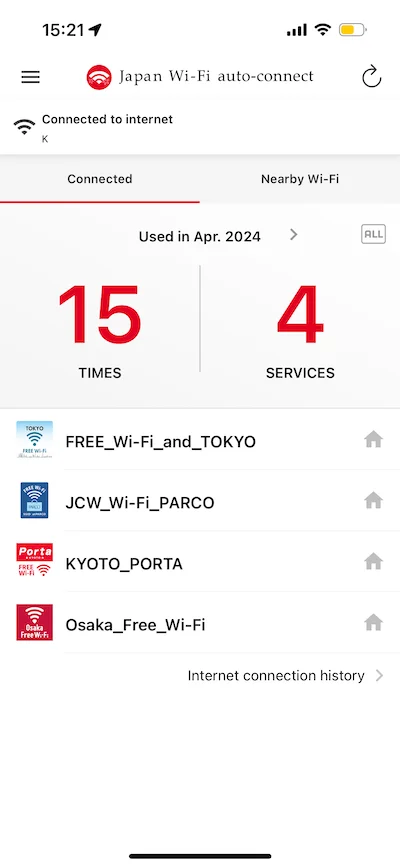
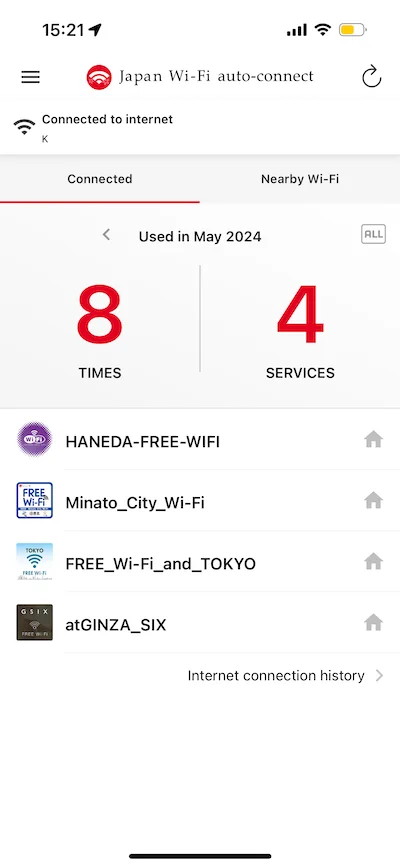
To save mobile data, you can use the Japan Wi-Fi auto-connect app. It completes the captive portals for several public Wi-Fi networks and can even connect to them automatically.
 |
 |
Japan Rail Pass
The Japan Rail Pass allows tourists to travel on trains operated by Japan Railways, including Shinkansen services, throughout Japan for 7, 14 or 21 days.
It was apparently once the obvious choice for every tourist, but the price rose considerably at the end of 2023 and it is now rarely worthwhile.
You can use one of several online calculators to determine whether it makes sense for your itinerary.
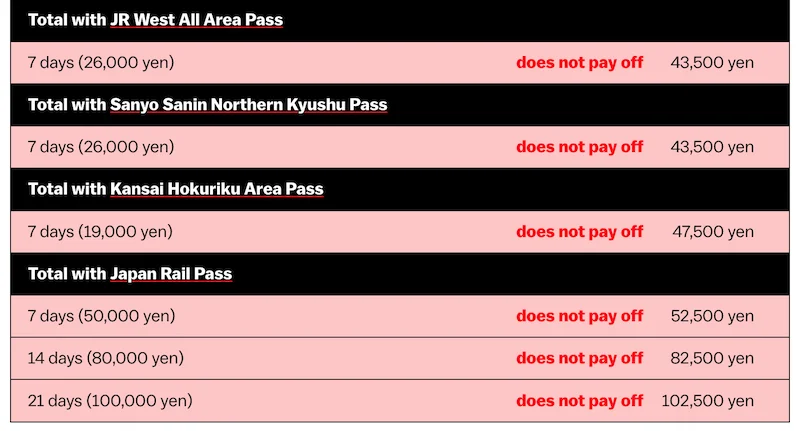
My calculation showed that a two-week Japan Rail Pass would cost ¥82,500, while buying all the journeys it covered separately would cost ¥42,000.
Suica card
Buying a rechargeable IC card such as Suica or Pasmo is definitely worthwhile in Japan. It makes the entire stay, and travelling in particular, much easier.
For each journey by train or metro, you could buy a ticket from a machine by entering your destination. This is rather complicated and inconvenient.
Instead, you add credit to a Suica or Pasmo card, touch it against the gate when entering and leaving a station, and the correct fare is deducted automatically. It is extremely convenient and simple.
 |
 |
You can buy a physical Suica or Pasmo card from a machine, for example at the airport after arriving, or use an electronic version on your phone.
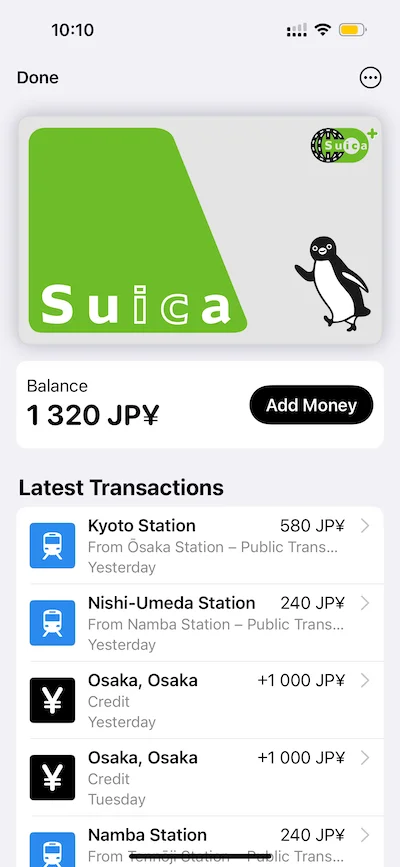
I used an electronic Suica card, adding it to Apple Wallet and topping it up before departure.
An electronic card lets you see the balance immediately and avoids the deposit required for a physical card. While travelling, you simply touch your phone against the entry and exit gates without even unlocking it.
Suica and Pasmo can also be used in convenience stores, vending machines and some restaurants.
The obvious question is why all these places, including public transport, do not simply accept contactless payments with an ordinary bank card, as the London Underground does, when the entire system already uses contactless terminals.
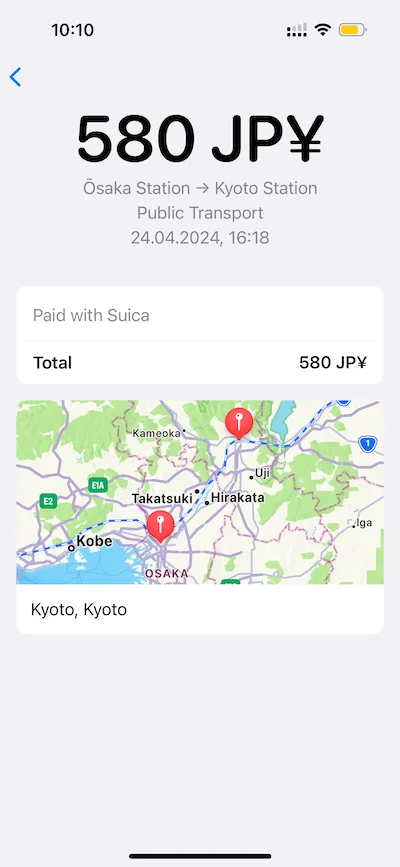
At least the transaction history shows the details of where you travelled and exactly how much it cost.
Transport
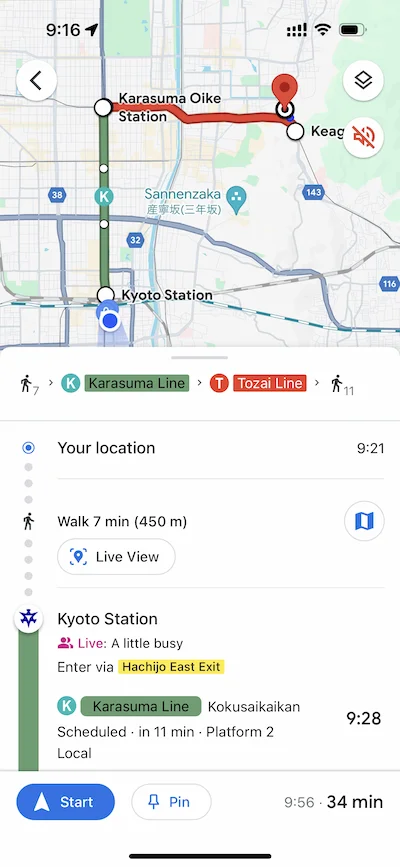
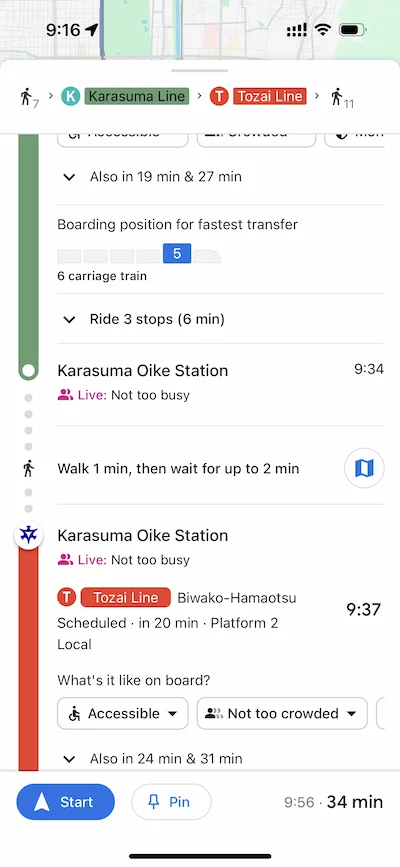
Google Maps works best for finding connections. It shows the exact line name, price and direction so that you board the correct train.
It often even recommends the most convenient metro carriage for making a transfer or reaching the exit closest to your destination.
 |
 |
The Suica card mentioned above can be used to pay for the metro, conventional trains and buses. It is the simplest and most convenient option.
For the Shinkansen, buying tickets directly from a machine at the station is easier. They can be purchased several days in advance.
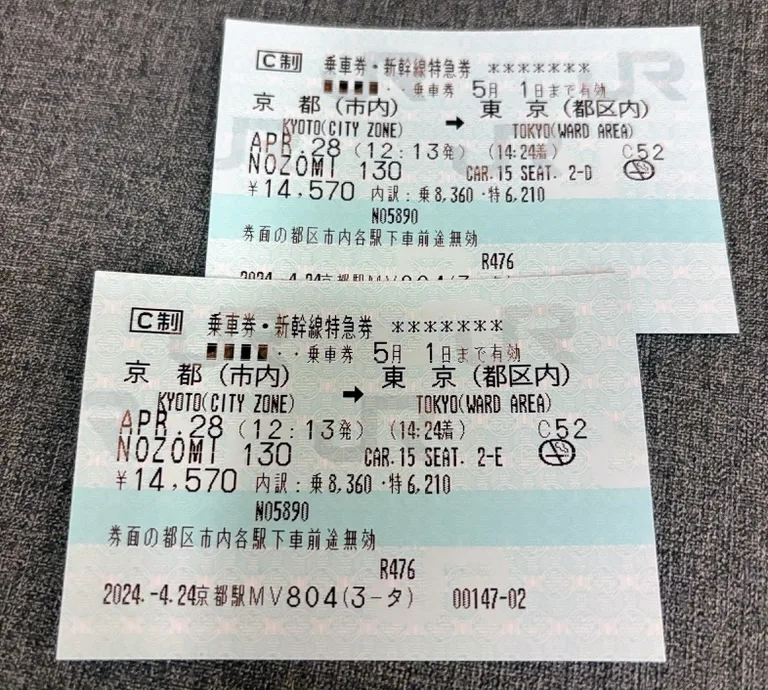
If your plans change, you can move a Shinkansen ticket to another date and time once without paying a fee.
Electrical sockets
Japan uses a 110V electrical supply, like the United States, but for historical reasons one half of the country uses 50Hz and the other 60Hz.
This is not a problem for modern electronics, but you need the correct adaptor. Japan uses Type A and B sockets, although in practice Type A is far more common.
The Type B adaptor I had used in the United States was therefore useless. Shops at home also tend to sell adaptors for Type B rather than Type A.
I solved the problem by buying a Type A USB-C charger in Japan. I only needed to charge my phone and tablet anyway.
Card payments and cash
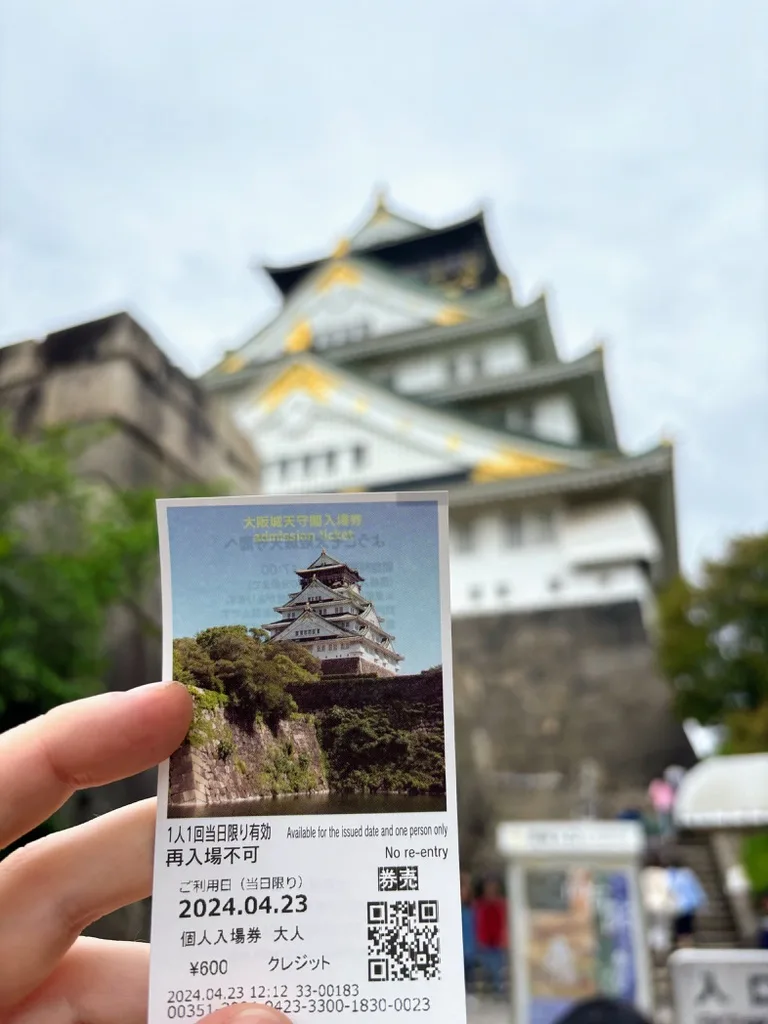
Japan remains a cash-based society, so do not expect to manage using cards alone as you can in Sweden or Denmark.
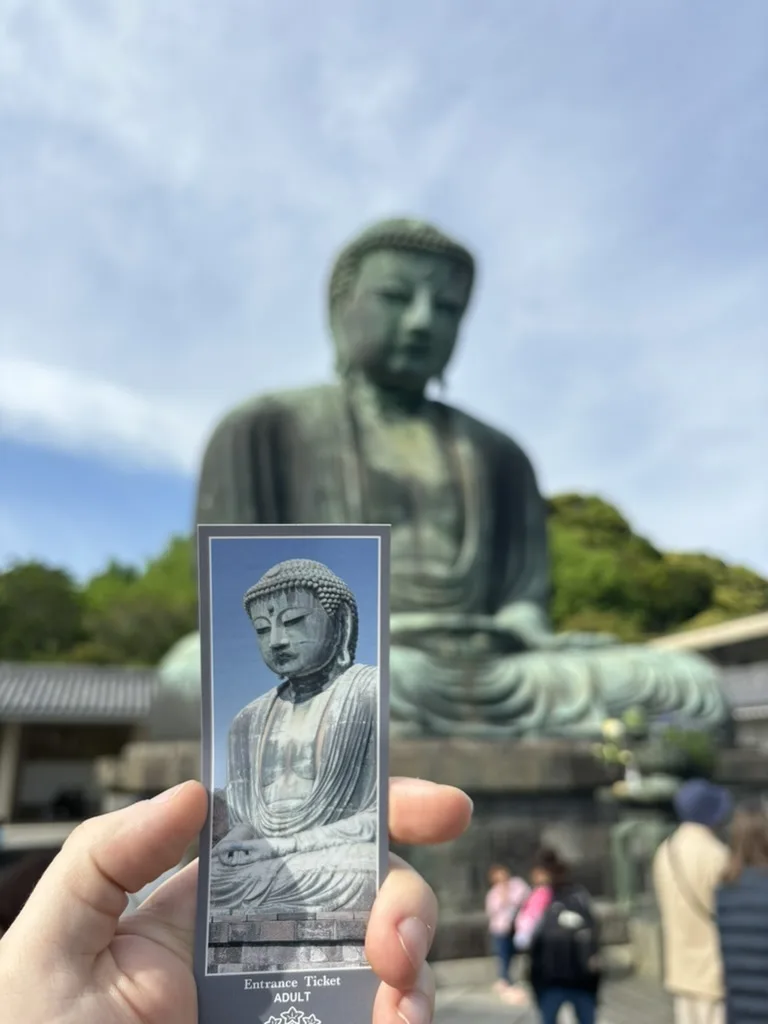
You will need cash not only in smaller restaurants but also when buying admission tickets at some famous tourist attractions.
 |
 |
Cards generally work without problems in hotels, larger restaurants and convenience stores, and when buying tickets at railway stations, although you sometimes need the physical card rather than Apple Pay.
I obtained cash by exchanging euros at Osaka Airport immediately after arriving.
I underestimated how much I would need, however, and had to use an ATM at 7-Eleven after a week.