Travelling through Japan: Tokyo 🇯🇵
The final stop on my trip through Japan was Tokyo, where I spent almost a week and from where I took a day trip to Kamakura.
Getting there from Kyoto
The Shinkansen is the ideal way to travel from Kyoto to Tokyo. Several kinds of Shinkansen train operate on this route: Nozomi, Hikari and Kodama.
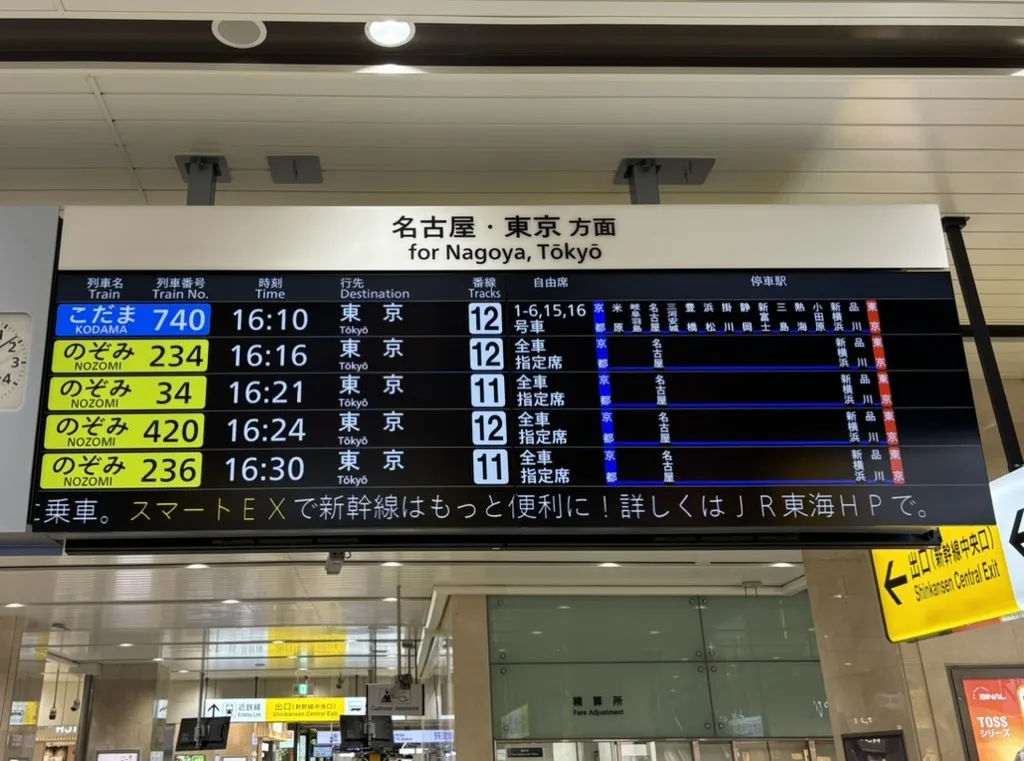
They differ in the number of stations at which they stop. Nozomi is the fastest. After Kyoto, it stops only at Nagoya and Shin-Yokohama before reaching Tokyo, where it calls at Shinagawa and Tokyo Station.
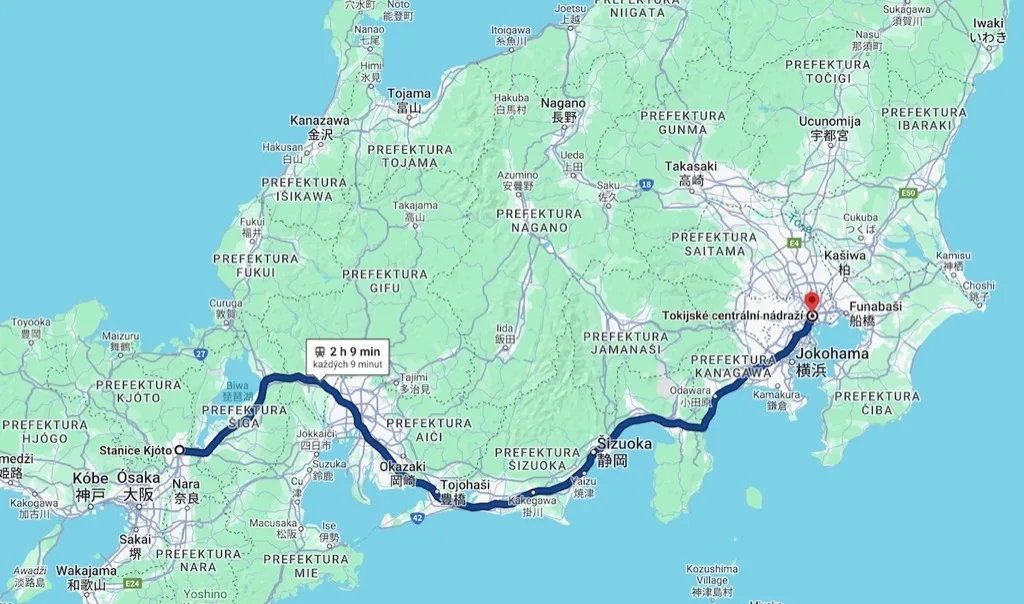
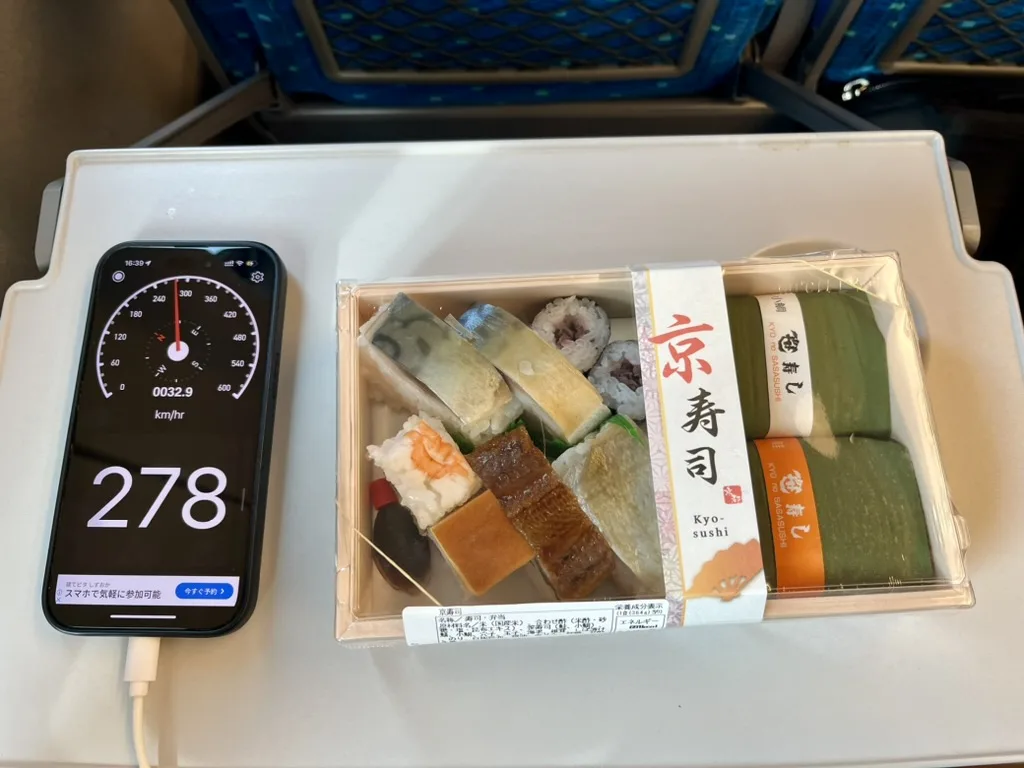
Nozomi covers the 450-kilometre journey from Kyoto to Tokyo in two hours, reaching speeds of almost 300 km/h.
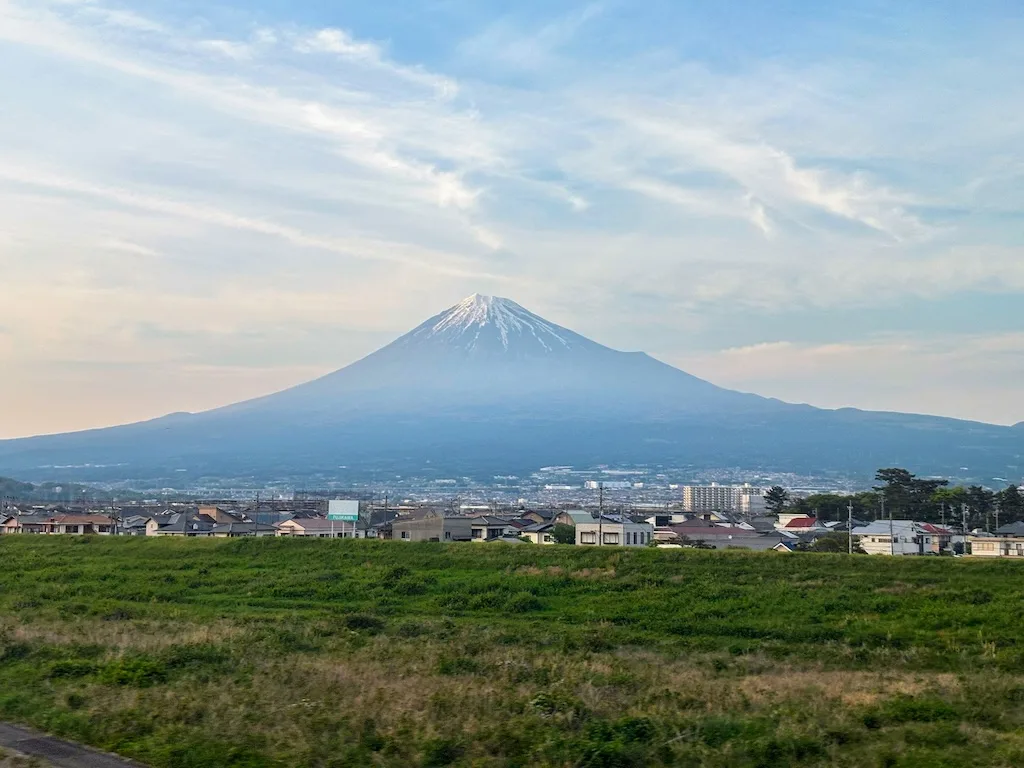
When travelling from Kyoto to Tokyo, it is worth sitting on the left side of the train for a view of Mount Fuji.
You do not necessarily have to leave the train at Tokyo Station. Shinagawa may be more convenient for reaching your accommodation. If you transfer to another Japan Railways line, your Shinkansen ticket remains valid for that journey within Tokyo.
I got off at Shinagawa, where the ticket gate returned my Shinkansen ticket, and transferred to the Yamanote Line. I left that line at Shinbashi, where the gate finally retained the ticket after letting me out of the station.
Getting around Tokyo
Tokyo has nine subway lines operated by different companies, and its subway map looks rather intimidating. In practice, you do not need to study it at all to travel around the city comfortably.
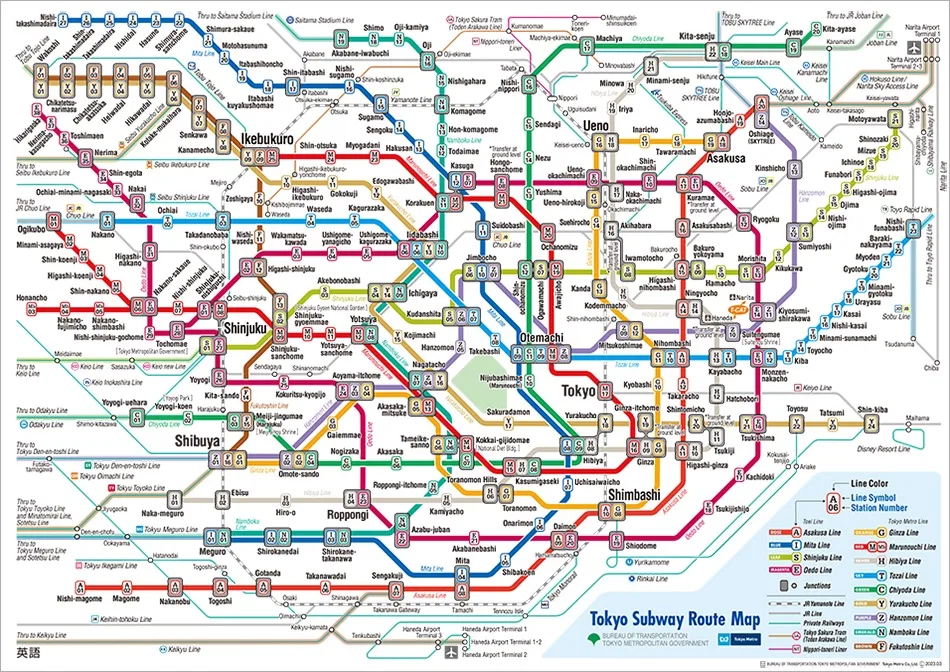
As I mentioned in my introductory Japan travel plan, Google Maps and a Suica card are all you need.
When comparing routes in Google Maps, pay attention to the price of each option. Because several different companies operate the subway lines, transferring between two companies costs more than changing between lines run by the same one.
Another category is the automated, single-track Tokyo Monorail, which can take you from Shinbashi to places such as Haneda Airport or teamLab Planets.
Accommodation
Tokyo is an enormous city—or rather an agglomeration of several cities—so it is worth choosing accommodation with good transport connections.
Staying near a station on the Yamanote Line is often recommended because the line forms a loop around Tokyo.
 |
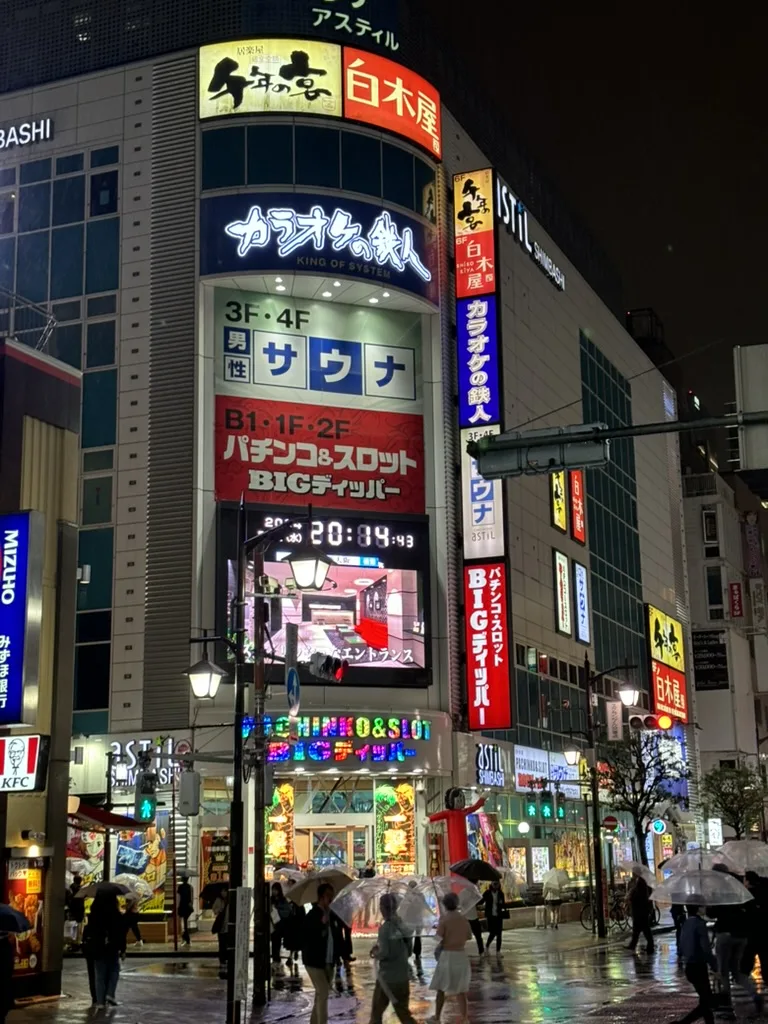 |
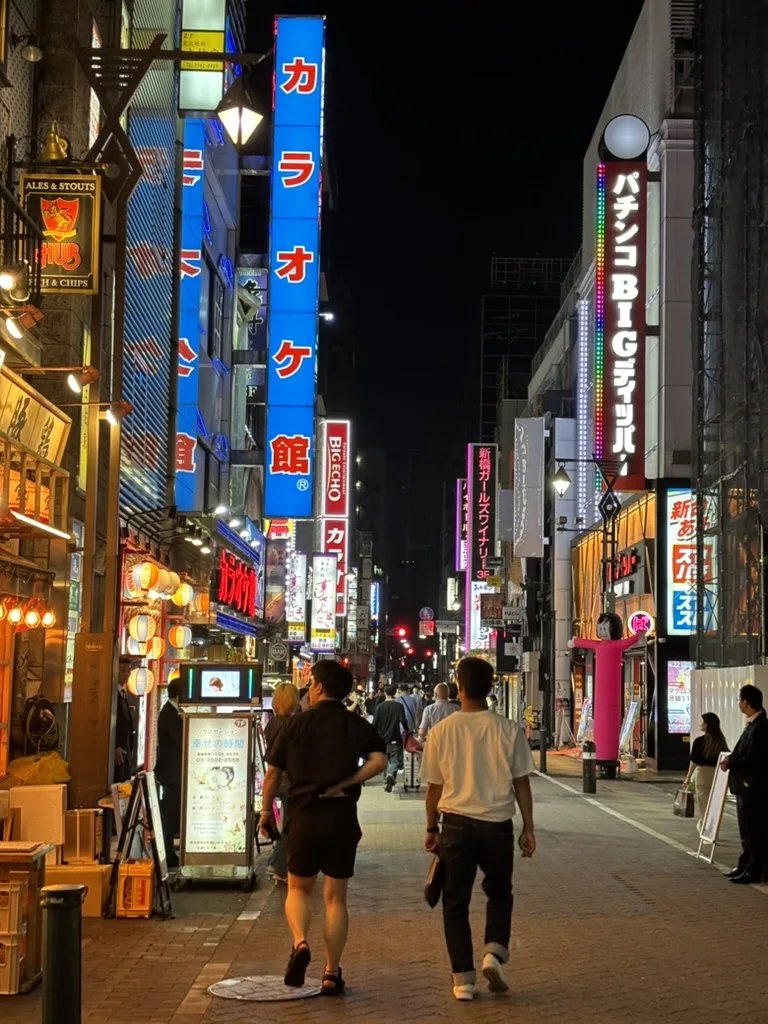
Popular areas include Shibuya and Shinjuku if you want somewhere busier, Asakusa for somewhere quieter, the area around Tokyo Station if you want the sense of staying in the city centre, or adjacent neighbourhoods such as Shinbashi and Ginza.
Considering the available accommodation, Shinbashi seemed the best choice for me. Shinbashi Station was within walking distance and served by several lines, including the Yamanote and Ginza lines.
Asakusa
Asakusa is a district with the atmosphere of old Tokyo and is home to the seventh-century Buddhist temple Sensō-ji.
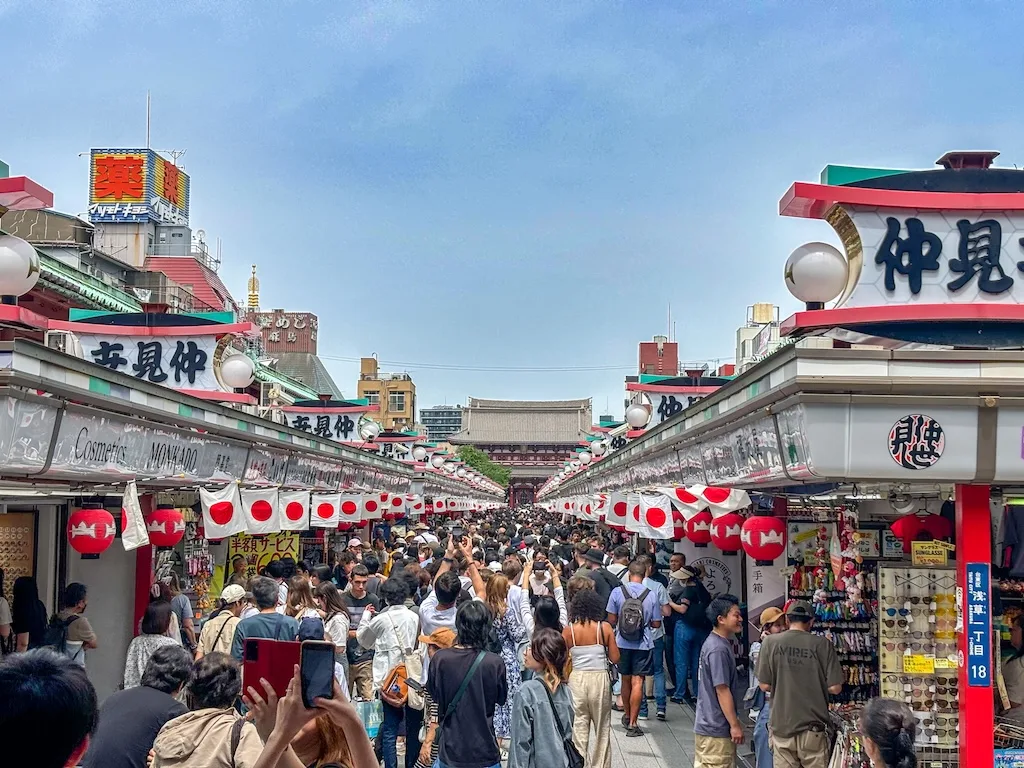
You can begin a visit to Asakusa by passing through Kaminarimon Gate, then continue along Nakamise to Sensō-ji.
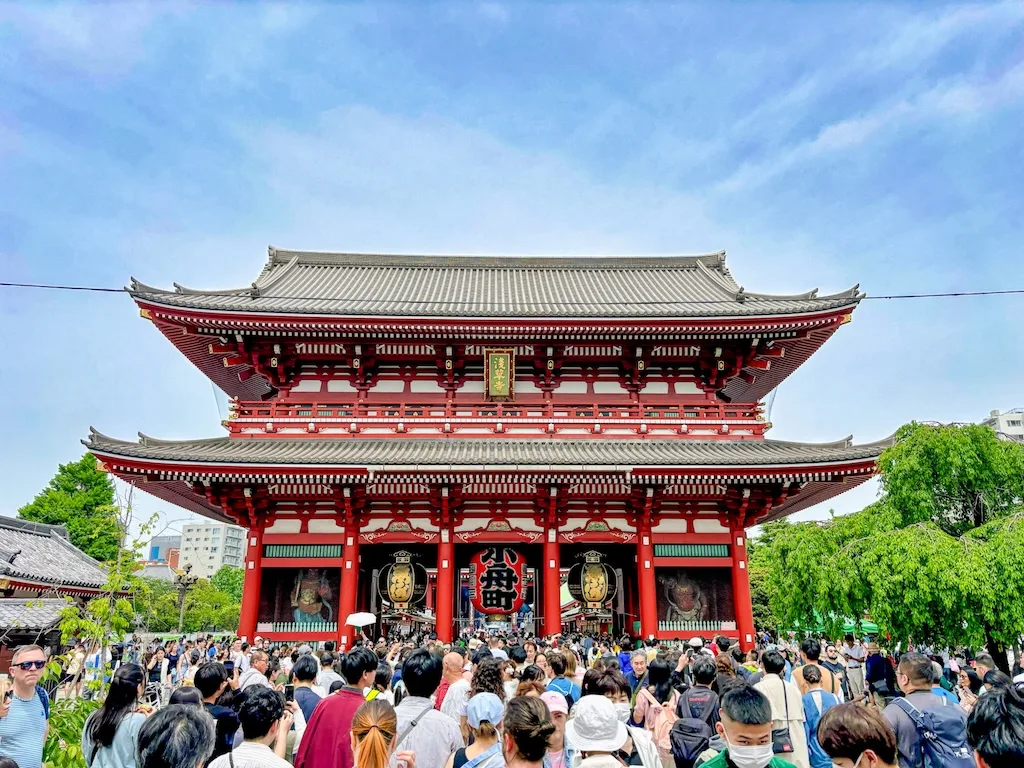
Be prepared for crowds, however. Nakamise may contain as many tourists as the street leading to Kiyomizu-dera in Kyoto.
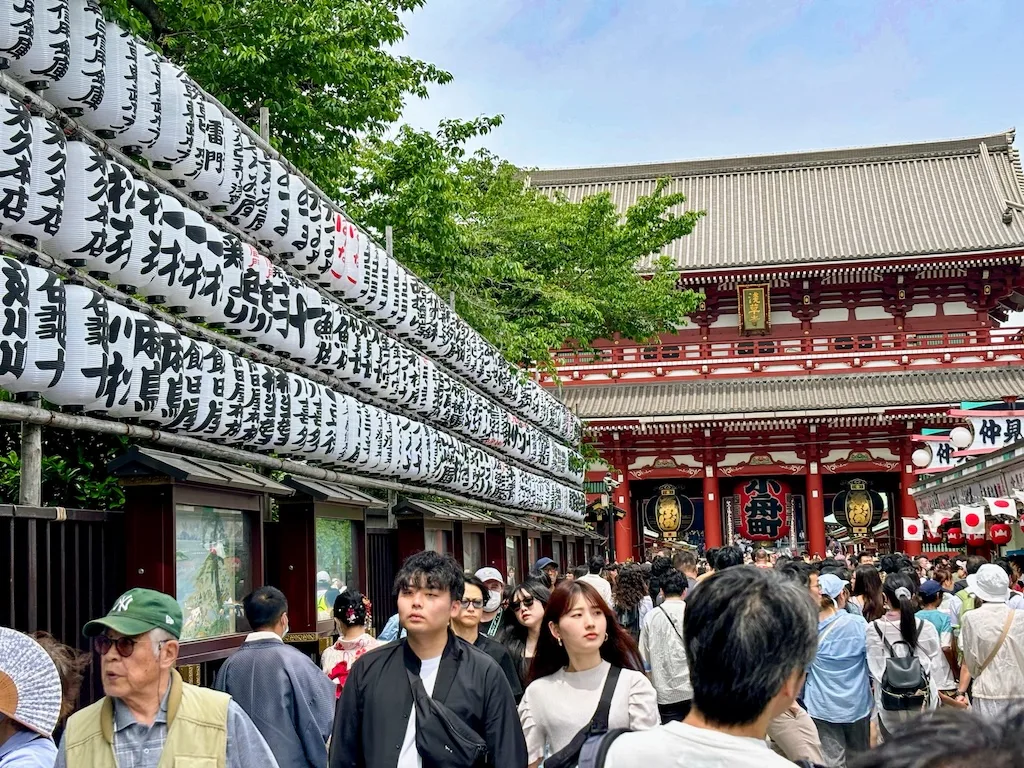
You can try many kinds of food on Nakamise and in its side streets.
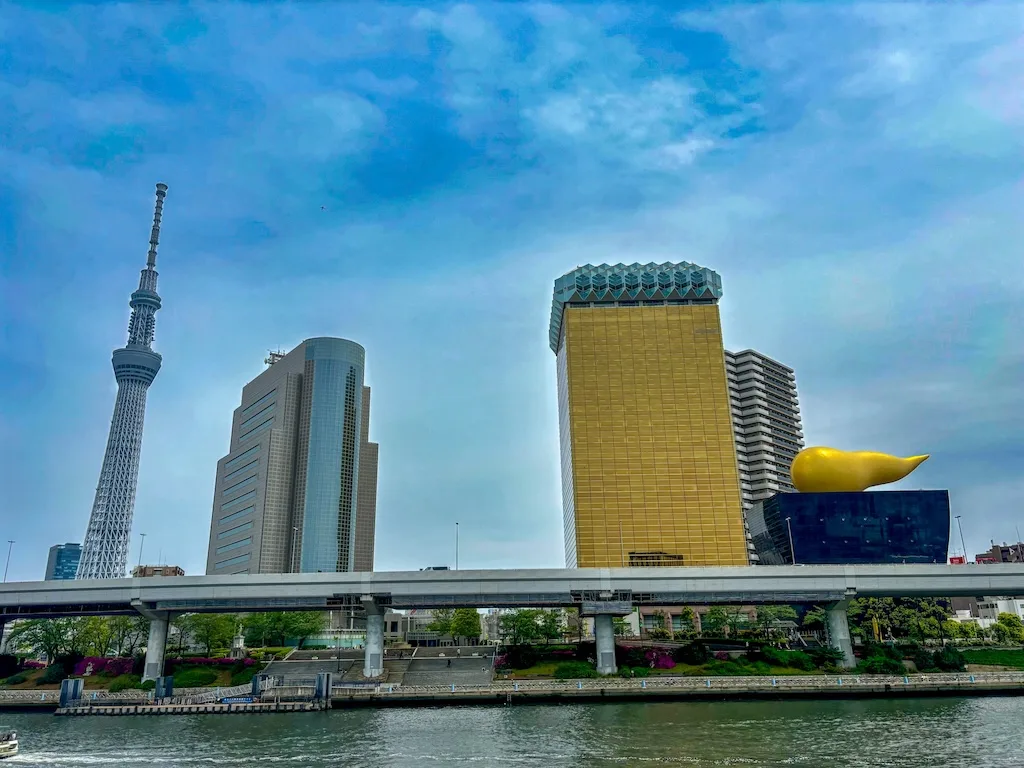
From Sensō-ji, you can walk towards the Sumida River and stop in Sumida Park, which offers views of Tokyo Skytree and the Asahi building.
Akihabara
While travelling from Asakusa to Akihabara, you can stop and rest in Ueno Park. You will need the energy once you reach Akihabara.
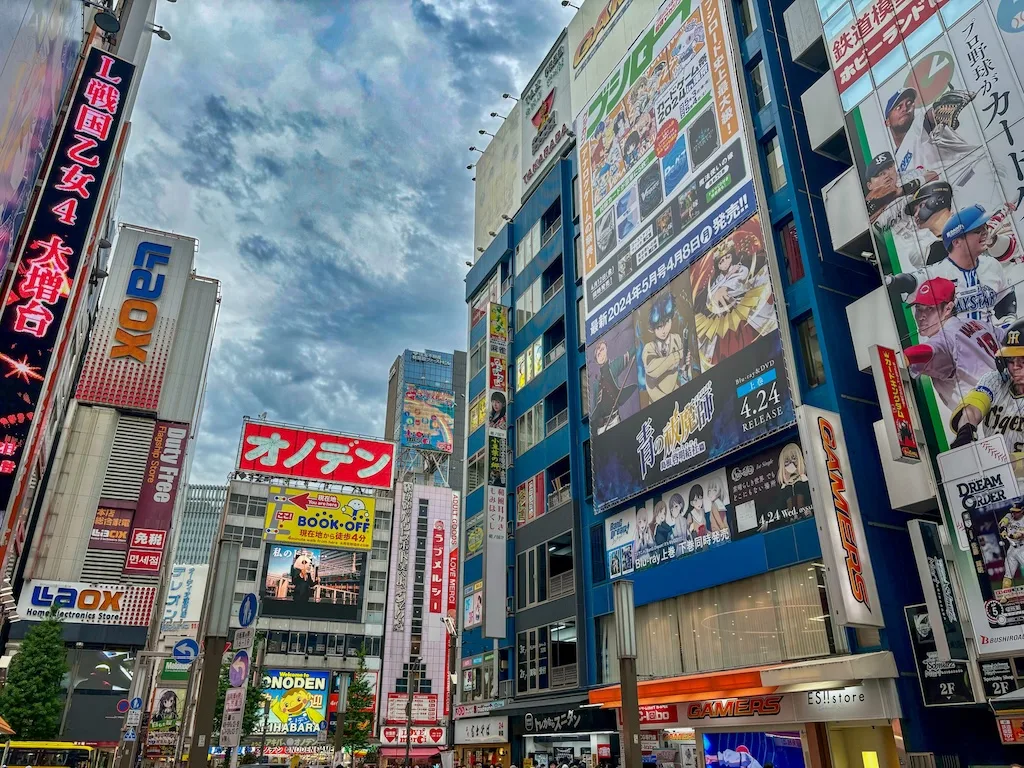
Akihabara is a fascinating part of Tokyo. It was once known mainly for electronics, but today it is more of a district for anime fans.
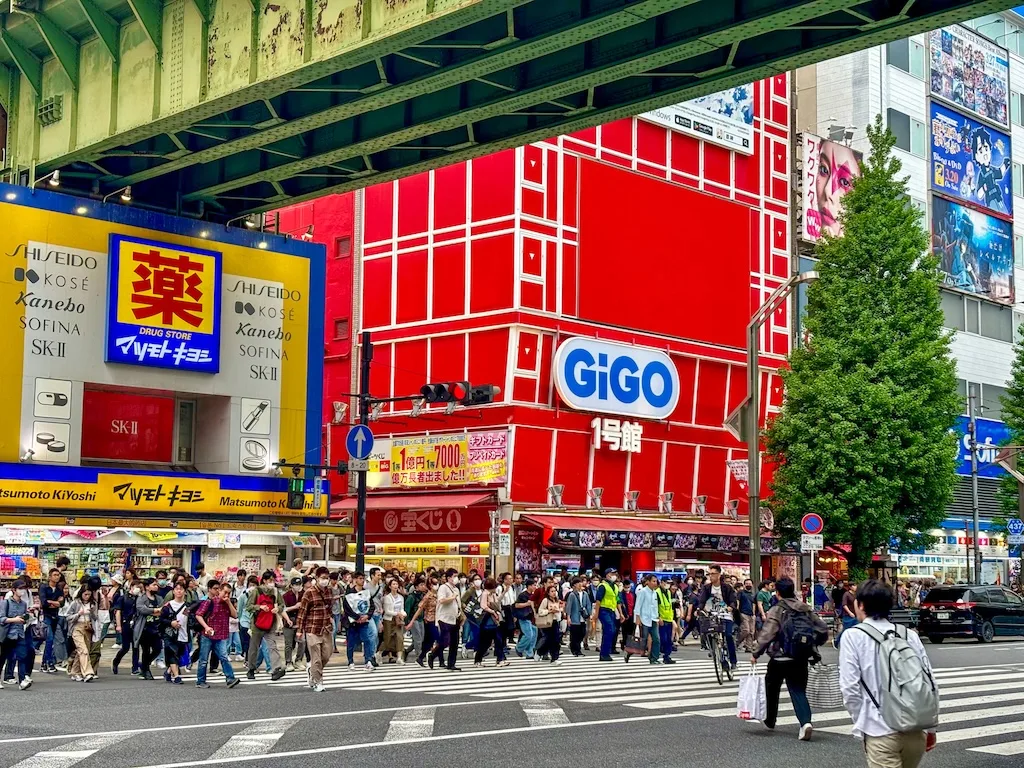
It can be very busy, perhaps even busier than Shibuya. Anime fans should visit shops such as Akihabara Radio Kaikan, Animate Akihabara and Mandarake Complex.
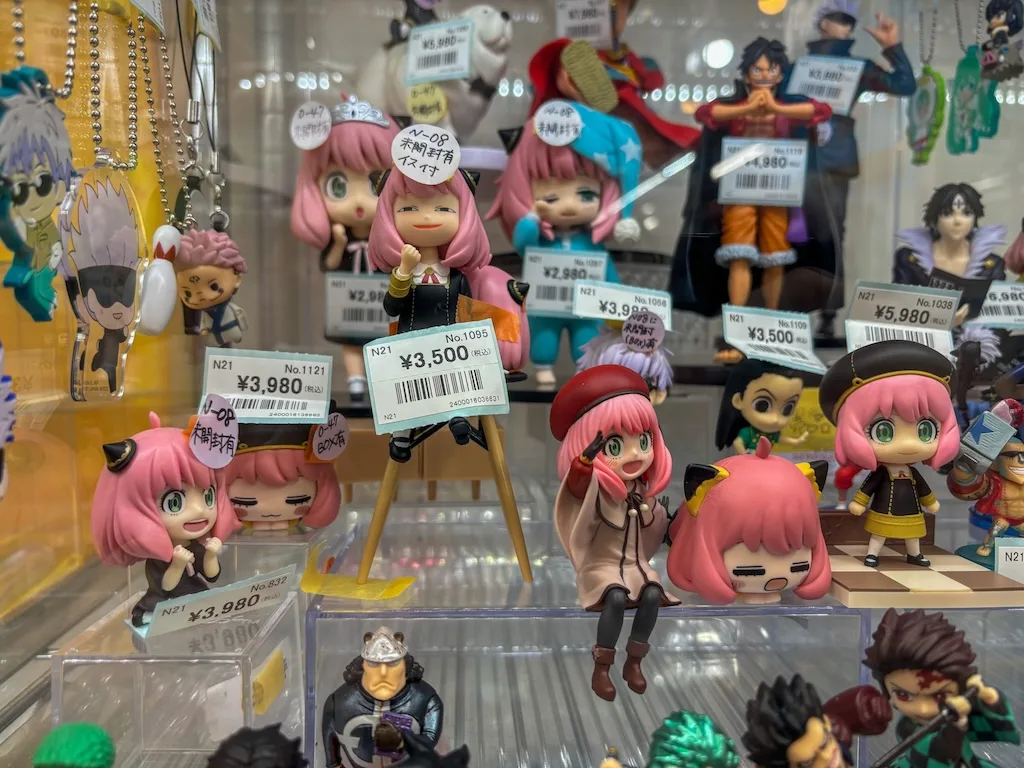
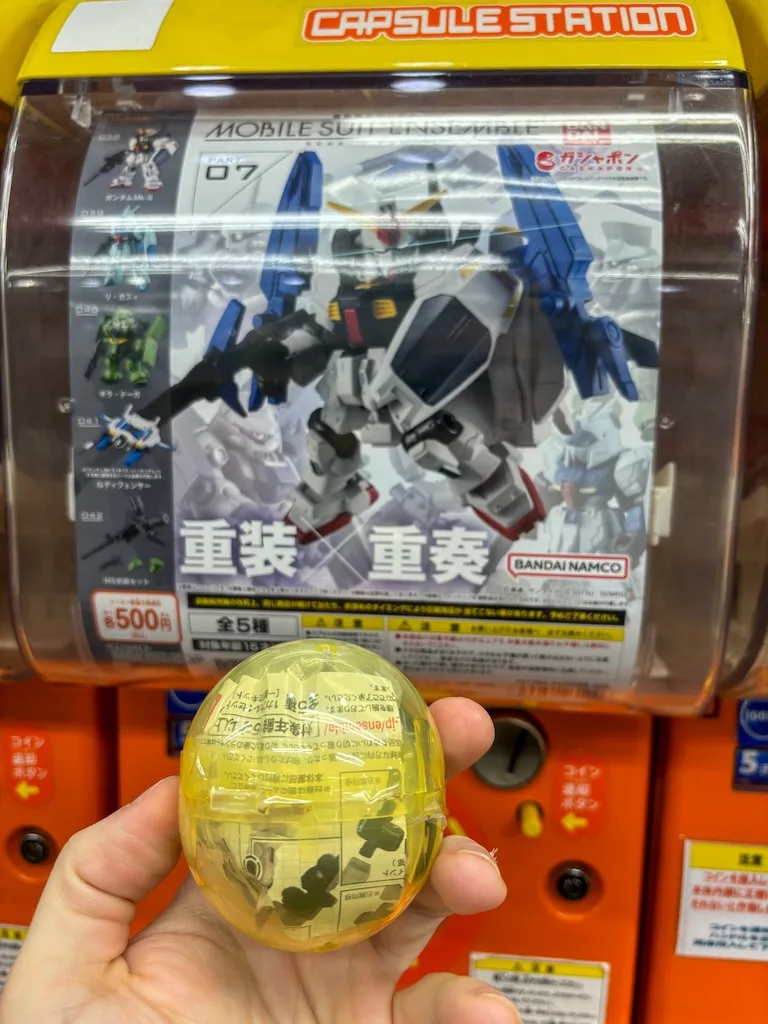
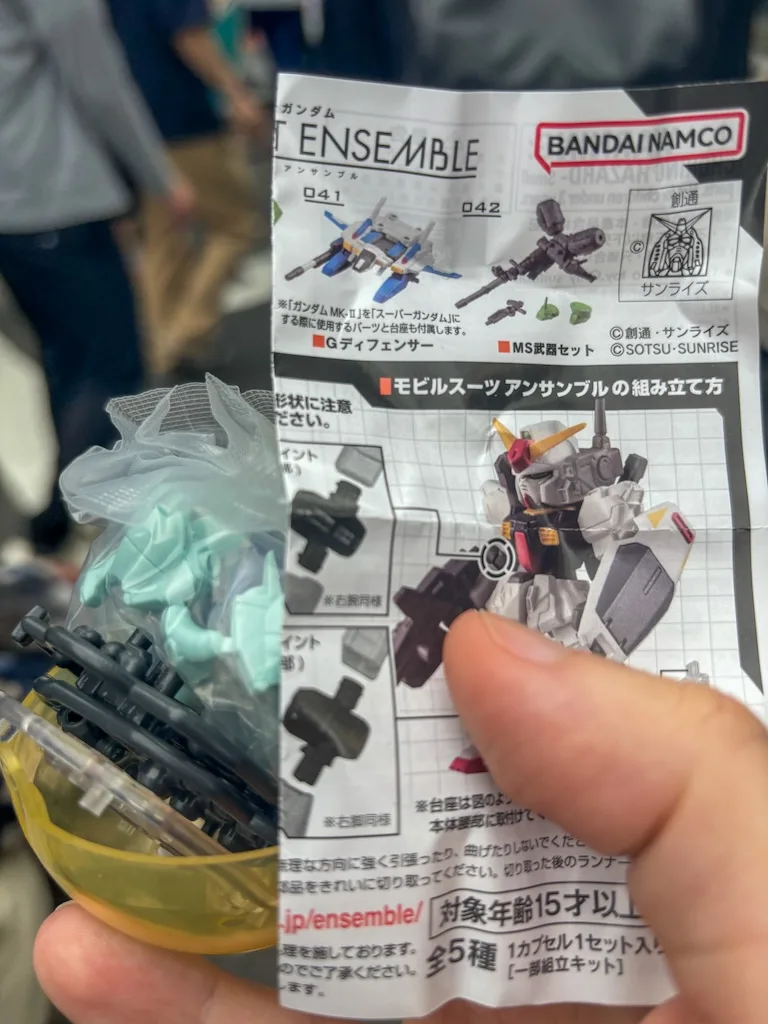
You can try your luck with gachapon machines, found not only on almost every corner but also in dedicated shops.
 |
 |
Heading west from Akihabara across the Kanda River brings you to Ochanomizu Station, where three railway lines cross. With a little luck, you can take an interesting photograph resembling a familiar scene from anime.
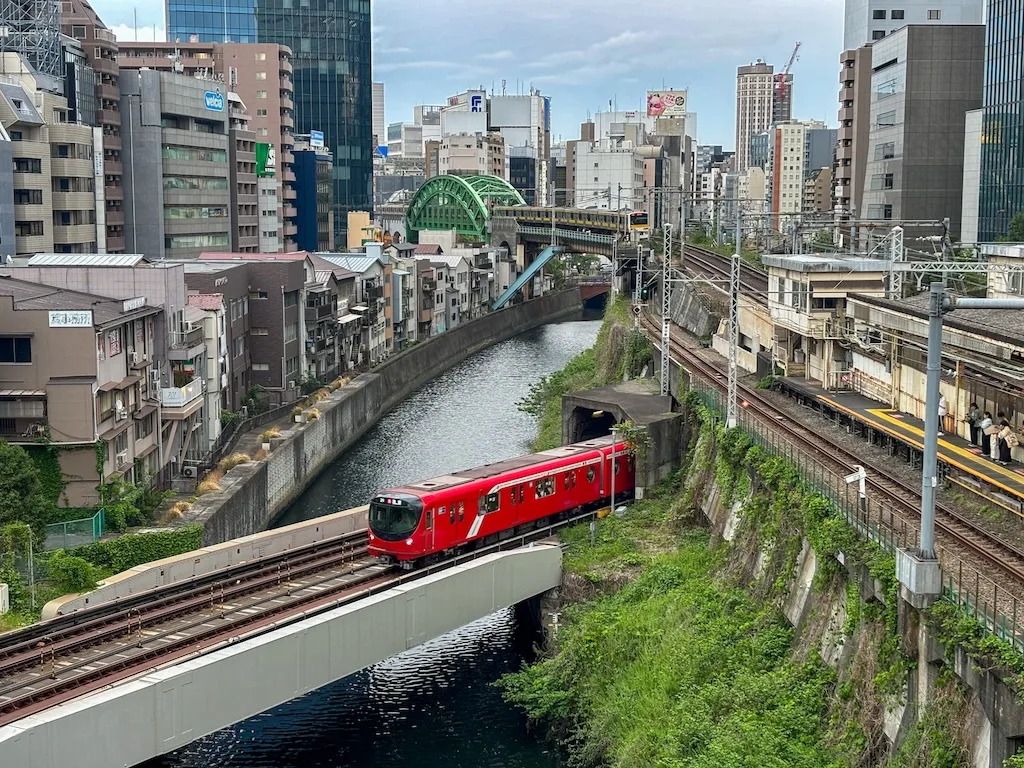
Shibuya
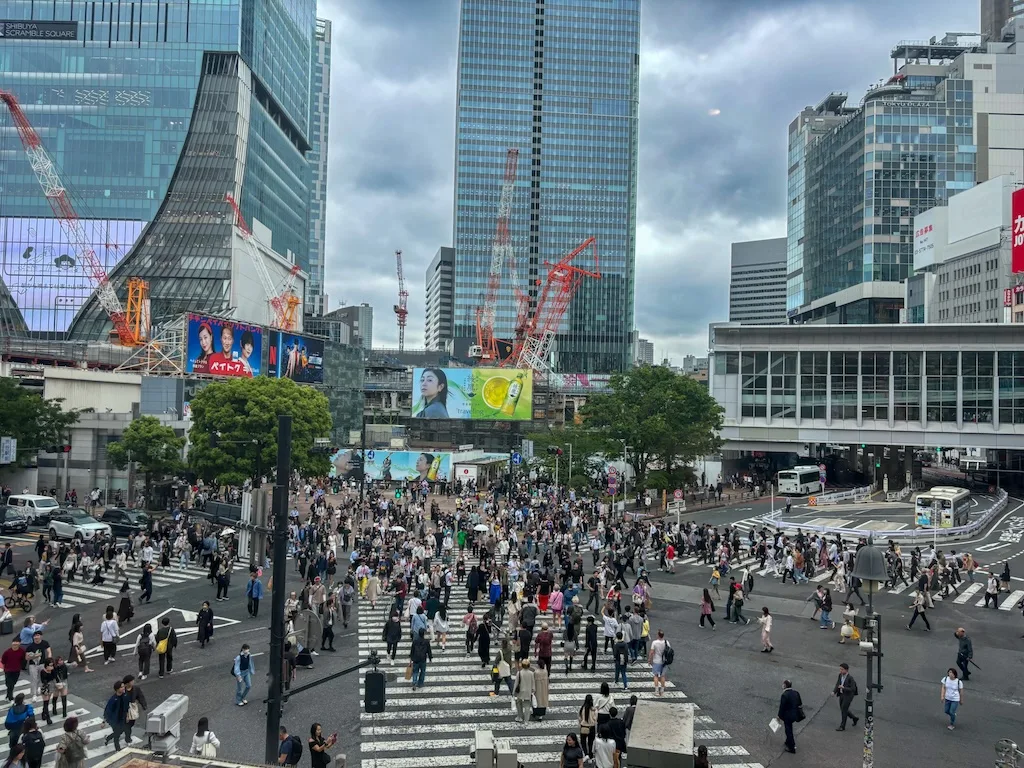
Shibuya is home to the famous Shibuya Crossing, where pedestrians cross the road in every direction. You have almost certainly seen it somewhere before, although up close it is simply another pedestrian crossing filled with people.
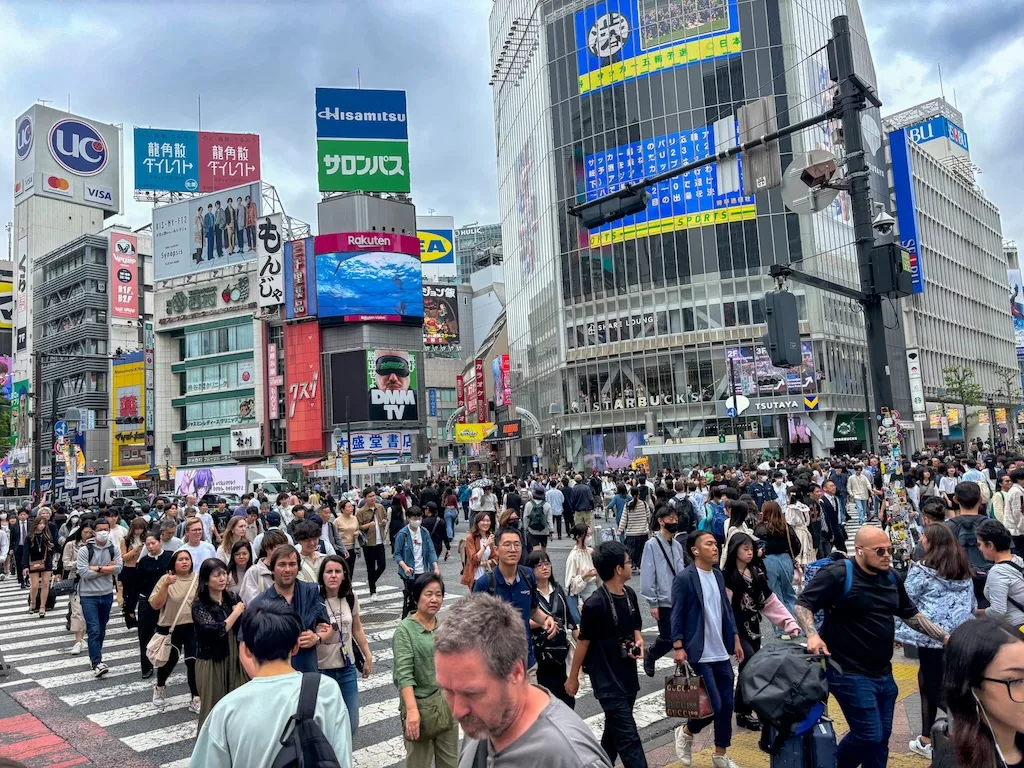
Shibuya Sky offers a better view of the crossing, but I do not think it is worth the price. The Tokyo Metropolitan Government Building in Shinjuku provides a much better view of the city for free.
You can at least see Shibuya Crossing from above at the Starbucks on the corner.
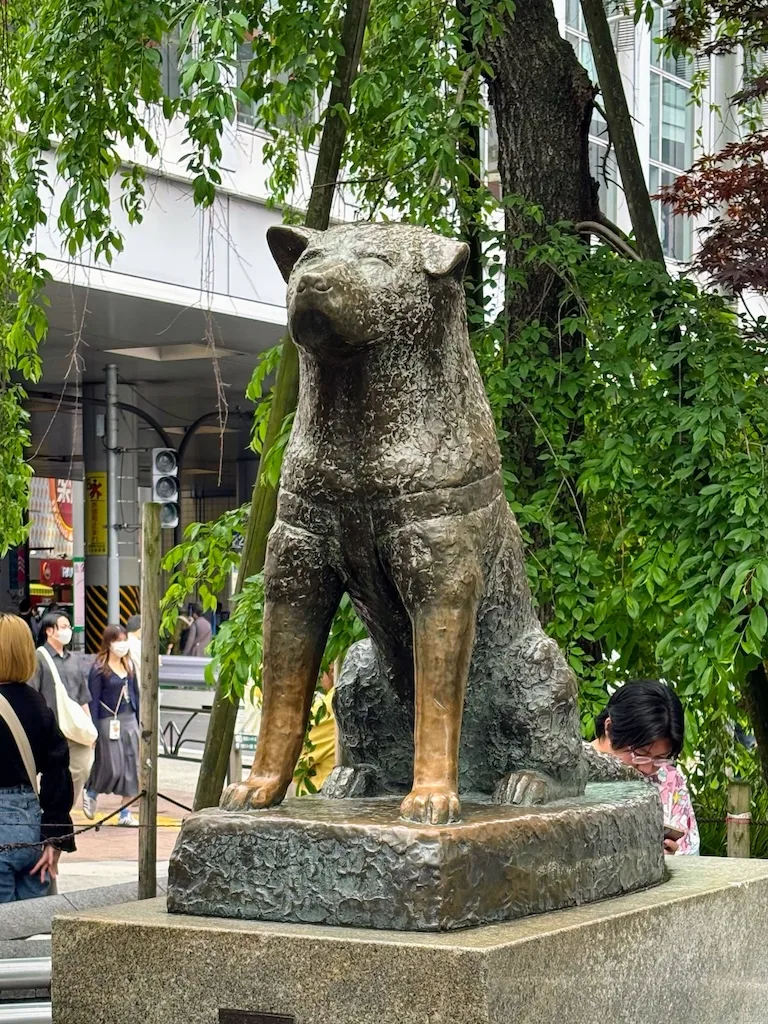
Beside the crossing is the statue of Hachikō, the dog who waited there for years for his owner, who never returned. If you want a photograph with him, you will need to join a queue.
If you enjoy shopping, Shibuya has many department stores, including the famous Shibuya 109, often seen in anime.
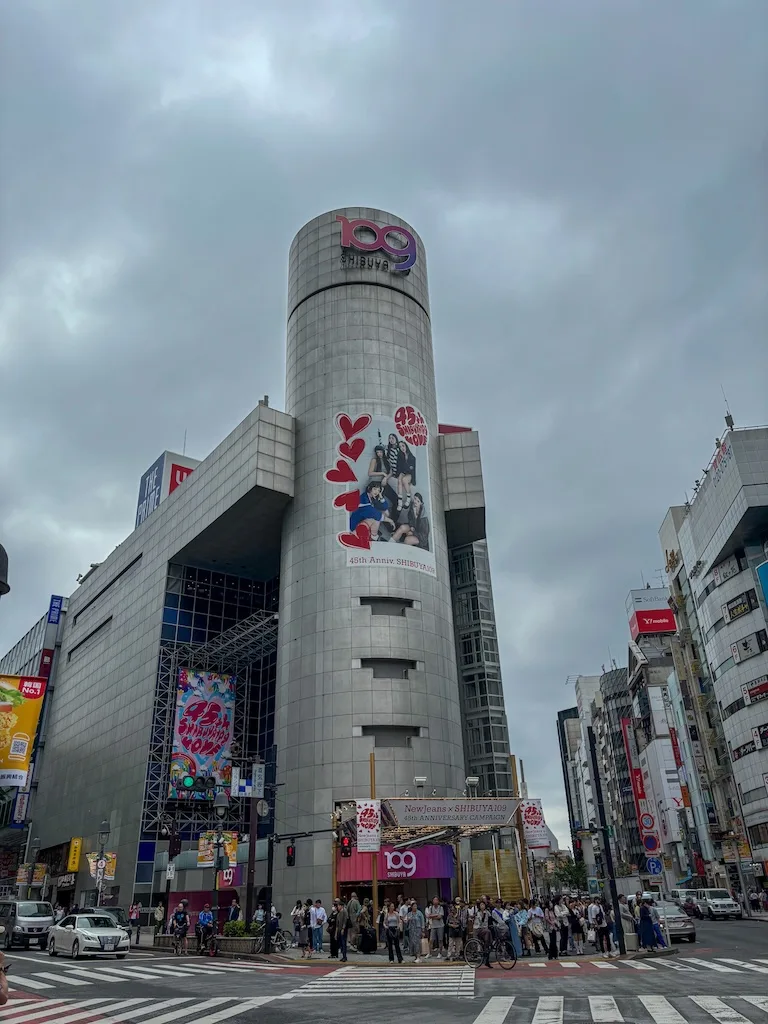
A little further north towards Shinjuku, you can rest in Yoyogi Park and visit Meiji Jingū.
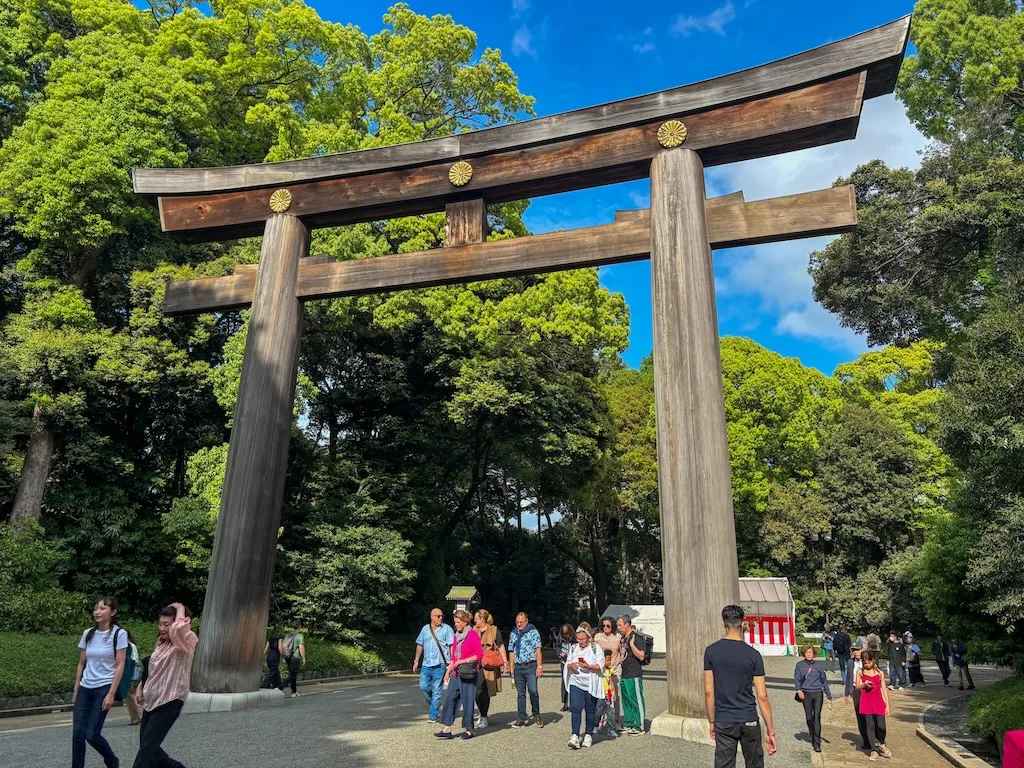
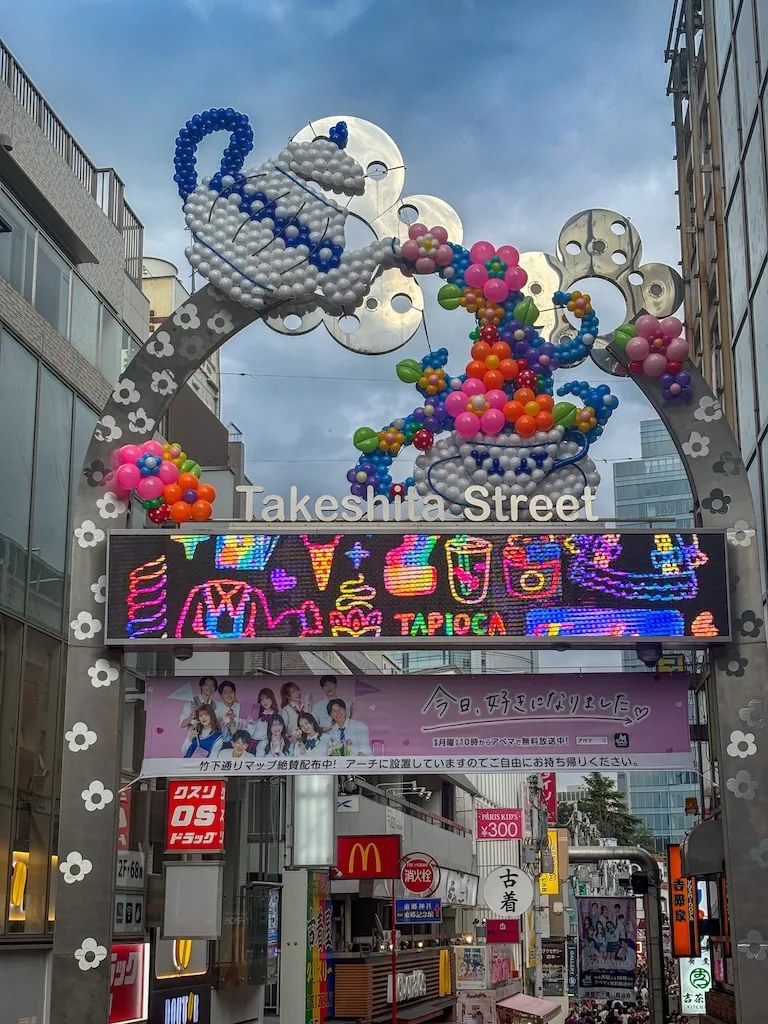
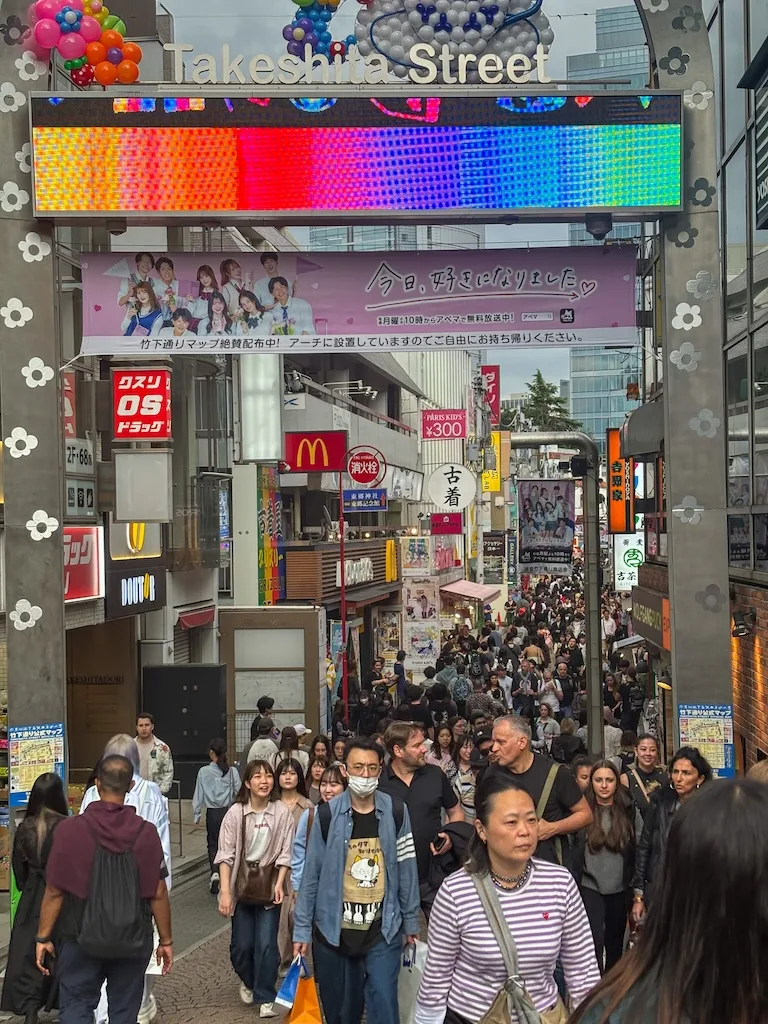
Leaving Meiji Jingū, you can head towards Harajuku Station and visit Takeshita-dōri. For some reason, the street is extremely popular with tourists, but in my view there is nothing particularly interesting there—only crowds.
 |
 |
Shinjuku
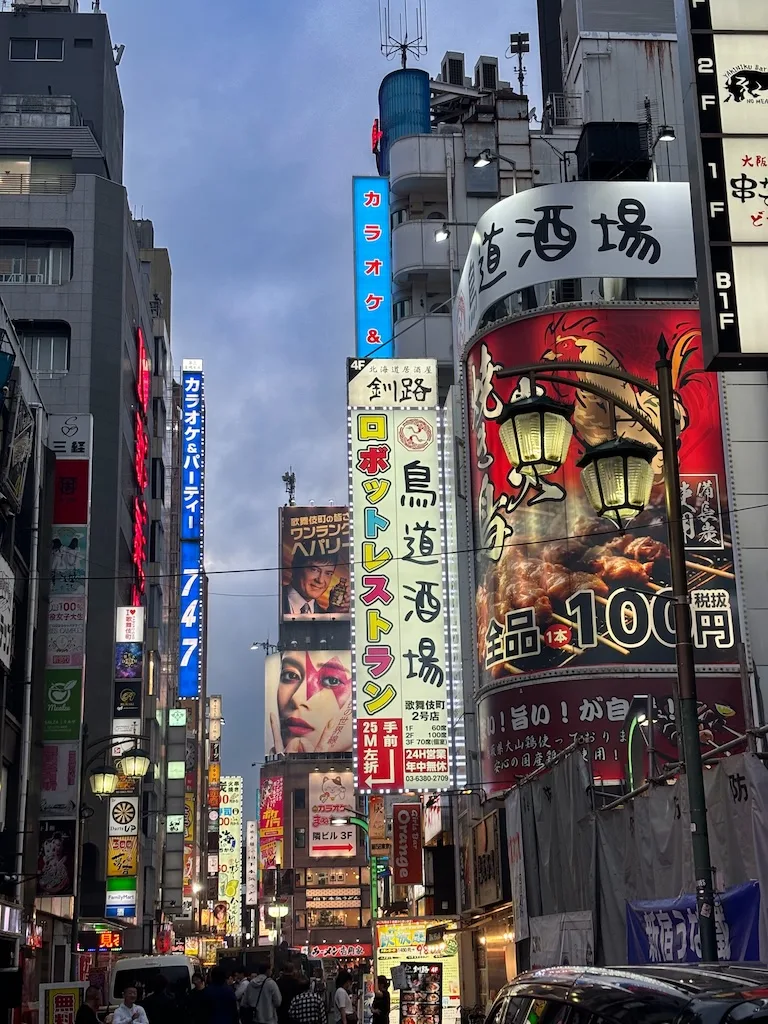
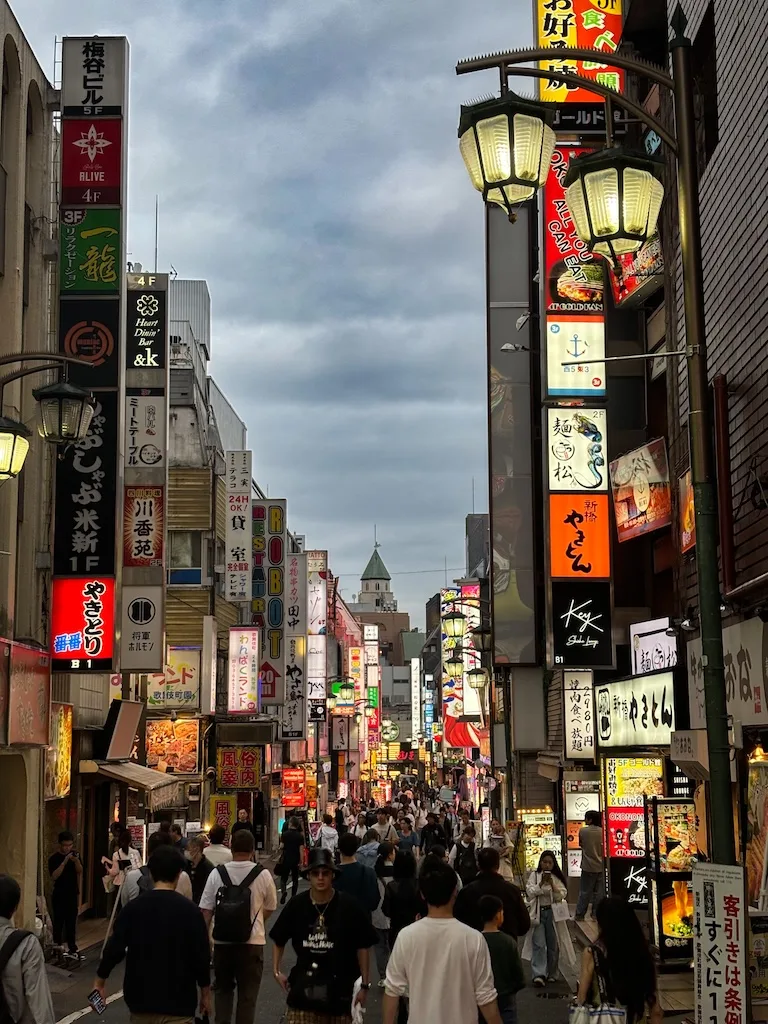
Shinjuku is a district filled with neon lights, bars, restaurants and skyscrapers.
 |
 |
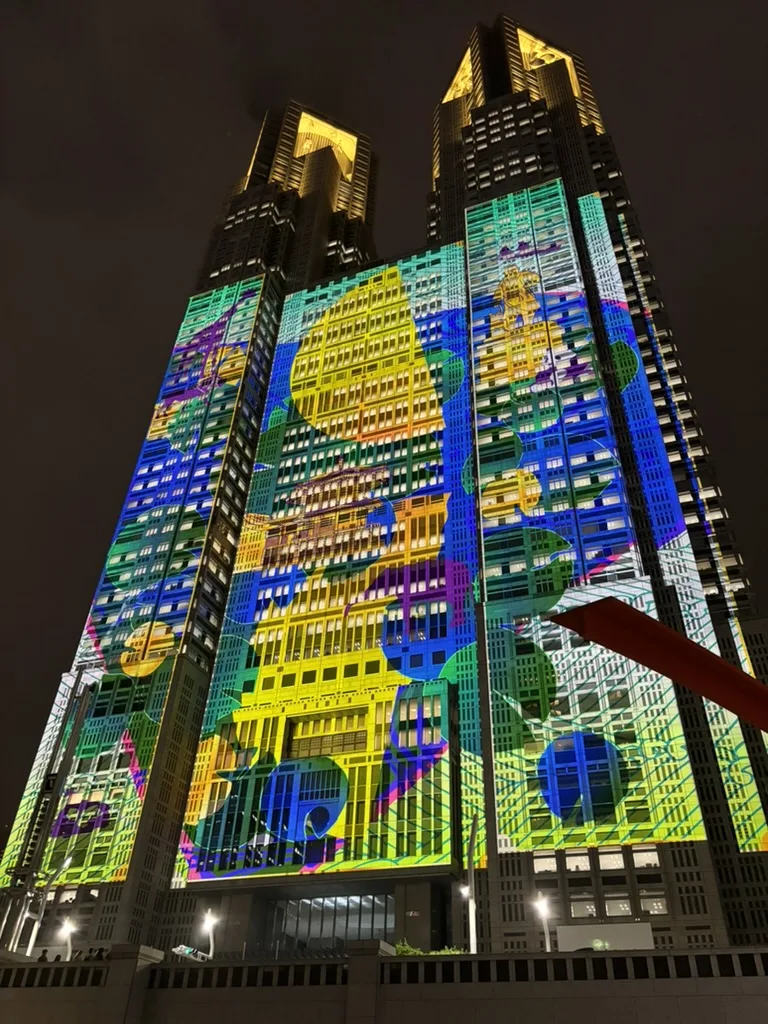
It is also home to the Tokyo Metropolitan Government Building, whose observation deck on the 48th floor can be visited free of charge.
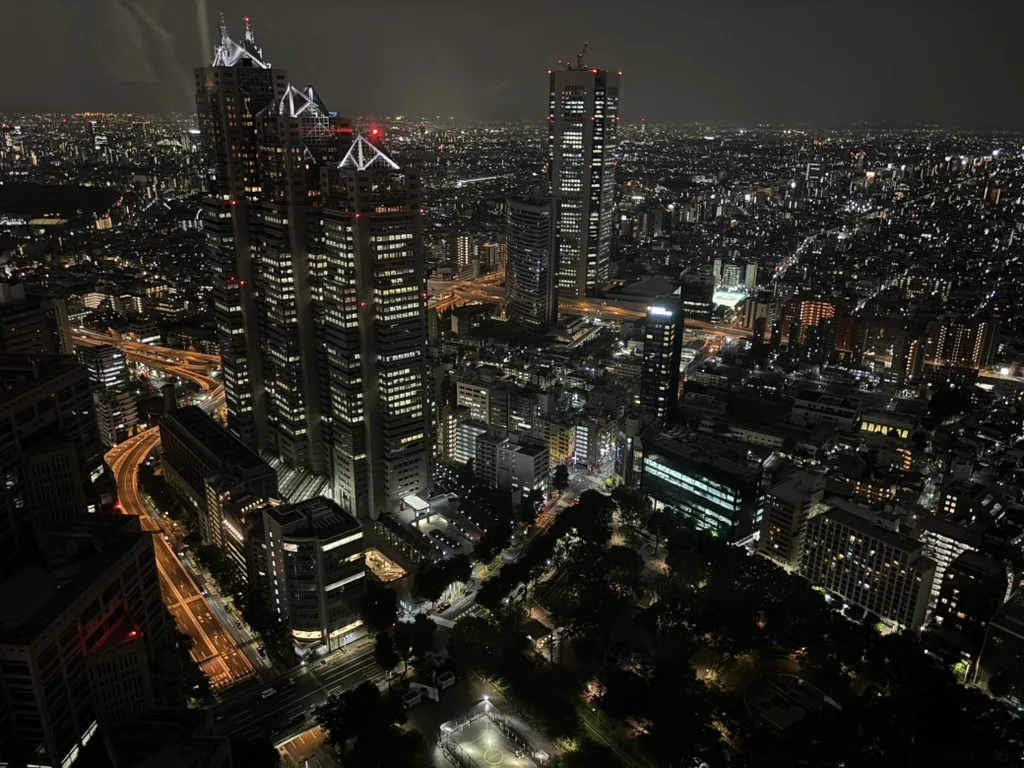
The observation deck offers an excellent view of Tokyo, even if it is a little lower than Tokyo Skytree. The city looks particularly impressive in the evening.
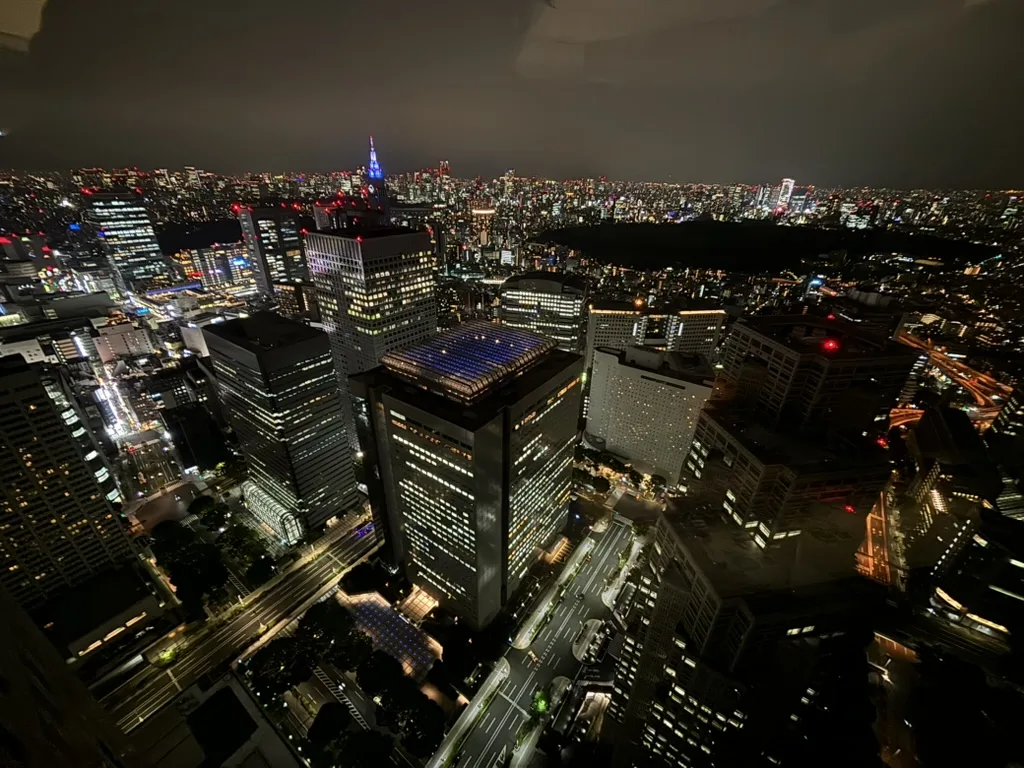
In the evening, light projections are also displayed directly on the building.
Ginza
Close to Shinbashi, where I stayed in Tokyo, is the famous Ginza shopping district.
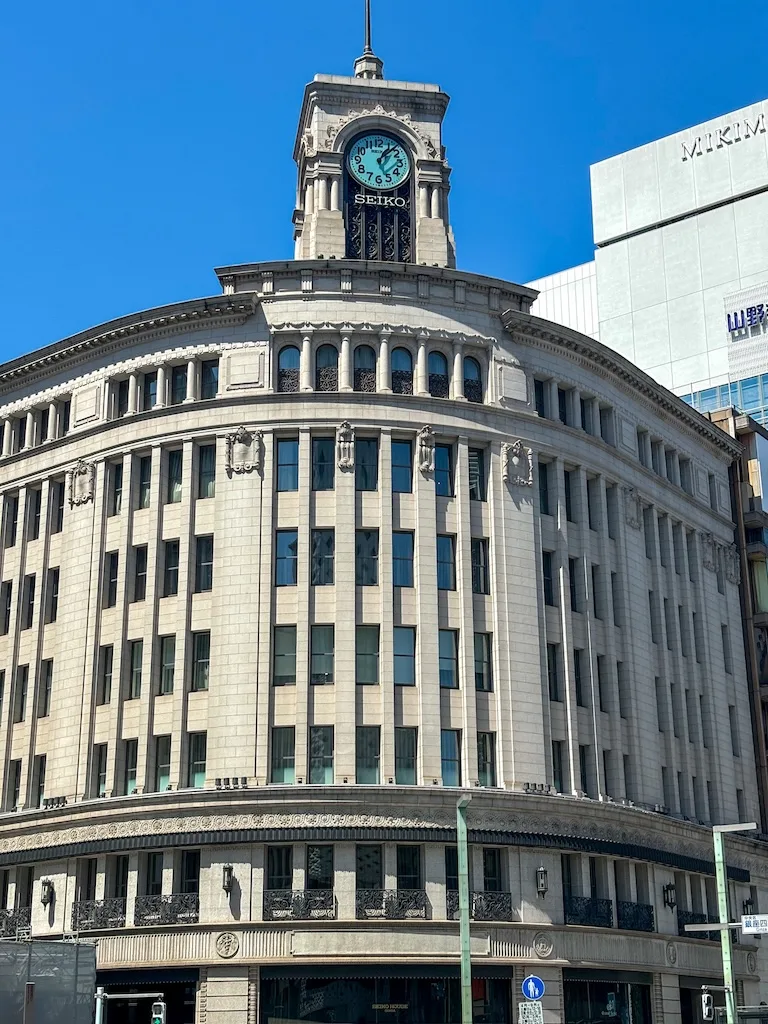
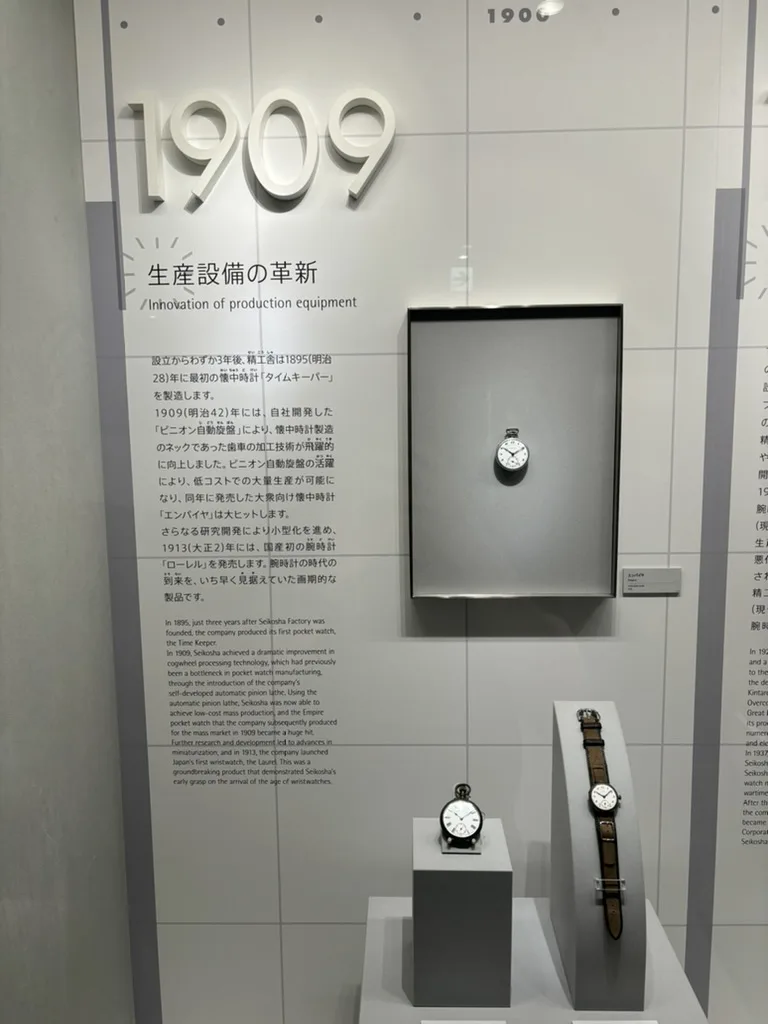
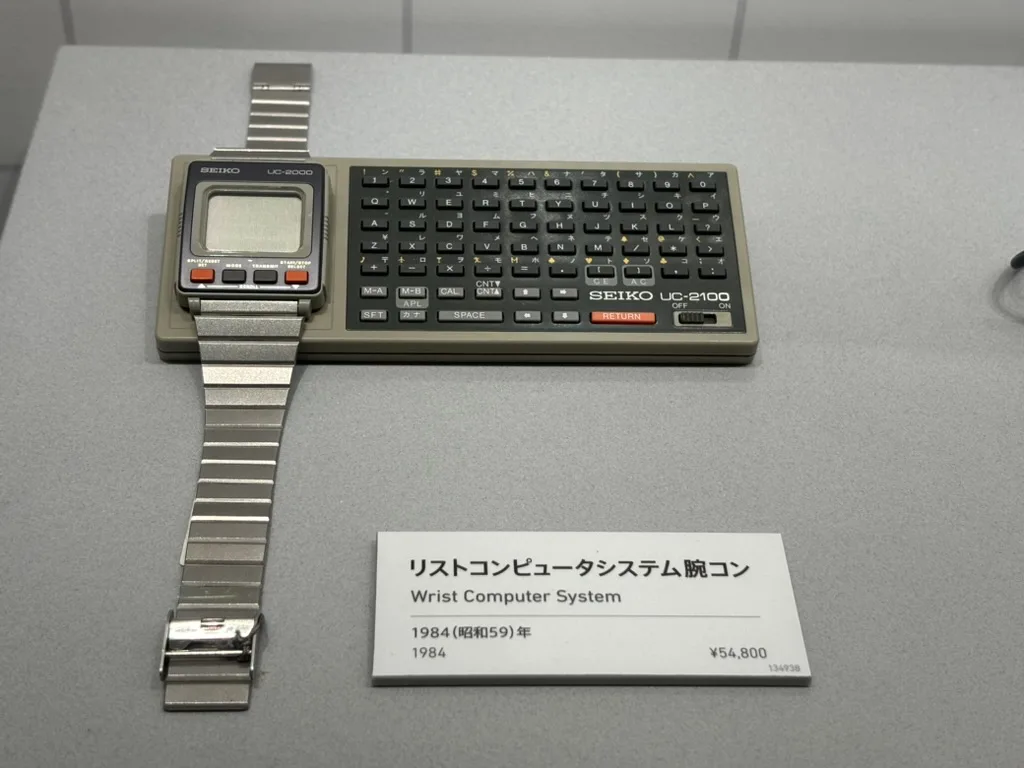
I am not particularly interested in shopping. As a watch enthusiast, what interested me most in Ginza was the Seiko building and the Seiko Museum.
 |
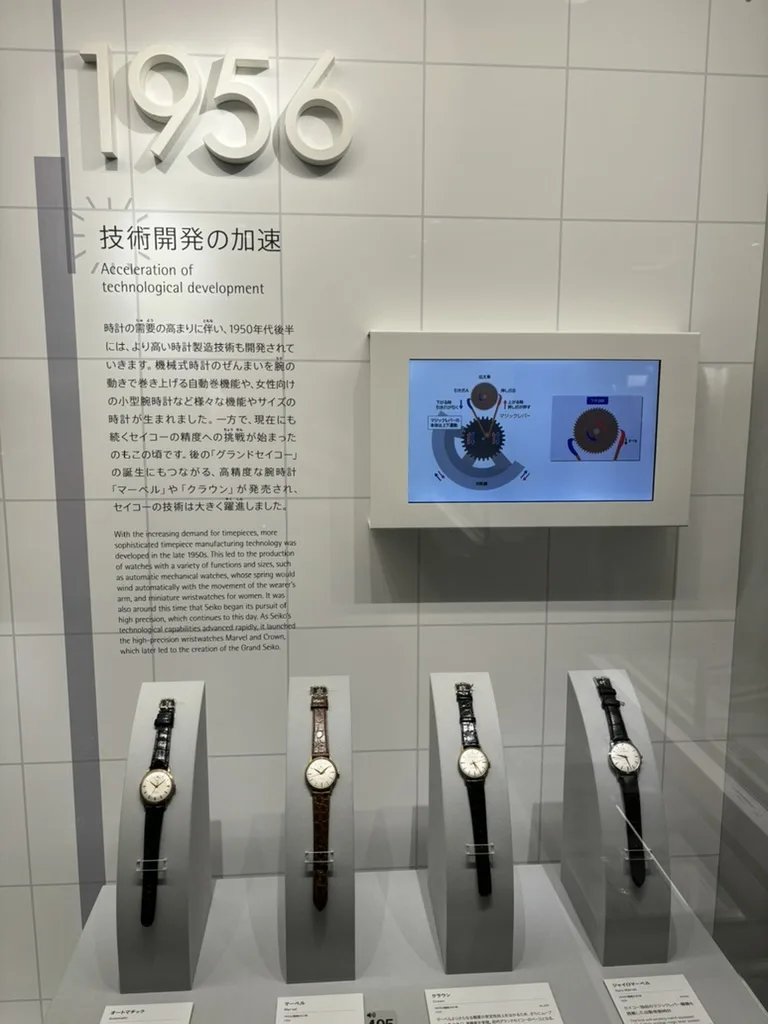 |
Admission to the Seiko Museum is free, although a reservation is recommended. It can be made easily online, even on the same day.
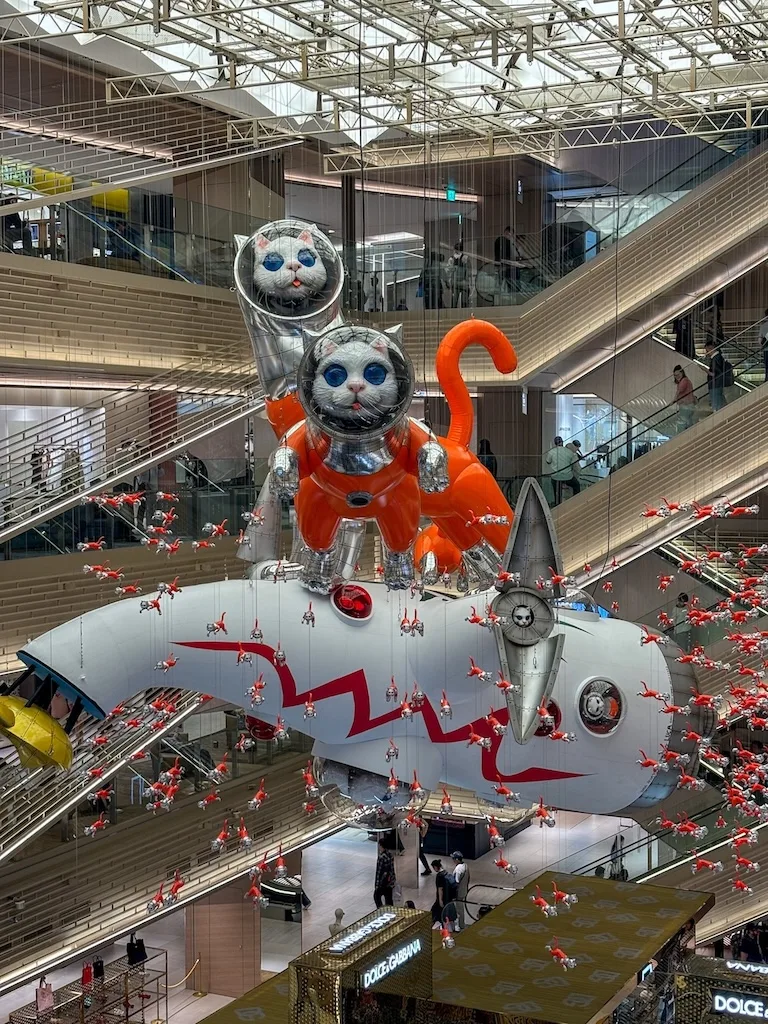
Ginza contains many shops and department stores belonging to well-known brands. Some department stores stand out for their interiors.
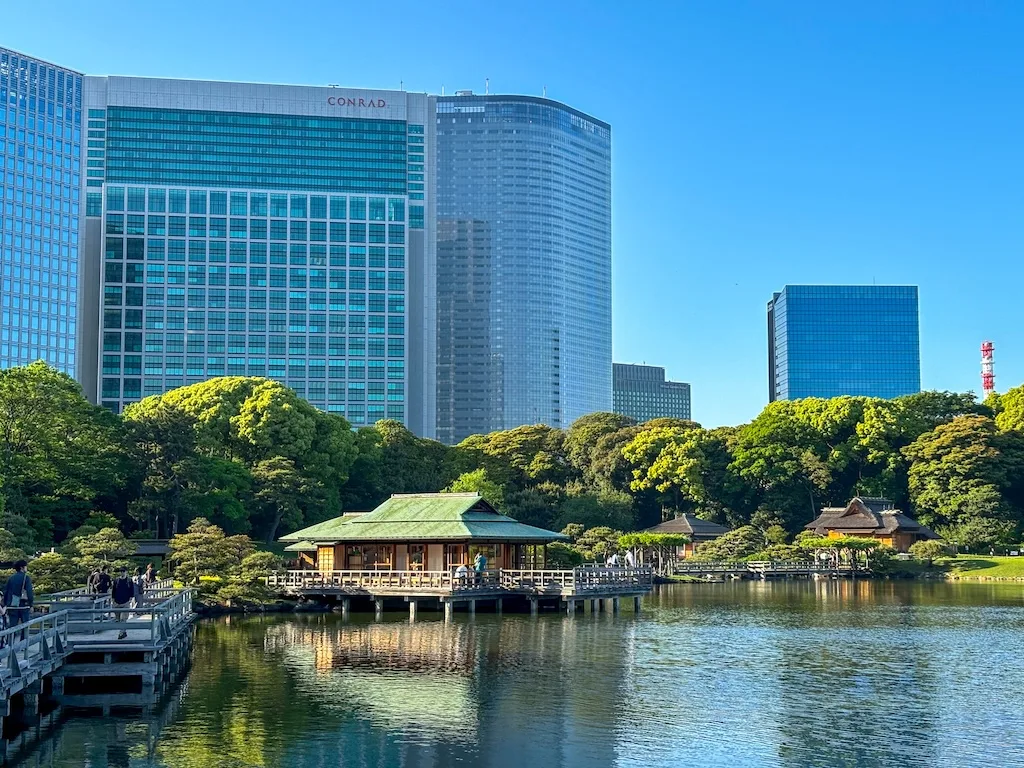
Close to Ginza, literally among the skyscrapers, is Hamarikyu Garden, with a teahouse directly on its pond.
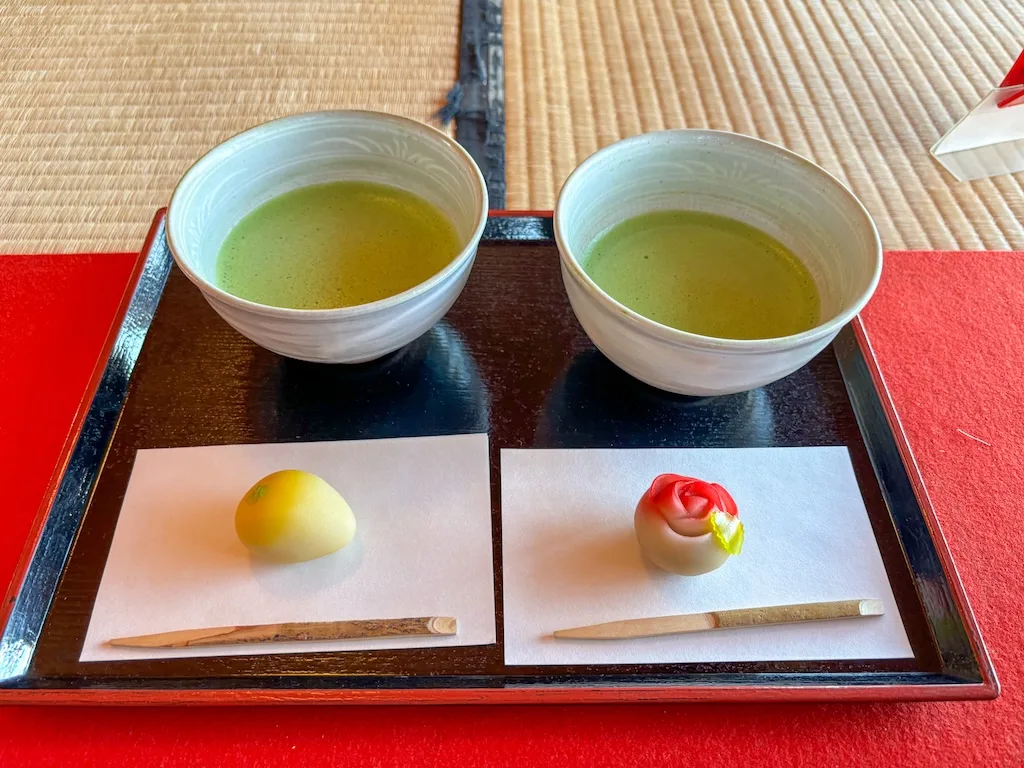
It is an ideal stop for matcha and a sweet.
Odaiba
Odaiba is an artificial island in Tokyo Bay that serves as a kind of technology and entertainment centre.
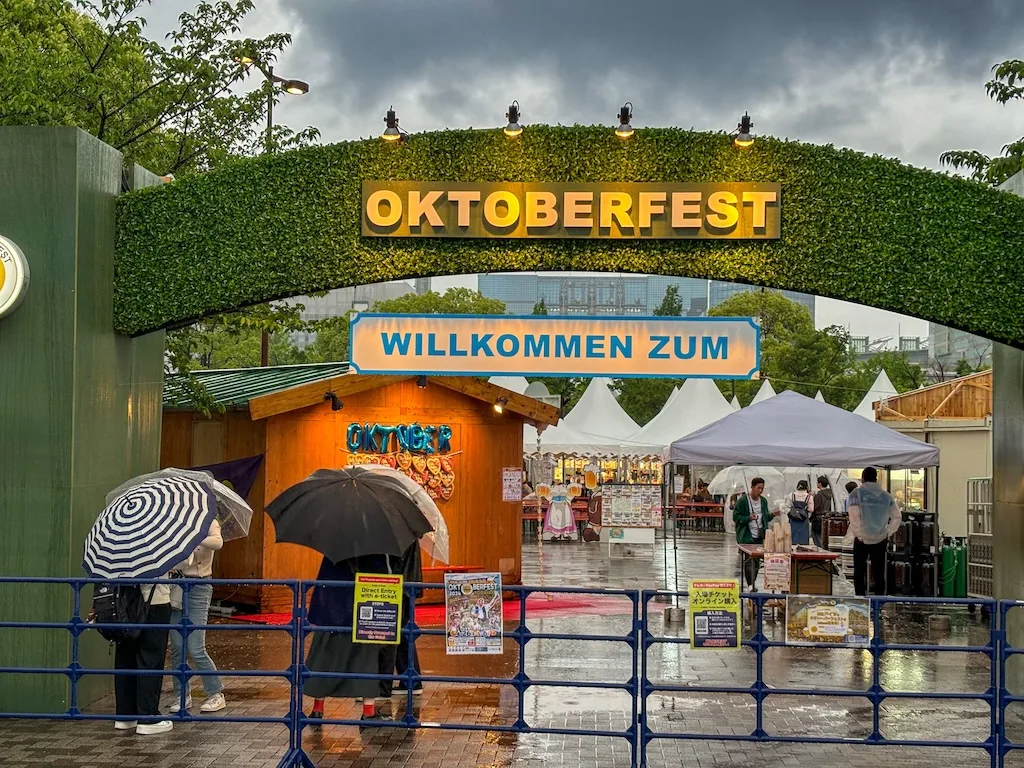
I encountered an Oktoberfest there in April. Perhaps the Japanese organisers had not entirely realised that “Oktober” in Oktoberfest has a meaning and refers to 10月.
The fully automated, single-track Tokyo Monorail takes you there from Shinbashi.
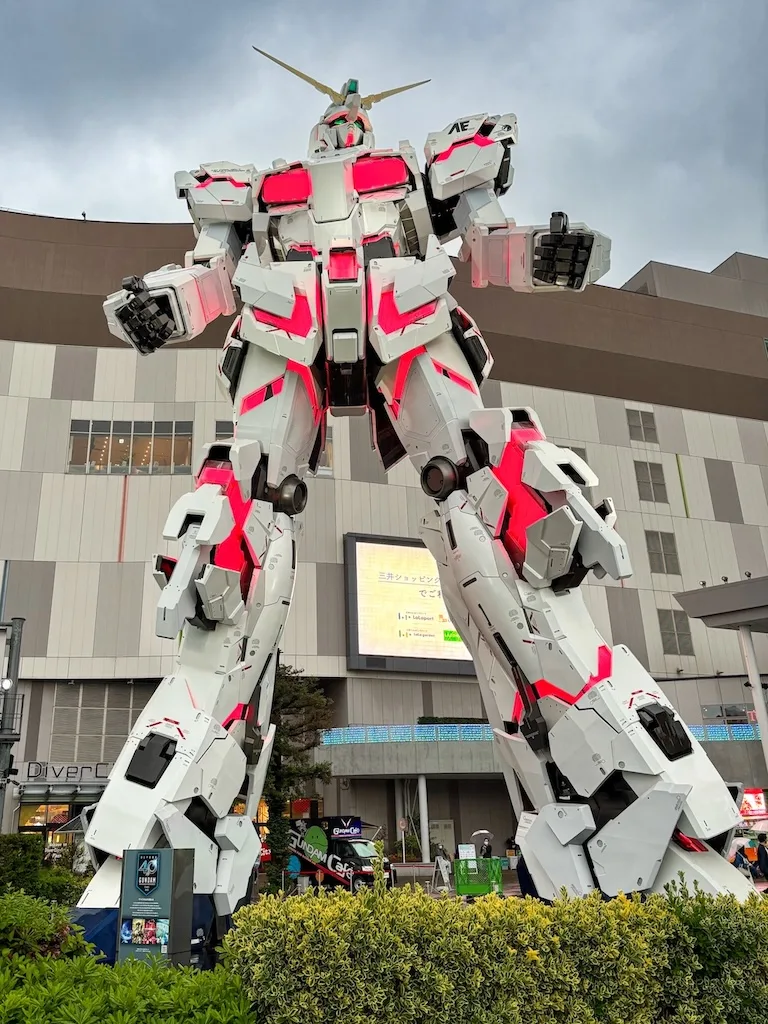
Anime fans will find a life-size Gundam statue more than 12 metres tall, as well as The Gundam Base Tokyo shop.
teamLab Planets
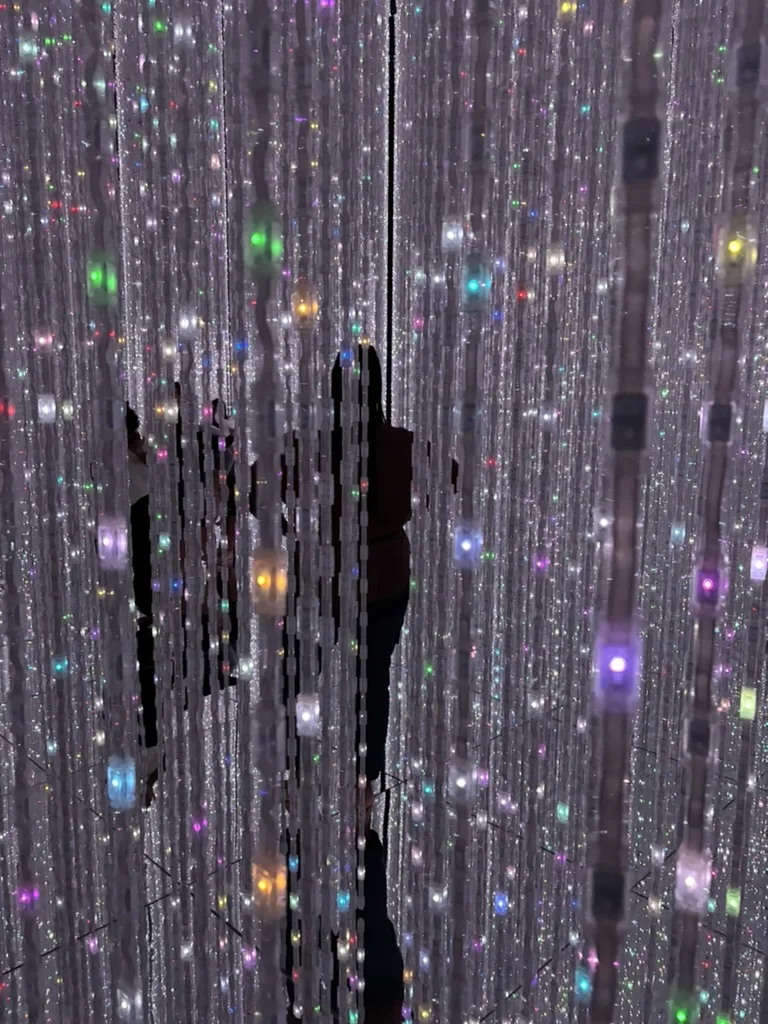
Odaiba is also home to the interactive digital art museum teamLab Planets, which is definitely worth visiting.
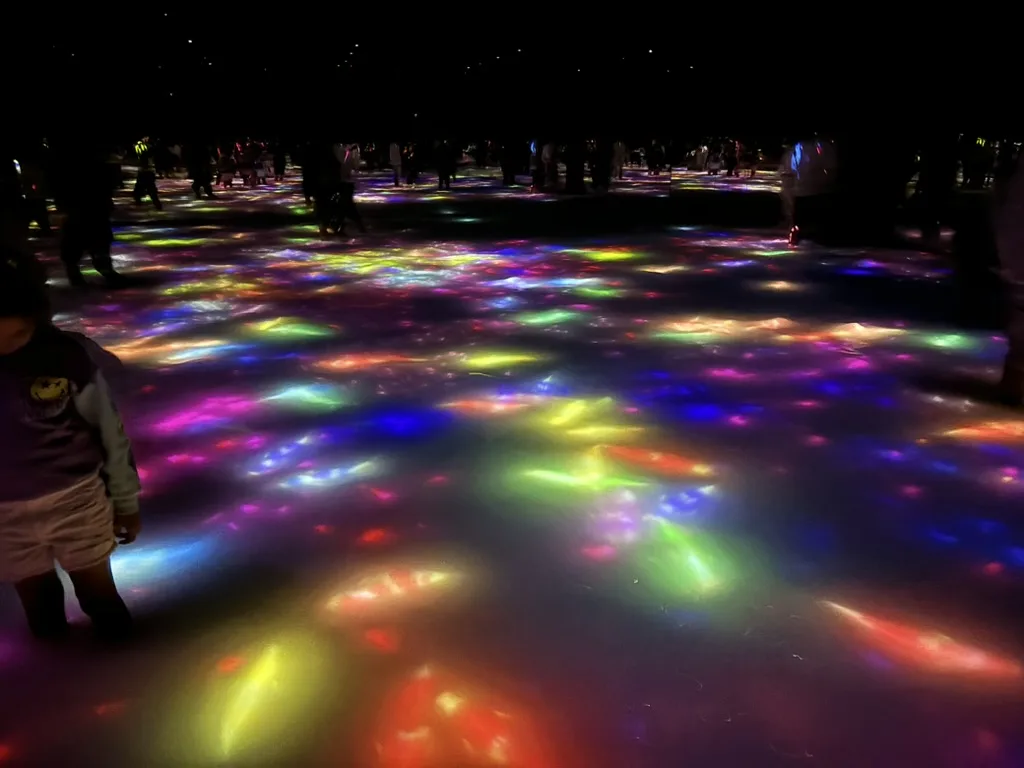
The museum has two sections. In the first, you wade through water and move among interactive installations that assault your senses.
Clothing that can be rolled above your knees is recommended because the water reaches that high in places. Alternatively, shorts can be borrowed from the changing room.
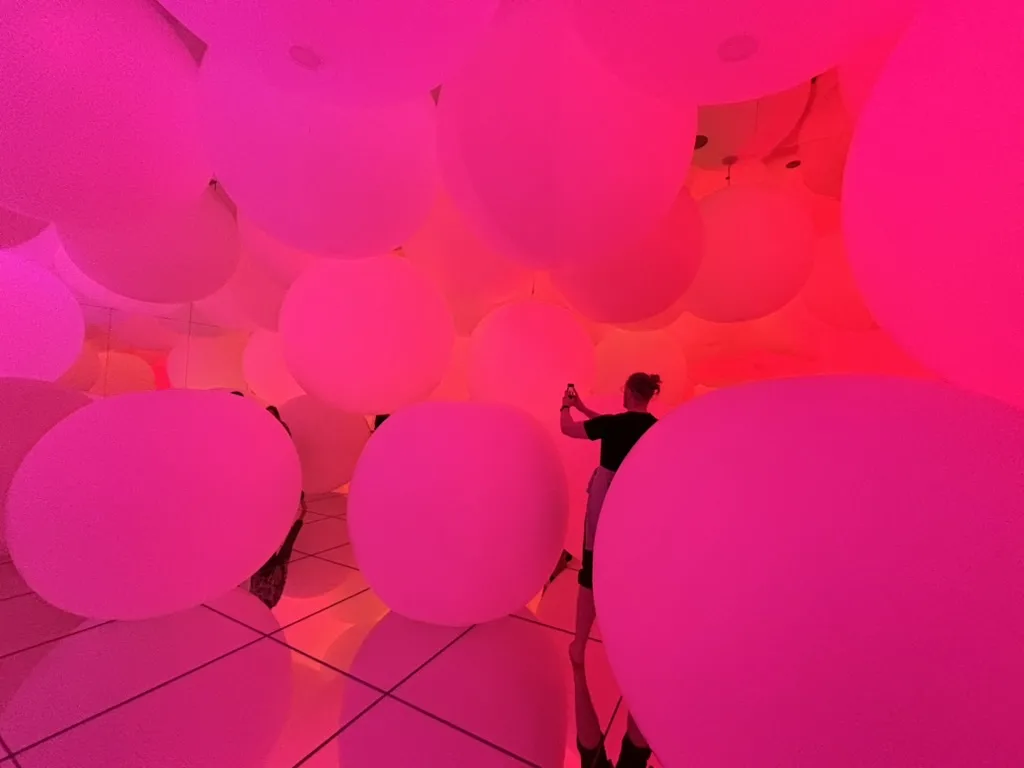
The second section focuses on flowers and aims to make you feel part of them in a room filled with moving live flowers and mirrors.
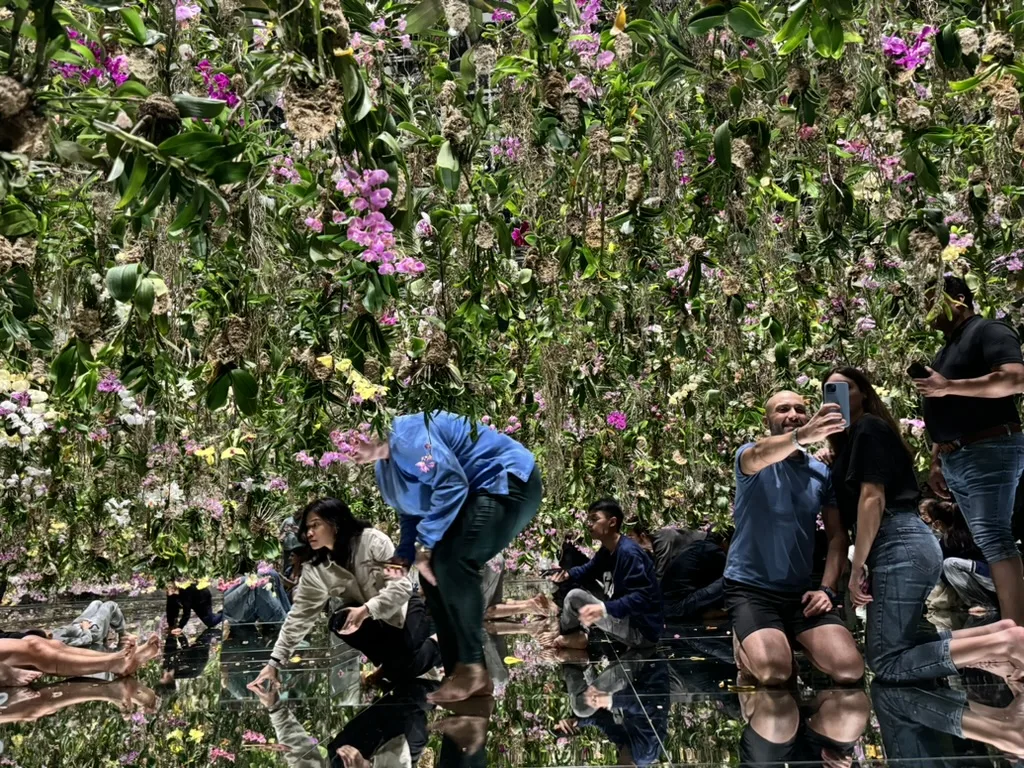
You need to reserve and buy tickets online before visiting.
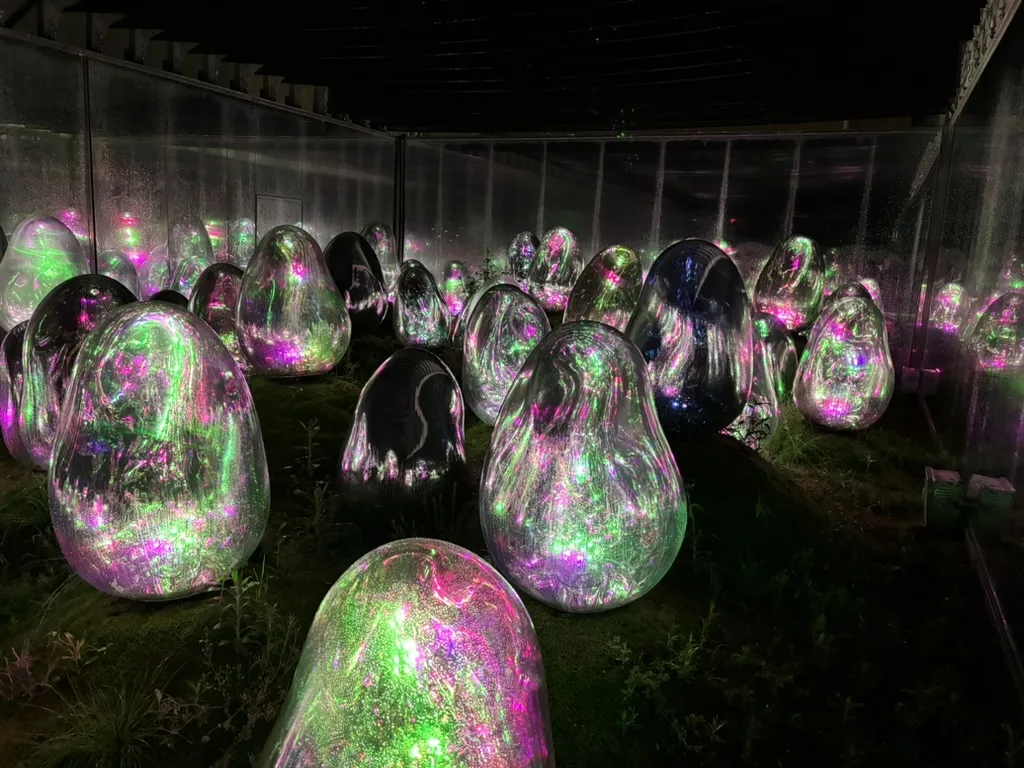
Tokyo is not the only city with a teamLab attraction. There is also teamLab Botanical Garden Osaka, although I did not have time to visit it during my stay in Osaka.
Kamakura
You can reach Kamakura from Tokyo in about an hour by direct train—for example, from Shinbashi. You can simply pay for the journey with a Suica card.
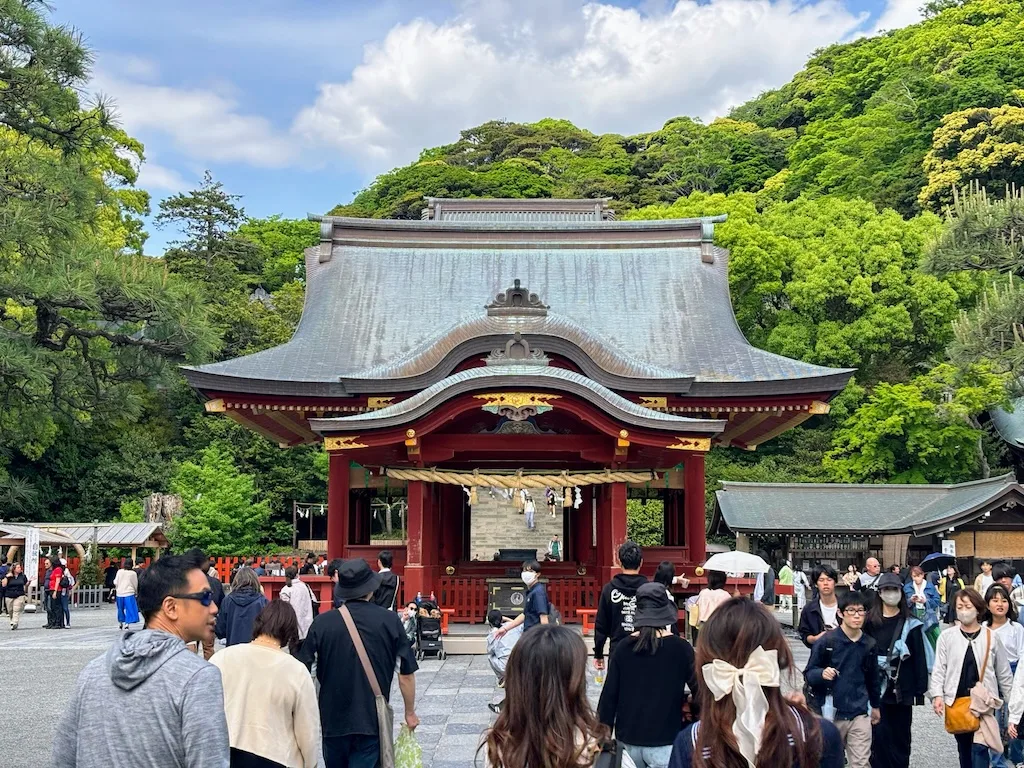
From Kamakura Station, you can follow the other tourists along Komachi-dōri towards Tsurugaoka Hachimangū. It was extremely crowded during Golden Week.
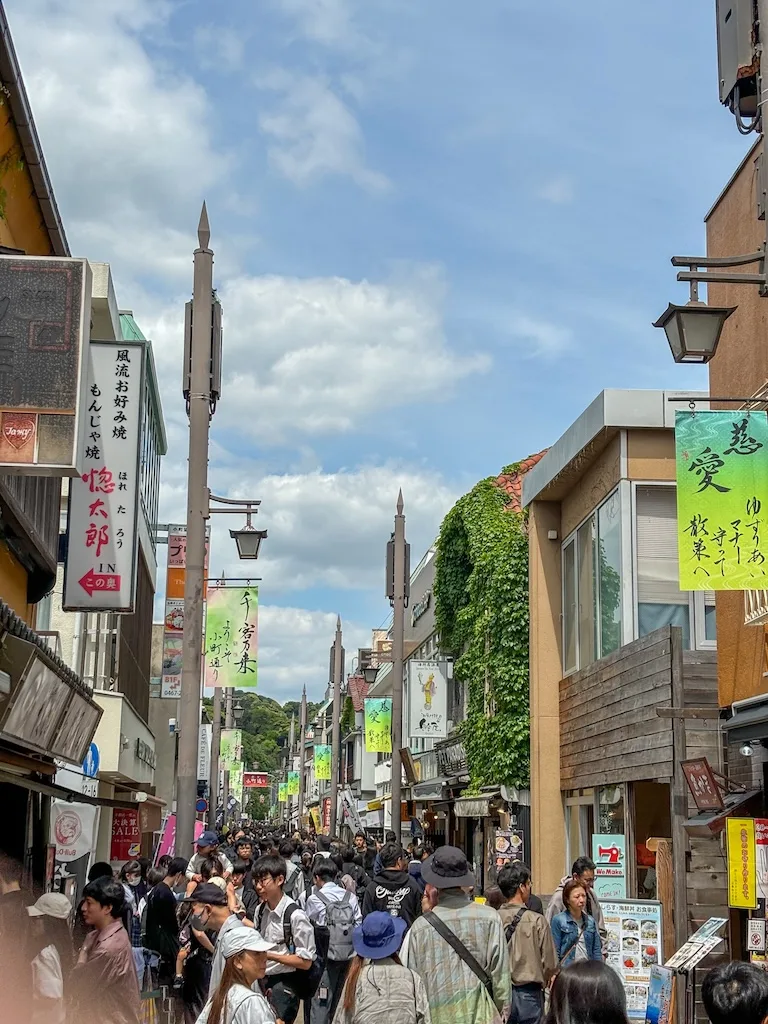
Komachi-dōri contains many shops and food stalls. To avoid the crowds and remain in the shade, you can use the parallel side street, which is much quieter.
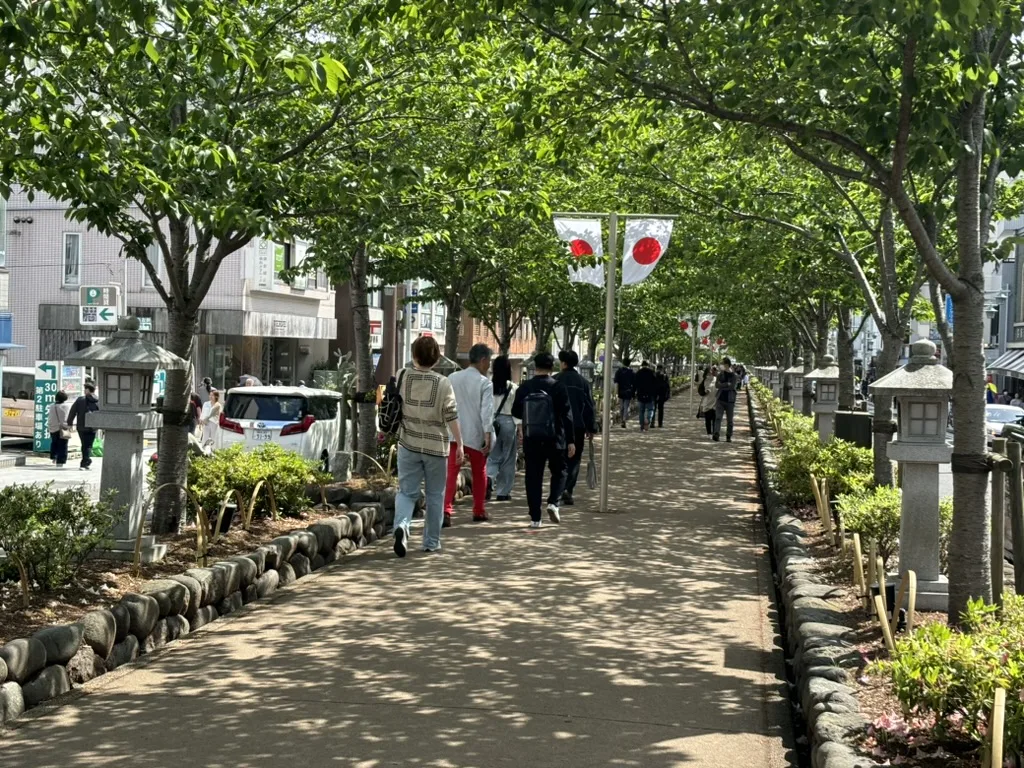
Komachi-dōri continues into the Tsurugaoka Hachimangū complex, which begins with a typical torii gate.
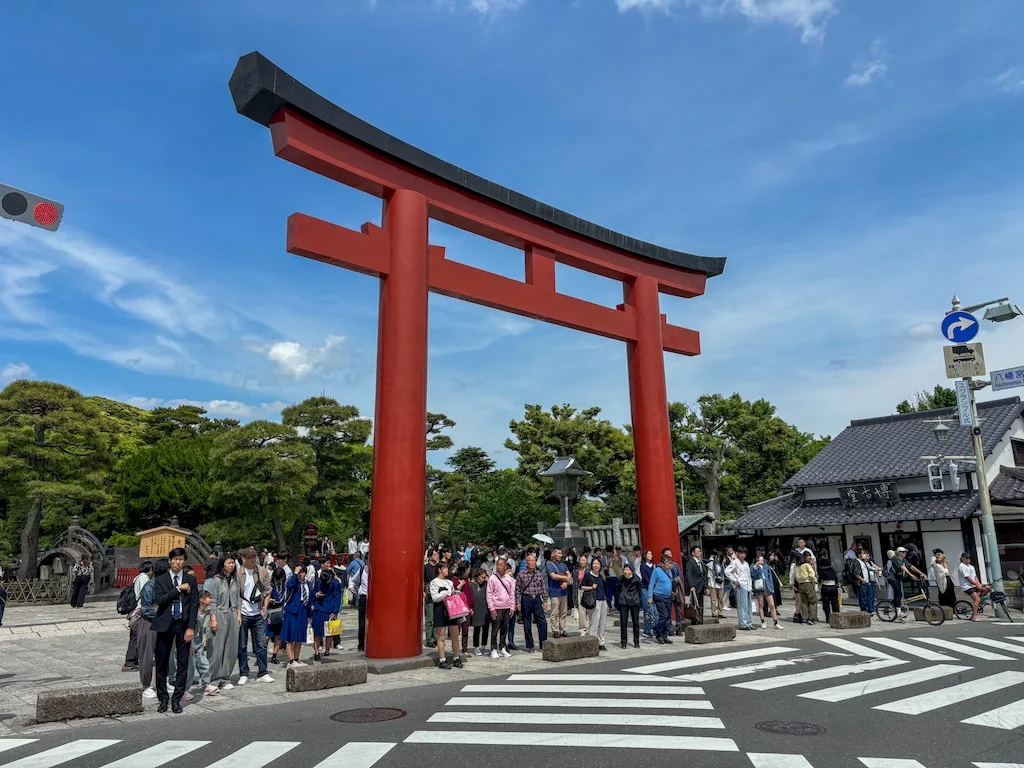
Beyond the gate are ponds with colourful carp and an island containing a smaller shrine.
Kamakura’s greatest attraction is the Daibutsu Buddha statue at Kōtoku-in Temple. The Daibutsu is 11 metres tall, making it slightly smaller than the Buddha in Nara.
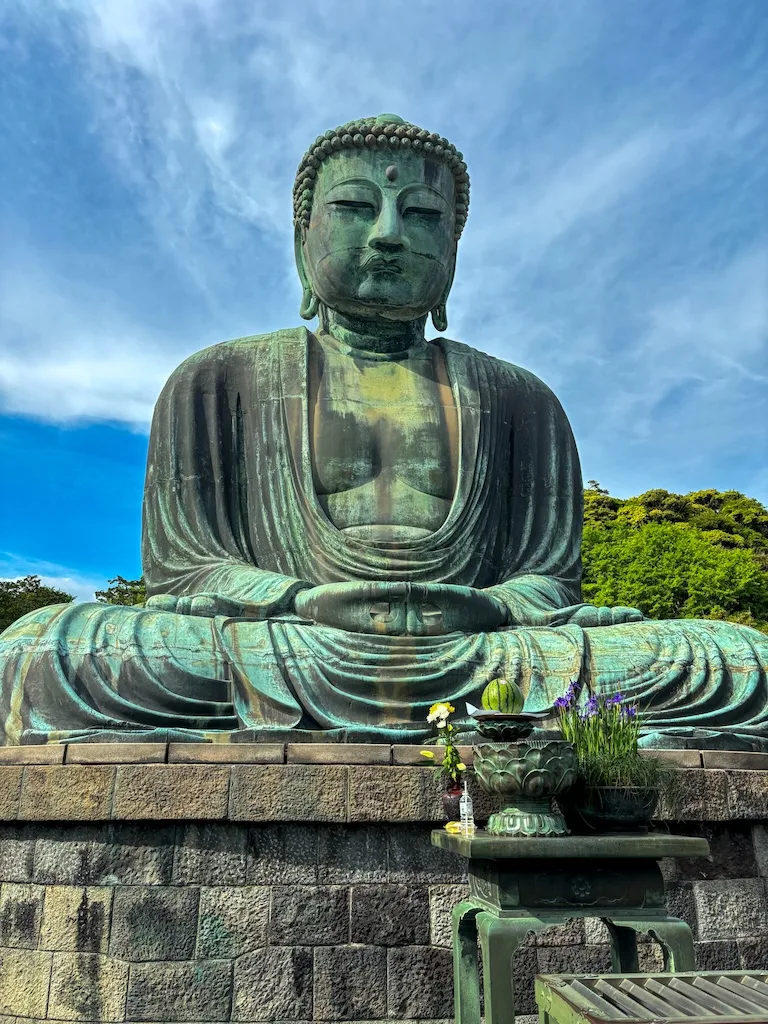
In my view, Kamakura’s Daibutsu feels much more impressive than the Buddha in Nara because it stands outside and can be seen in its entirety.
Update: I visited Tokyo again a year later, and the second visit was completely different.