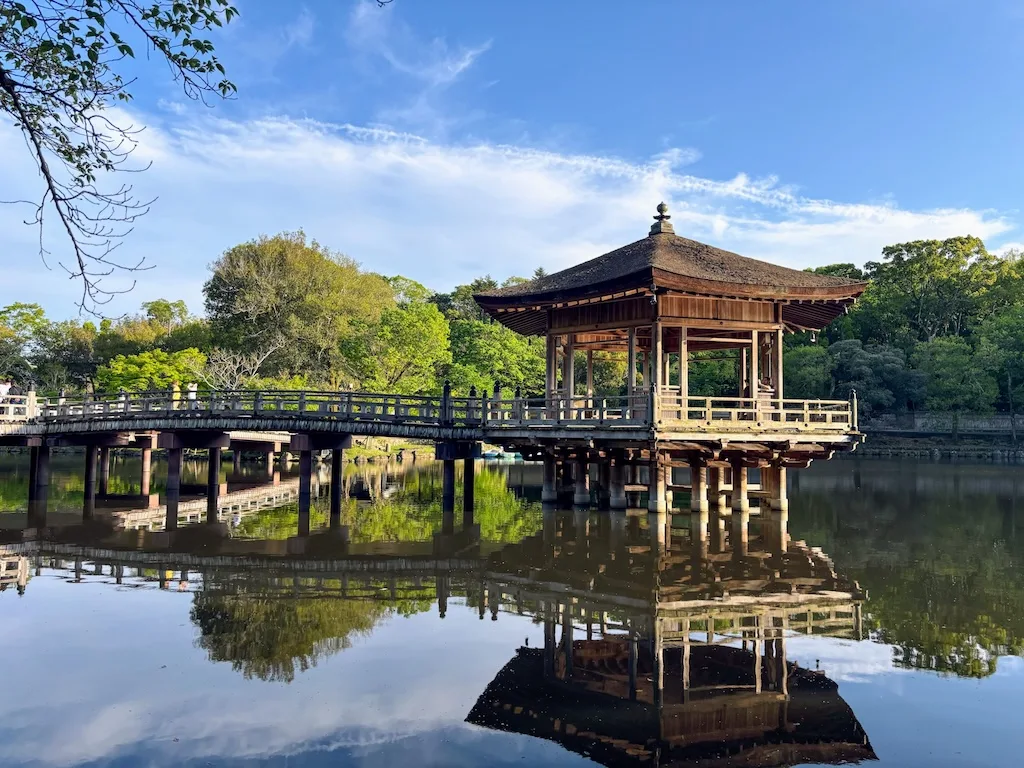
Travelling through Japan: Nara 🇯🇵
I had originally planned to visit Nara from Osaka. It is closer and would have left more time for exploring Kyoto, but my late arrival in Japan forced me to change my plans and visit Nara from Kyoto instead.
Nara is one of Japan’s ancient capitals, filled with greenery and temples, but it is best known for the sacred deer that roam freely through the city.
Getting from Kyoto to Nara
Several trains operated by Japan Railways and Kintetsu connect Kyoto and Nara.
The fastest is the Kintetsu Limited Express, which reaches Nara from Kyoto in around half an hour.
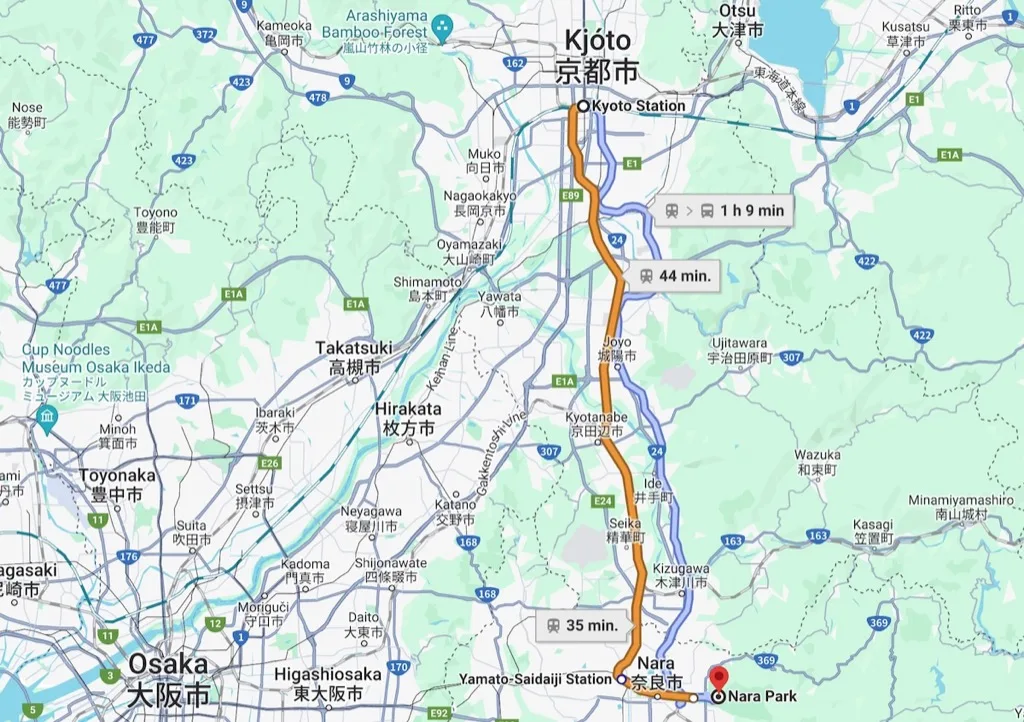
A Suica card alone is not enough for this train. You need to buy separate tickets for specific seats from a machine or ticket counter. They can be purchased several days in advance, including for the return journey.
Once in Nara, walking is sufficient because all the interesting places are relatively close together. Buses are available too.
Nara Park
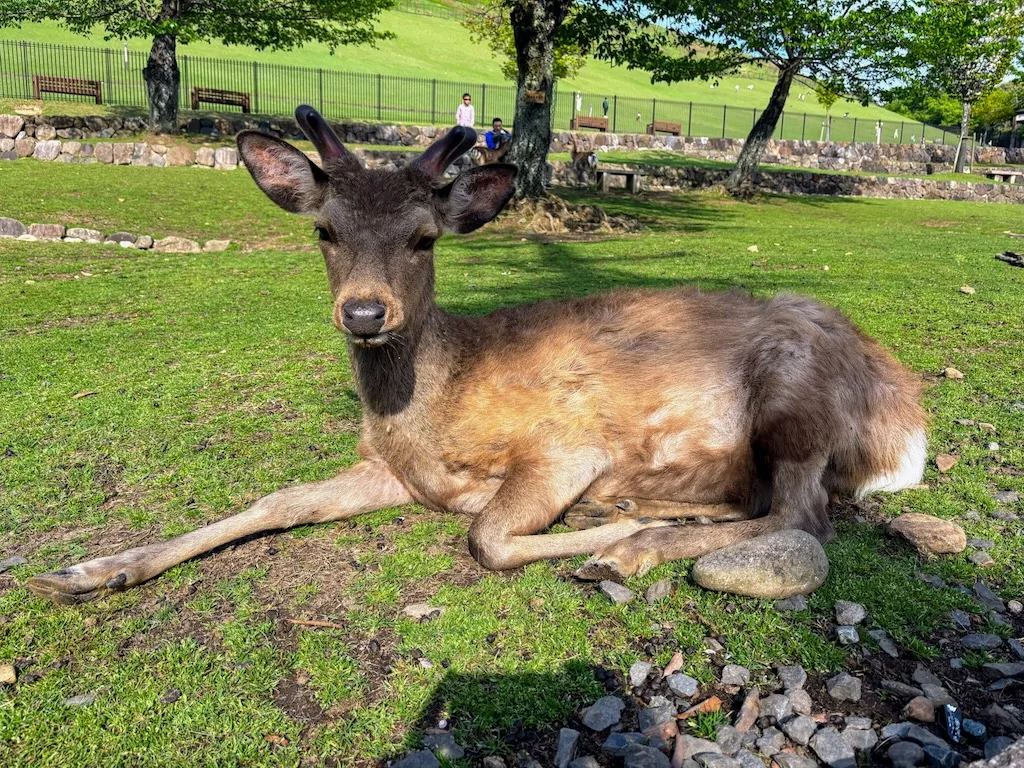
For most visitors, Nara’s greatest attraction is Nara Park and its free-roaming sacred deer.
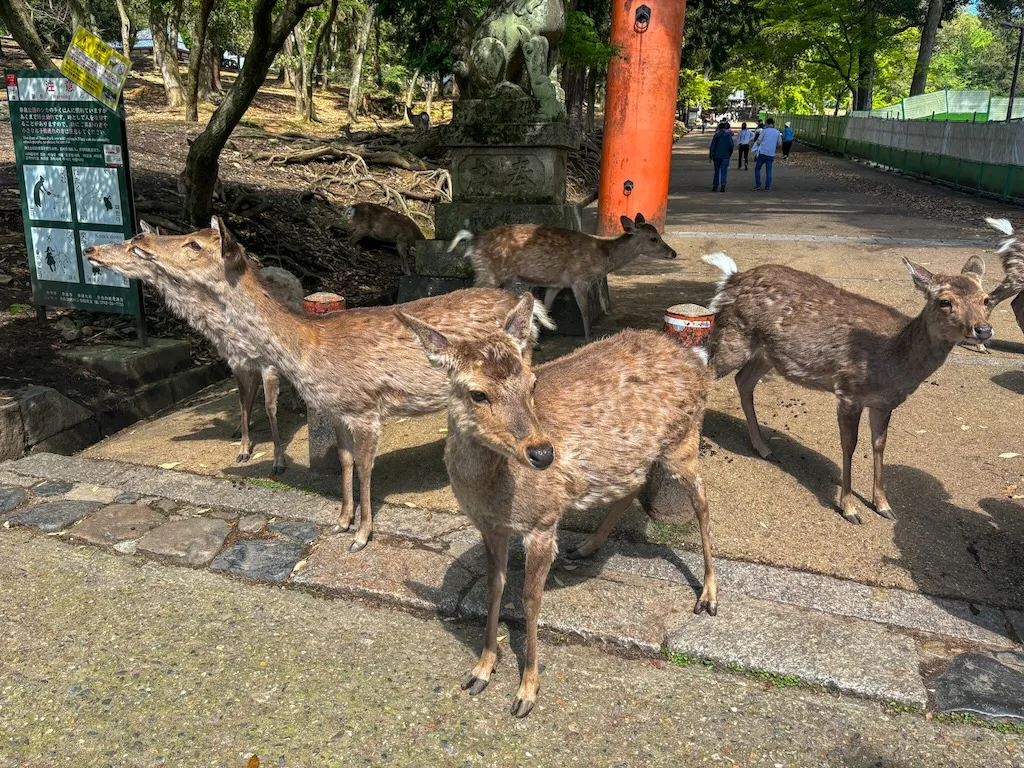
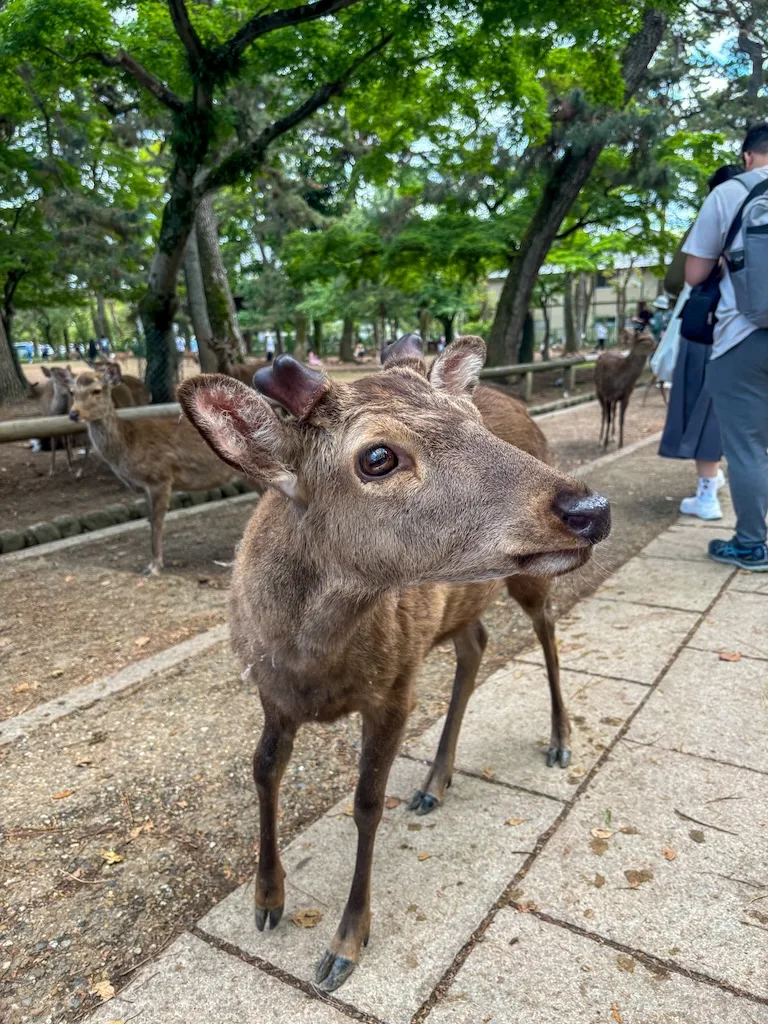
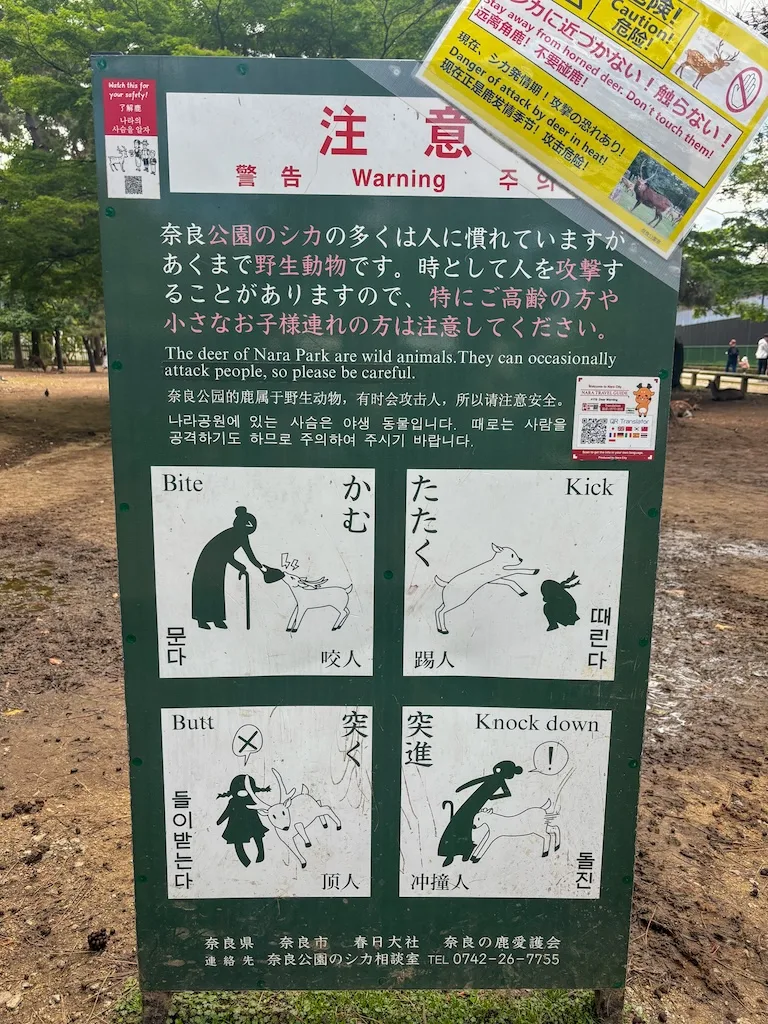
The deer are accustomed to people and actively ask them for food. They can even bow their heads to receive it.
 |
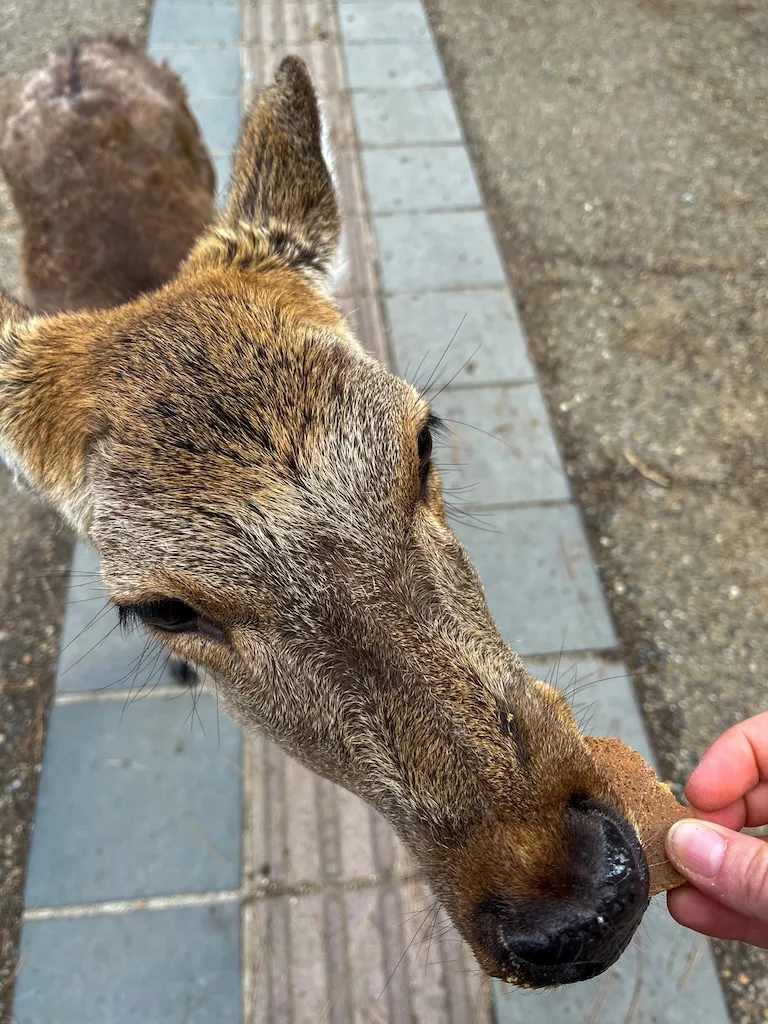 |
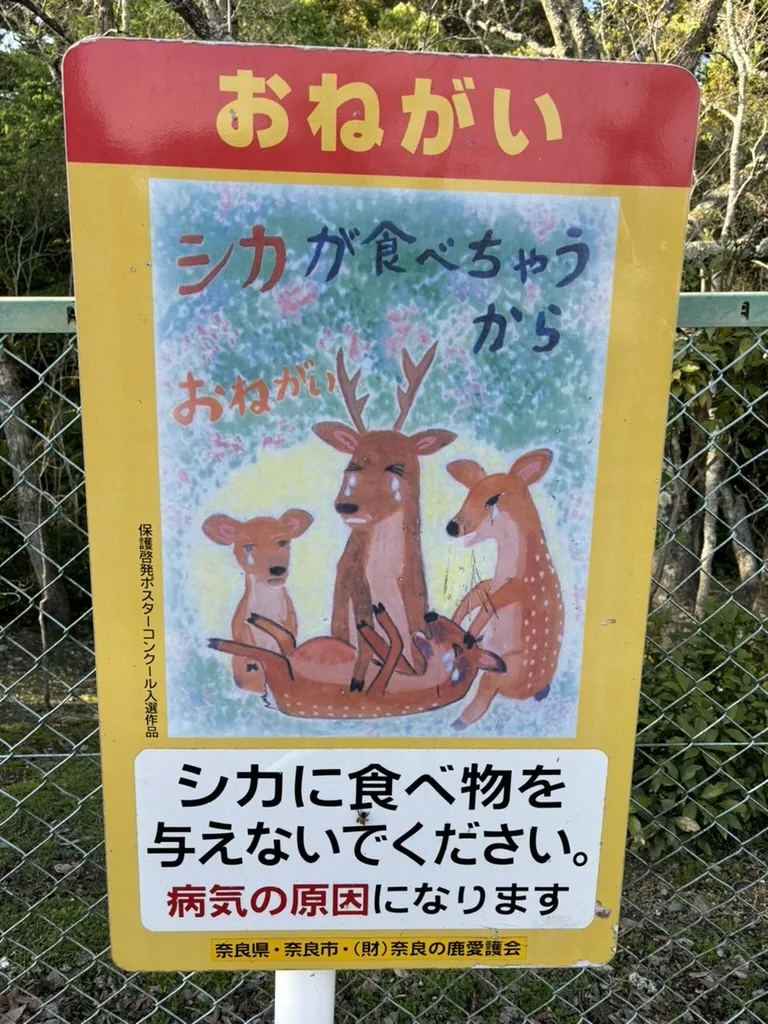
You should not feed the deer just any food. Give them the special deer crackers sold on almost every corner for ¥200 per pack of ten.
 |
 |
If you like animals, feeding Nara’s deer is a very enjoyable experience. I loved interacting with them.
Isui-en and Yoshikien gardens
On the way from Nara Park to Tōdai-ji Temple, you can stop at the Isui-en and Yoshikien gardens, both of which are well worth visiting.
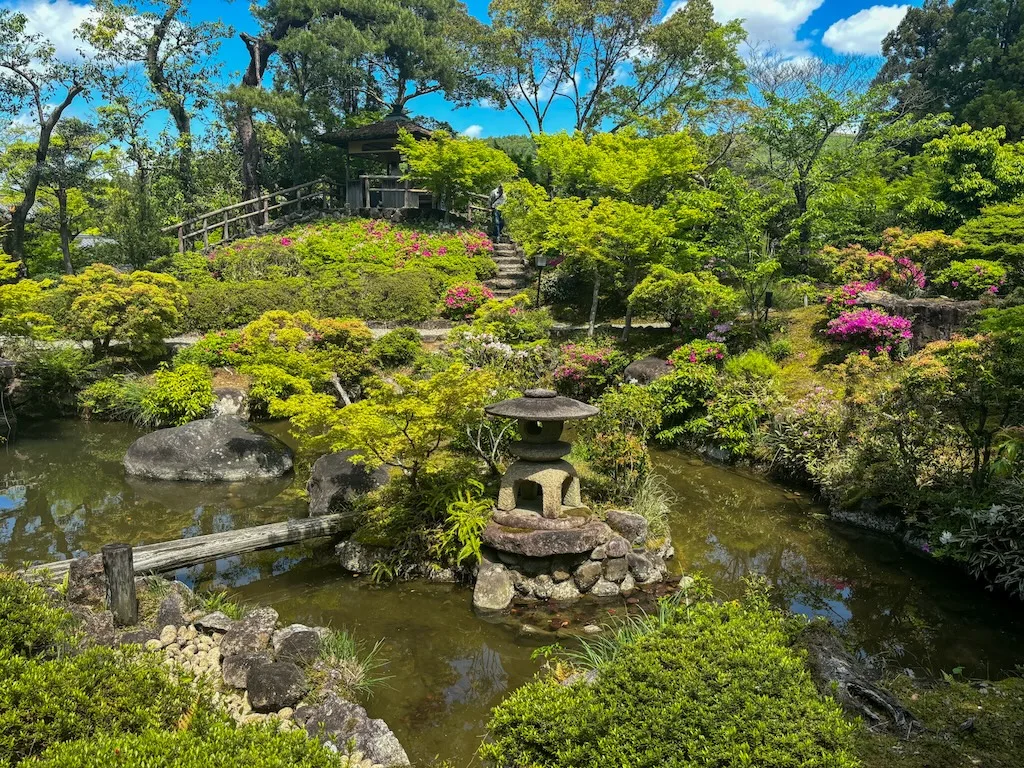
Isui-en also contains a museum and charges a small admission fee.
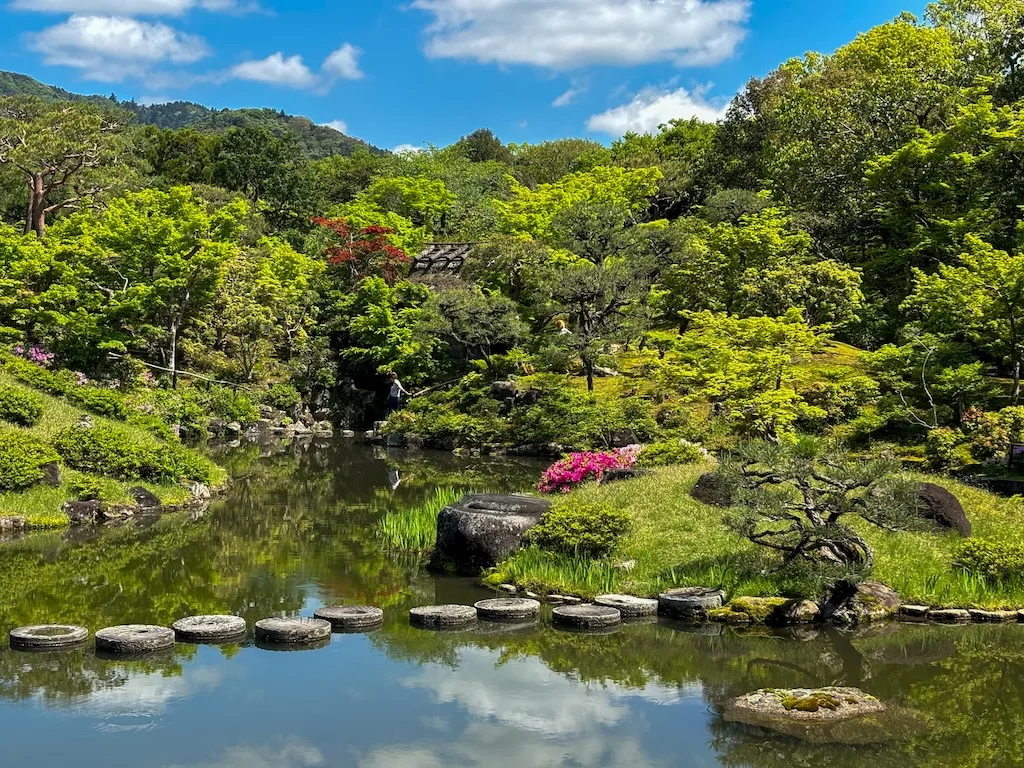
Yoshikien is larger and completely free to enter.
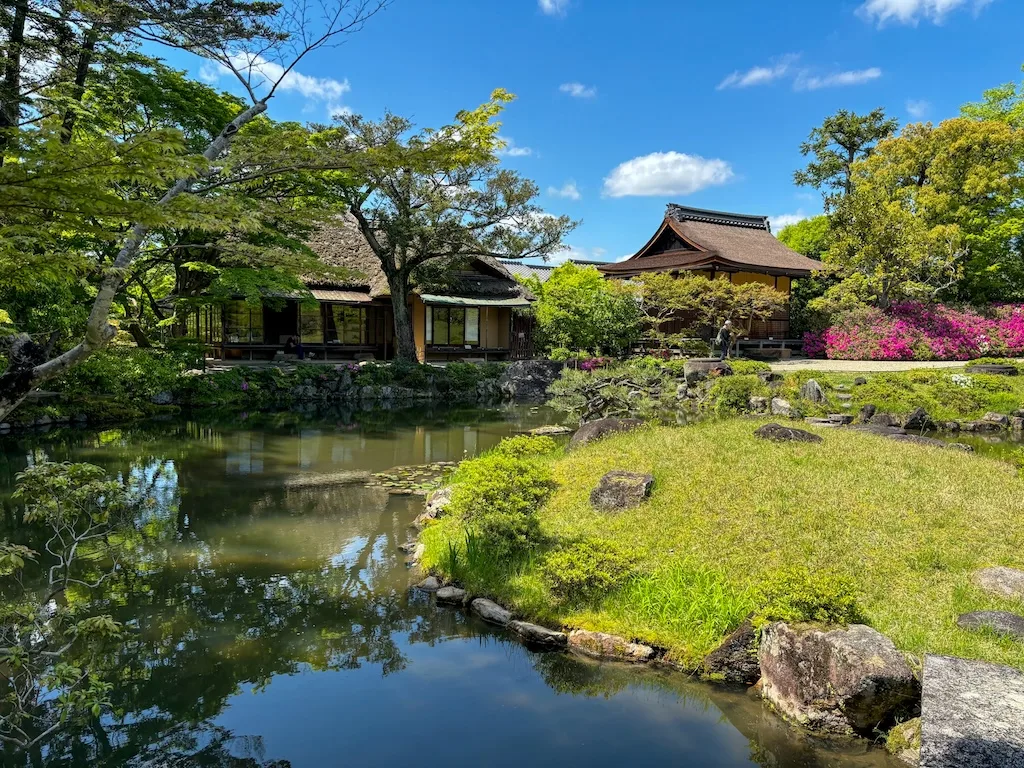
Both gardens create a sense of calm and offer a place to rest away from the other tourists.
Tōdai-ji Temple
Tōdai-ji is a 1,300-year-old Buddhist temple and Nara’s second most visited attraction after Nara Park.
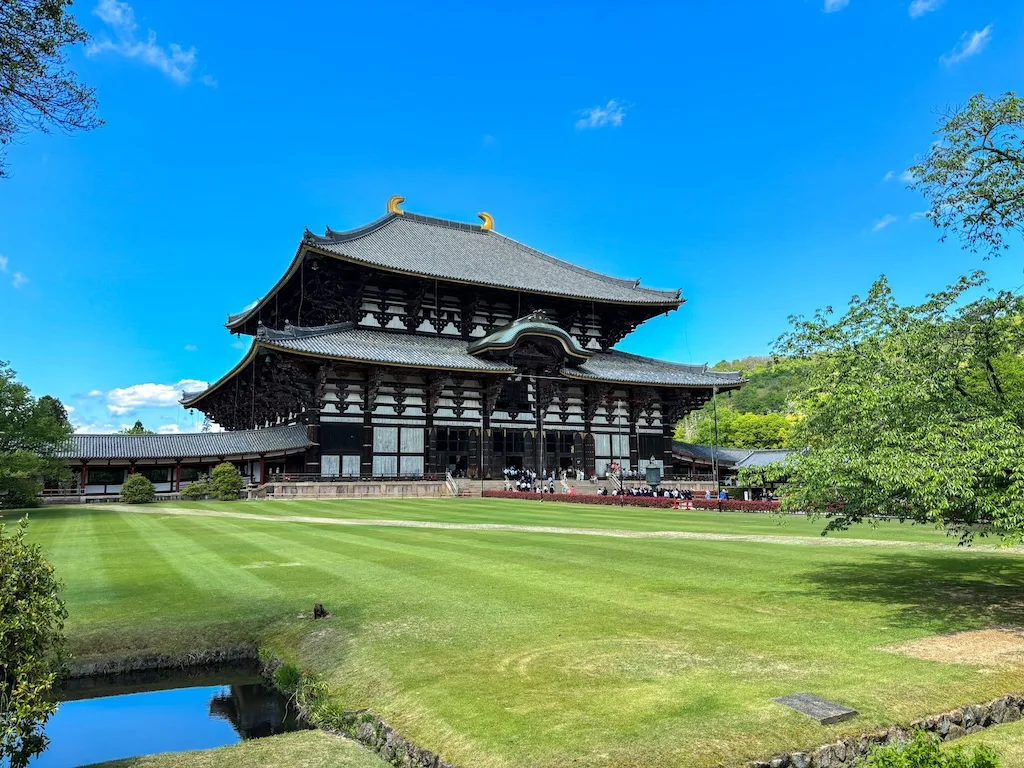
Like Kyoto, Nara is a common destination for school trips, so you will often encounter large groups of children.
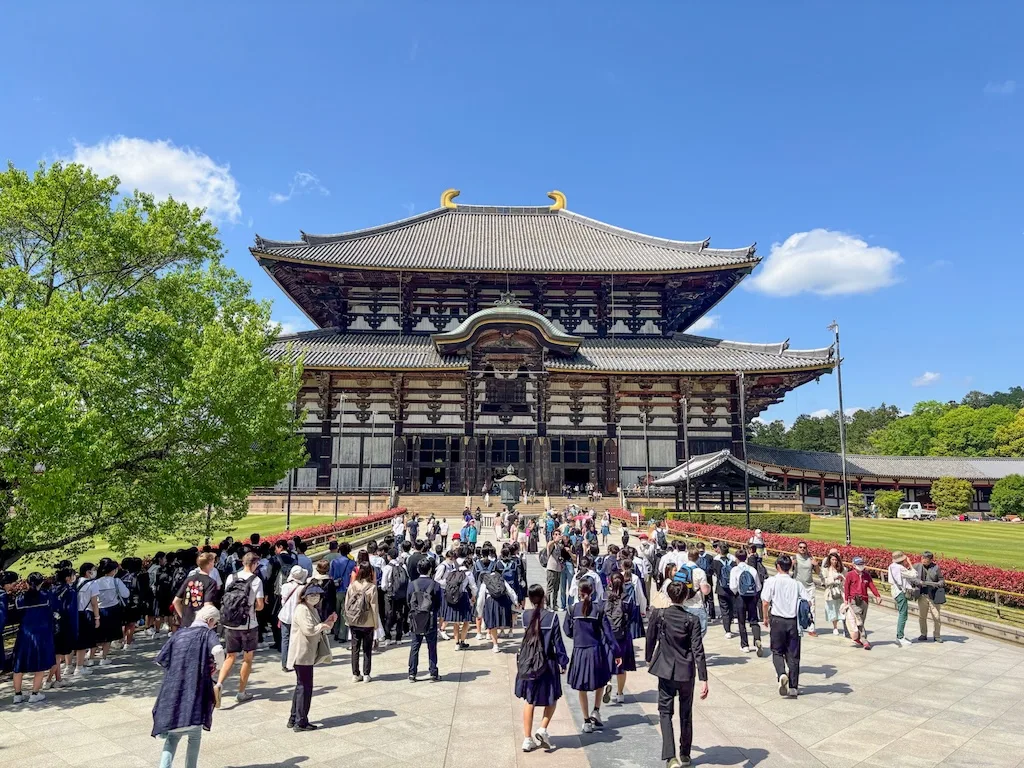
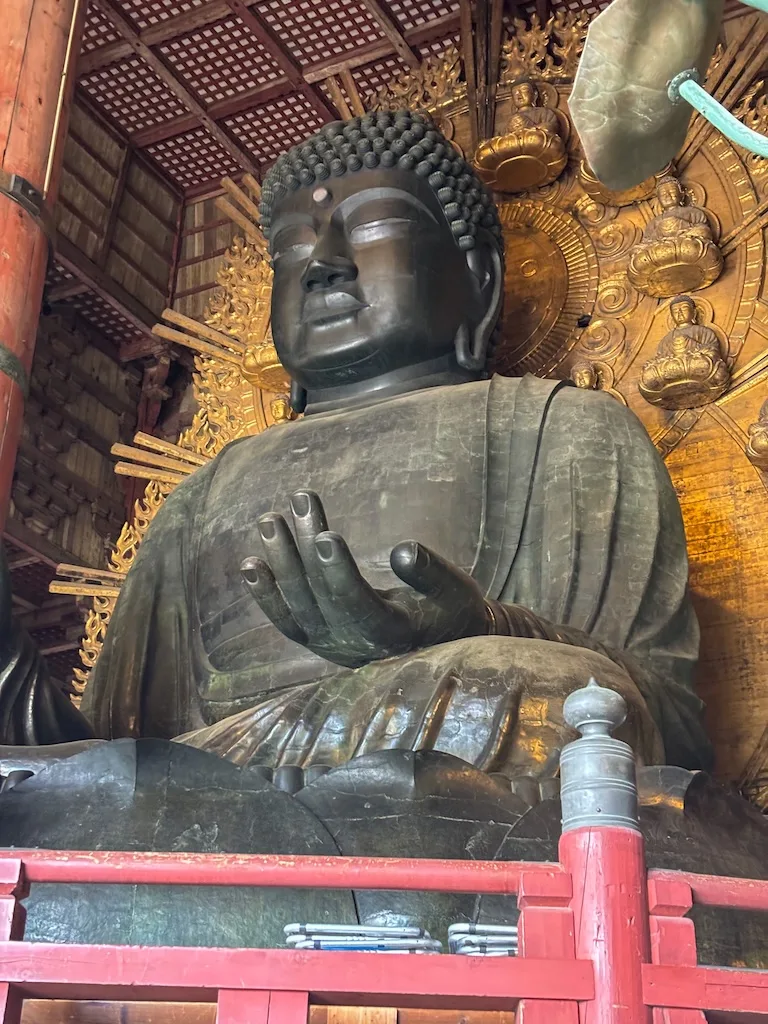
Inside the temple is a statue of the Buddha almost 15 metres high. That is a few centimetres taller than the Buddha in Kamakura.
 |
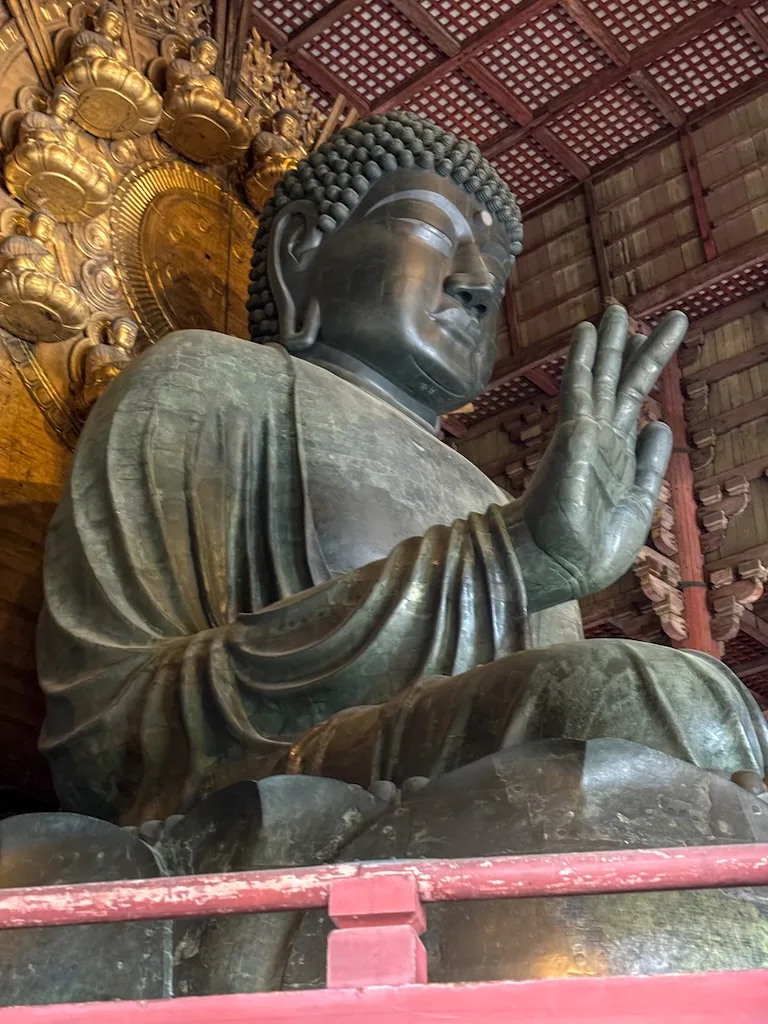 |
Visitors should not photograph the Buddha from the front, although photographs from the sides were allowed.
Tōdai-ji Shōrō
On the way from Tōdai-ji to Nigatsu-dō, you pass the Tōdai-ji Shōrō bell tower.
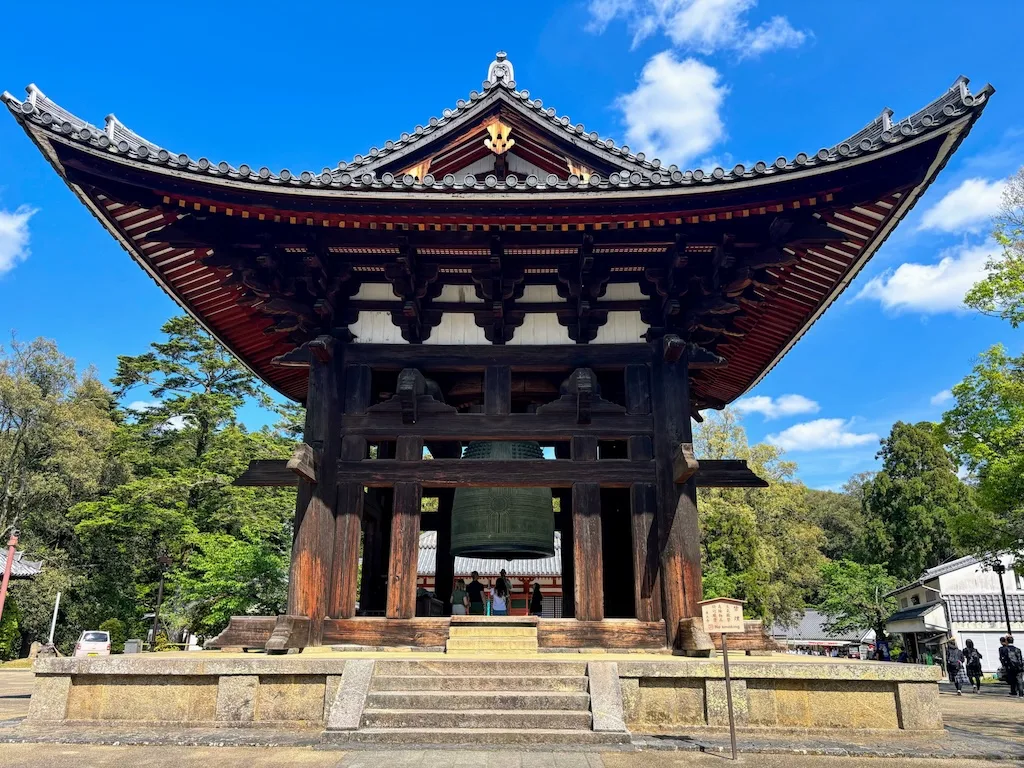
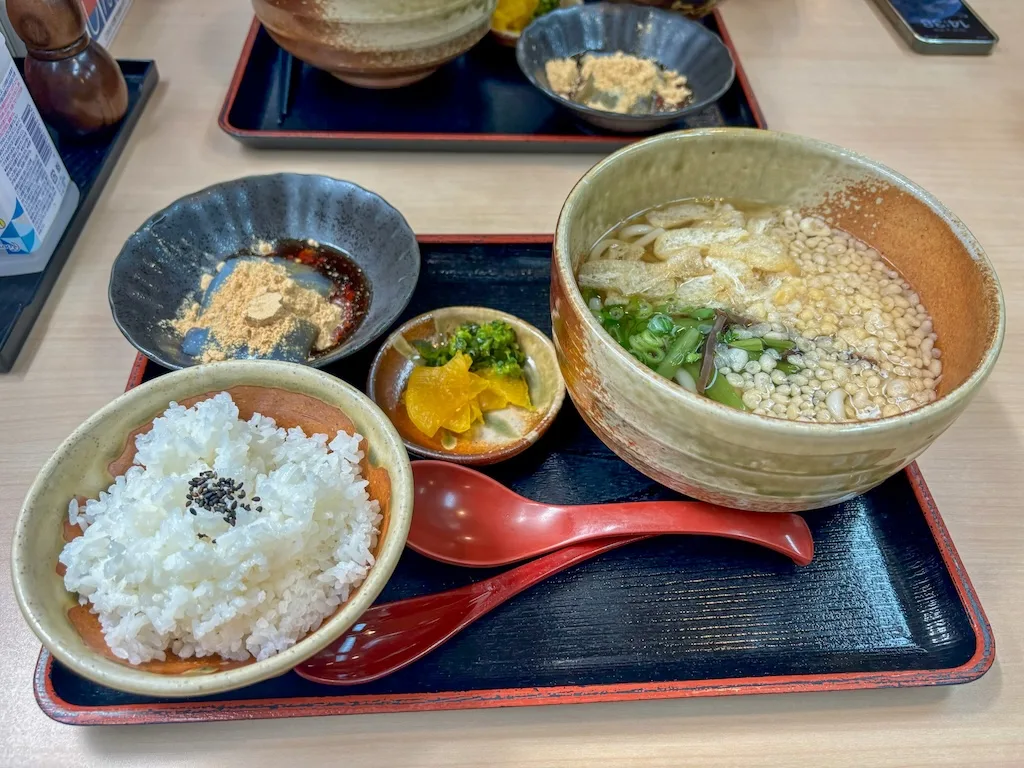
This is a good place to stop for lunch in one of the small restaurants, perhaps for an udon lunch set.
Nigatsu-dō
Nigatsu-dō is a smaller temple belonging to Tōdai-ji but occupying a separate complex of buildings.
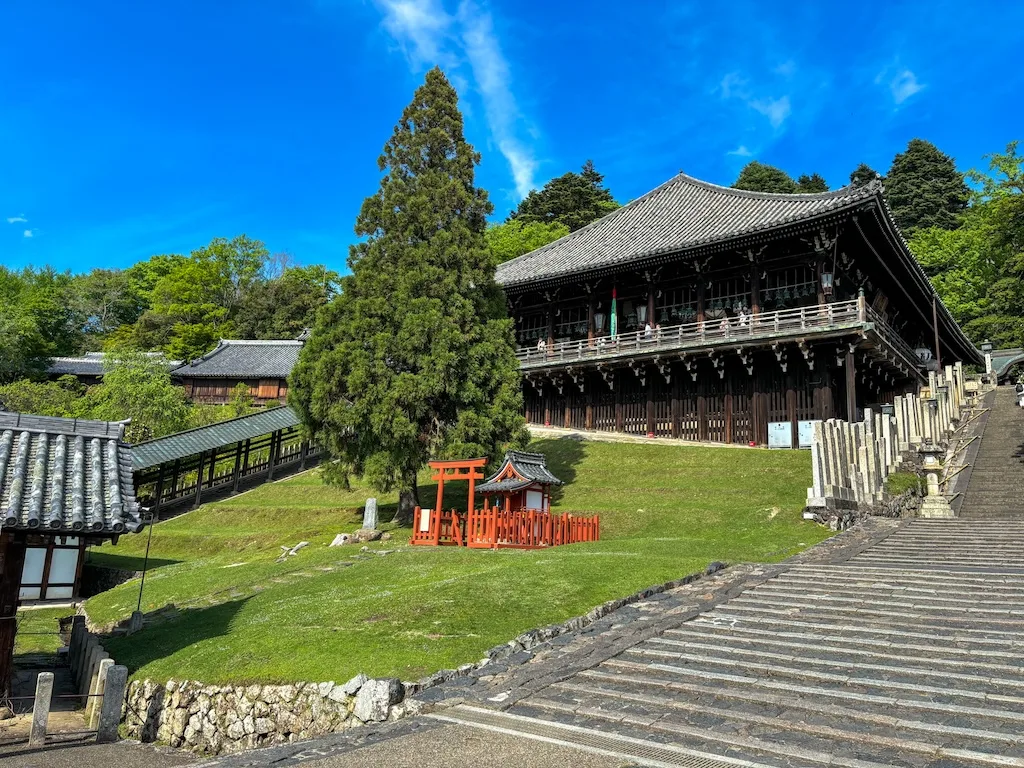
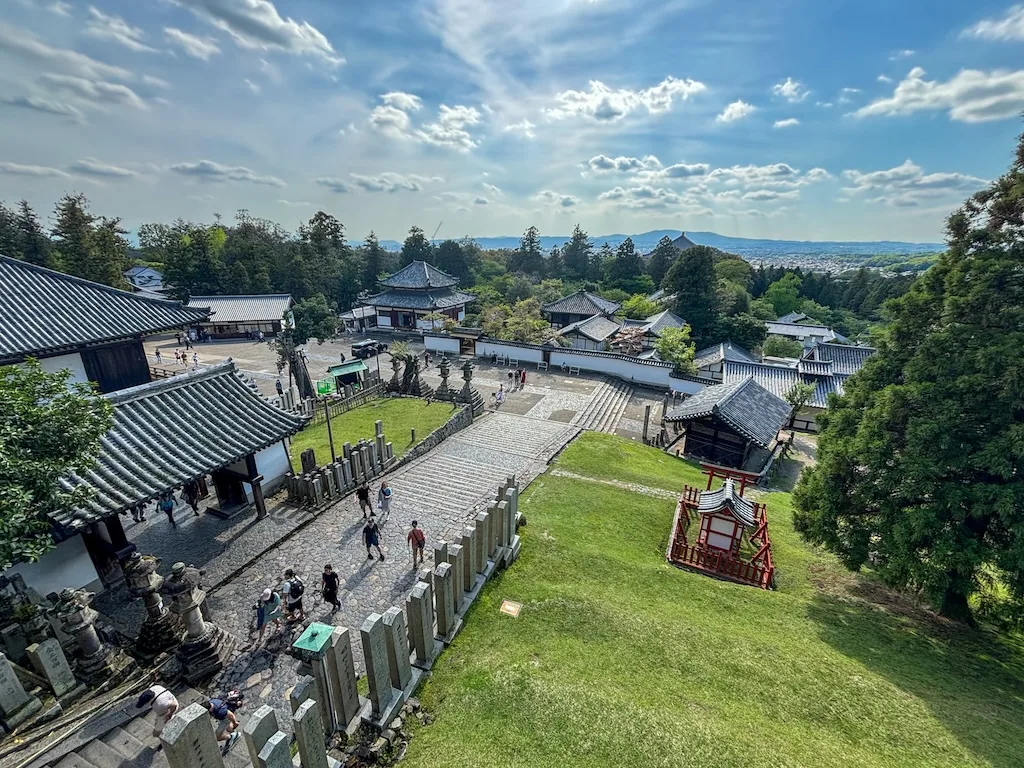
Its terrace offers a very good view over the whole of Nara.
At the rear of the complex is a place where you can rest and help yourself to water or tea, provided that you wash your cup afterwards.
Kasuga Taisha
Kasuga Taisha is Nara’s best-known Shinto shrine and is almost as old as the city itself.
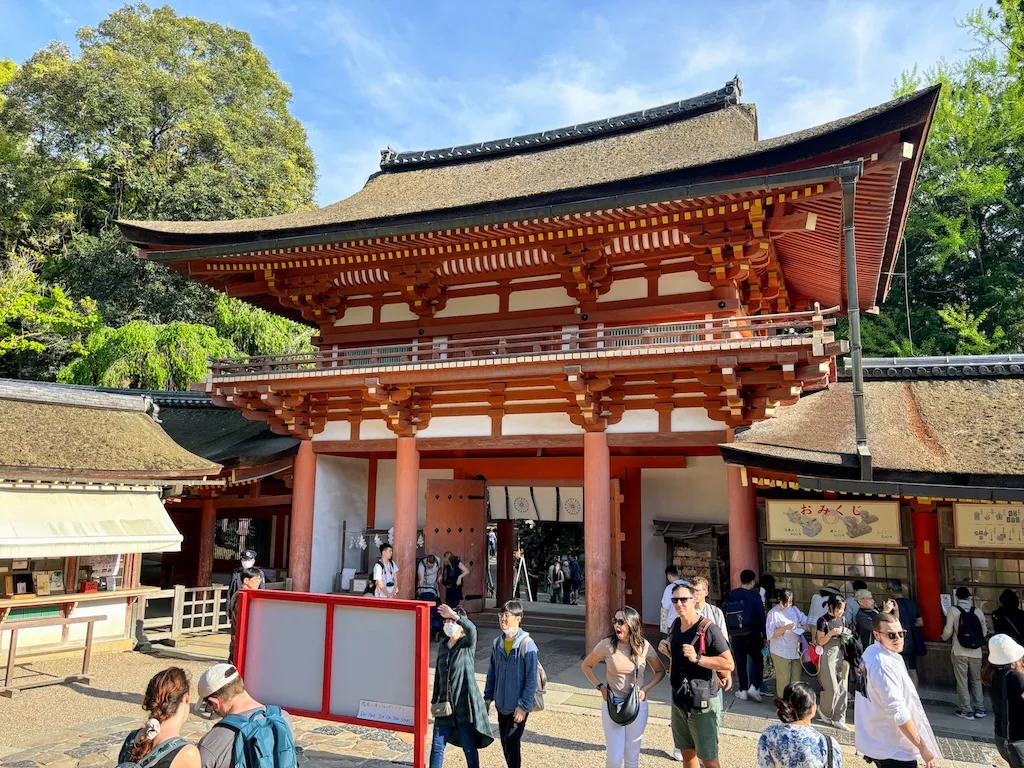
The shrine is known for the hundreds of lanterns donated by worshippers. The lanterns inside are bronze, while those outside are made of stone.
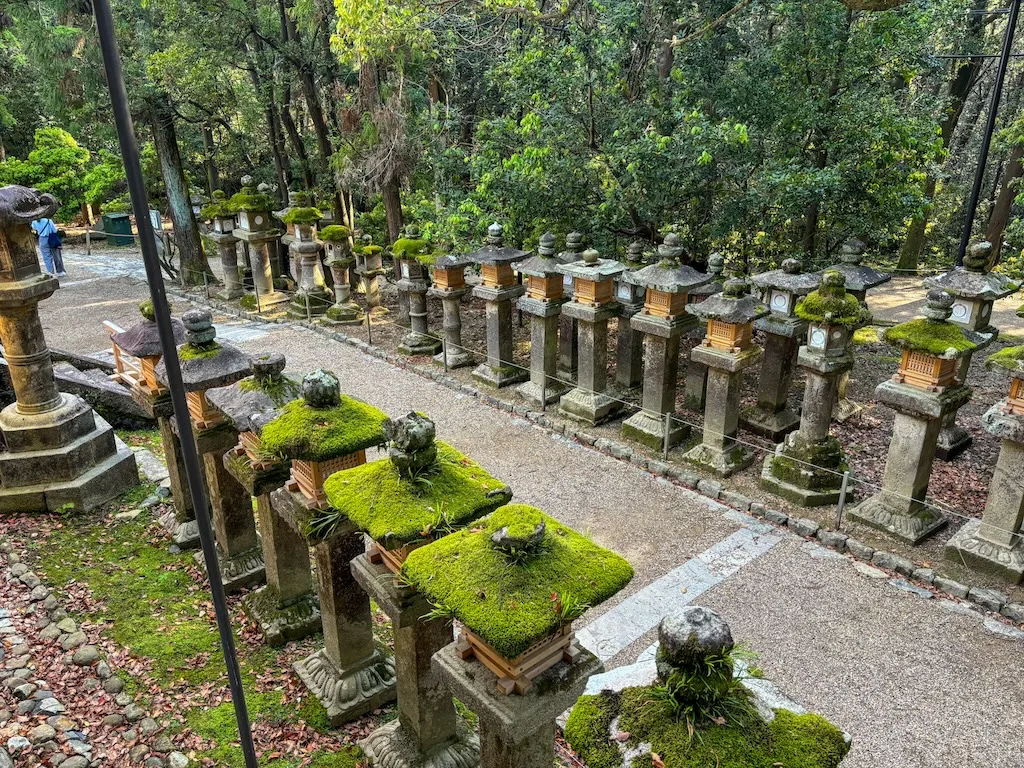
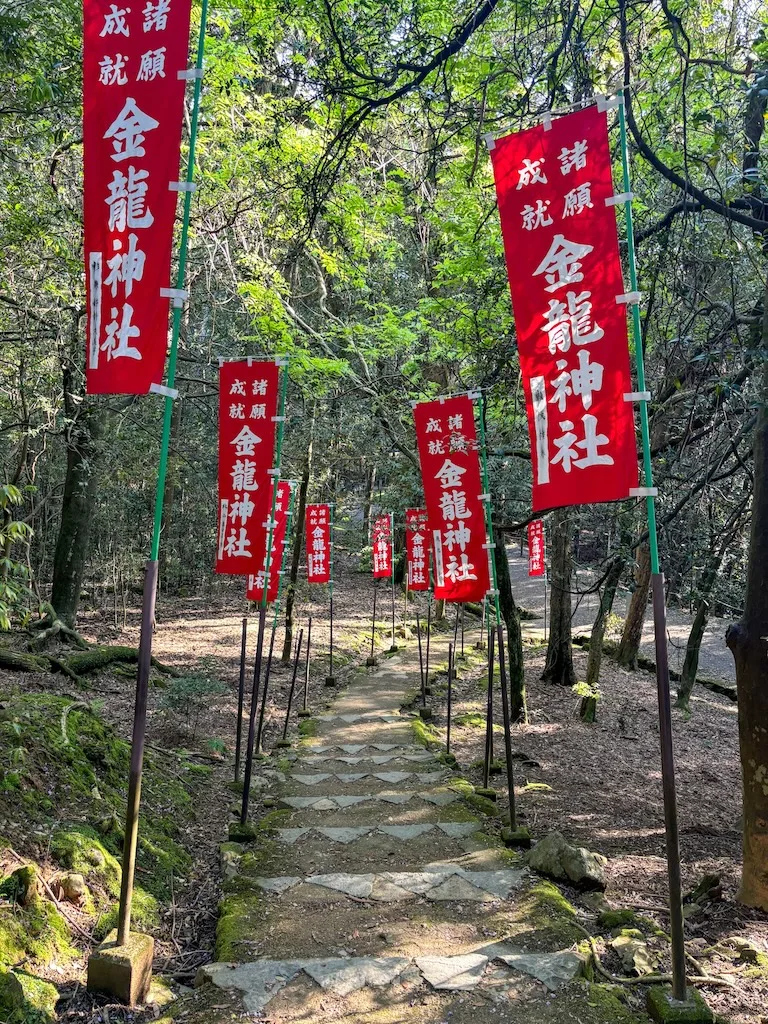
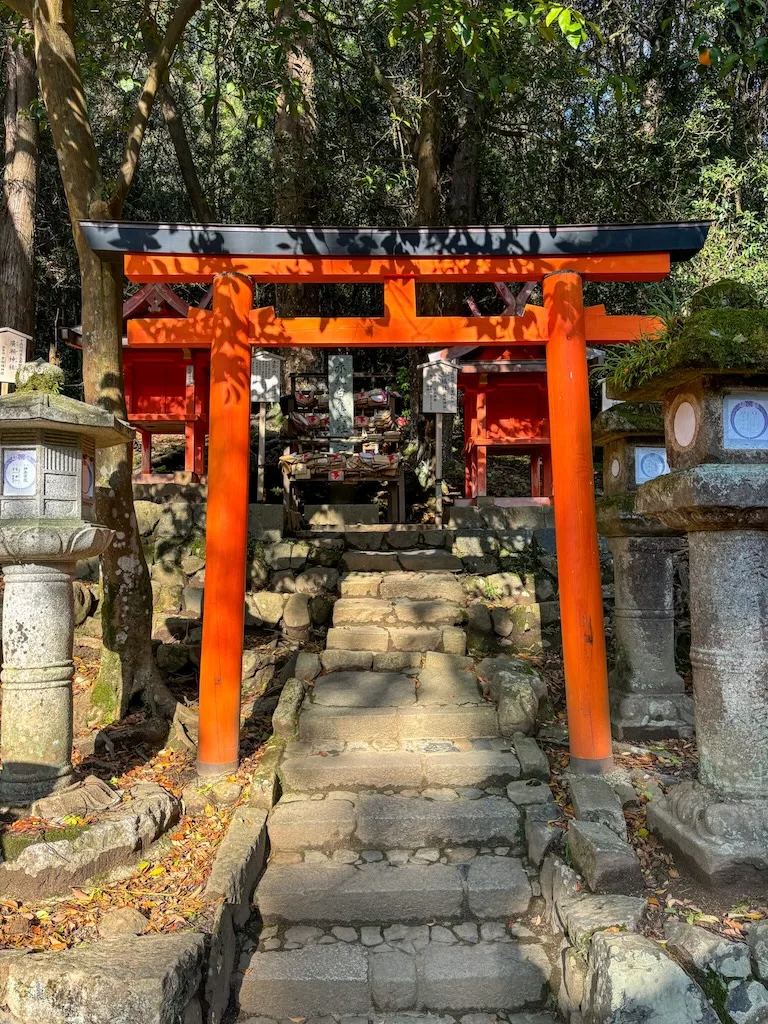
More small shrines can be found in the surrounding forest.
 |
 |
Ukimido
On your way back to the railway station, you can stop beside Sagiike Pond and sit in the wooden Ukimido pavilion.