Travelling through Japan: Osaka 🇯🇵
The first stop on my trip through Japan was Osaka, where my flight arrived.
I would describe it as a port city without enormous crowds, but with good food and nightlife.
Osaka felt like a relatively Western city and a very good place to begin a journey through Japan. It was a shame that a cancelled flight left me with only two days there.
Getting there from the airport
After arriving at Kansai International Airport, you have several options for reaching Osaka.
The two basic choices are a bus or one of several trains. A bus is better for carrying luggage, but I chose the train because I tend to travel fairly light.
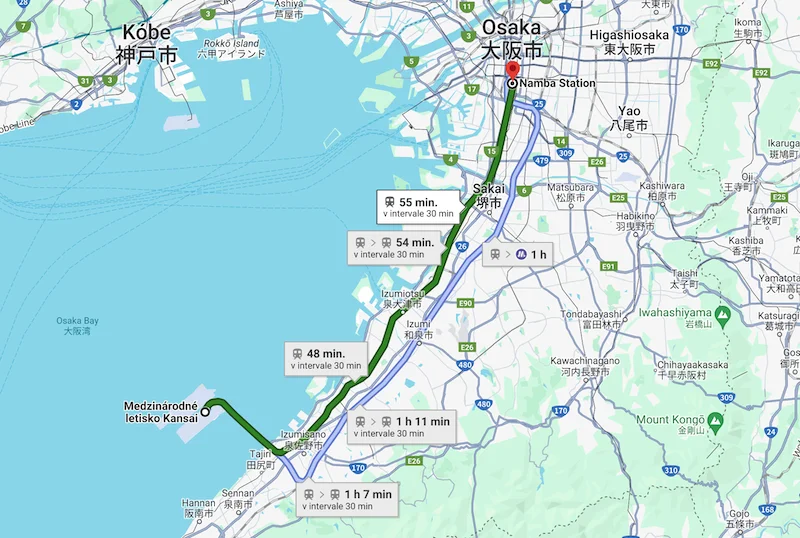
The right train depends on where you are staying in Osaka. My hotel was in Namba, so the most convenient option was the Limited Express Rapi:t, which runs directly from the airport to Namba Station.
The Limited Express Rapi:t is a fascinating train with a futuristic design and is an experience in its own right. It is operated by Nankai rather than Japan Railways, which runs other trains better suited to reaching Osaka Station.
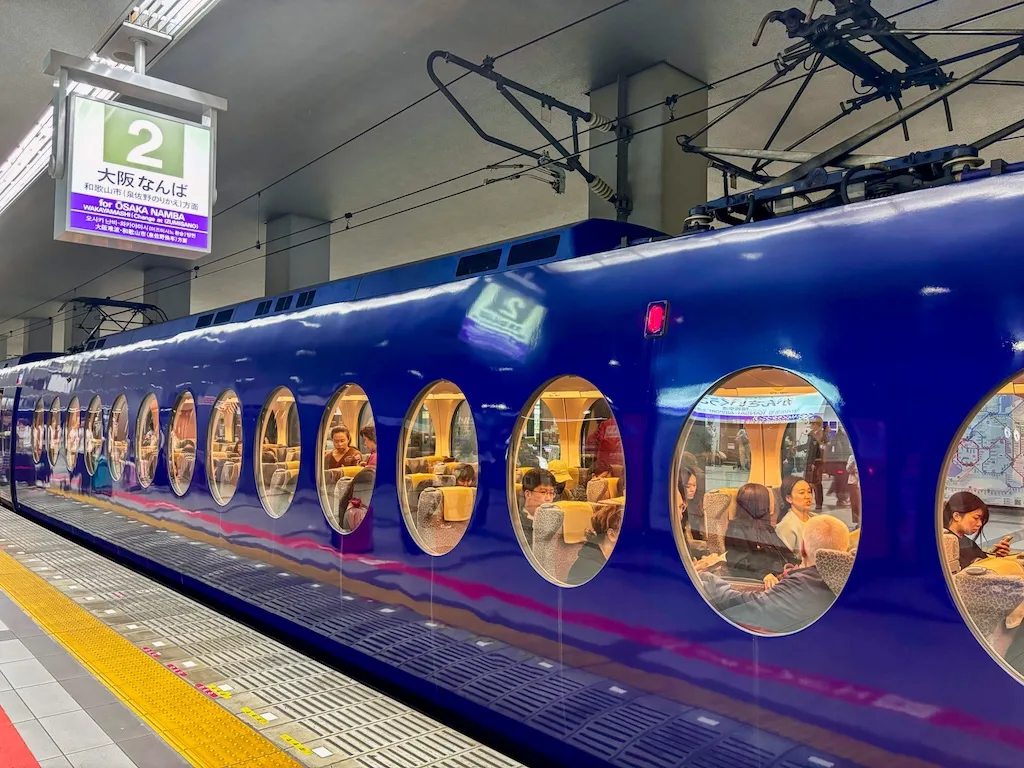
Tickets can be bought from a Nankai counter or ticket machine, and the train runs twice an hour.
Getting around Osaka
The metro is the easiest way to travel around Osaka. It is straightforward to use and is not usually very crowded.
Station names are almost always shown in the Latin alphabet, and virtually all announcements seem to be made in English as well.
As almost everywhere in Japan, Google Maps works well for finding connections, while a Suica card makes paying easy, as I described in my Japan travel plan.
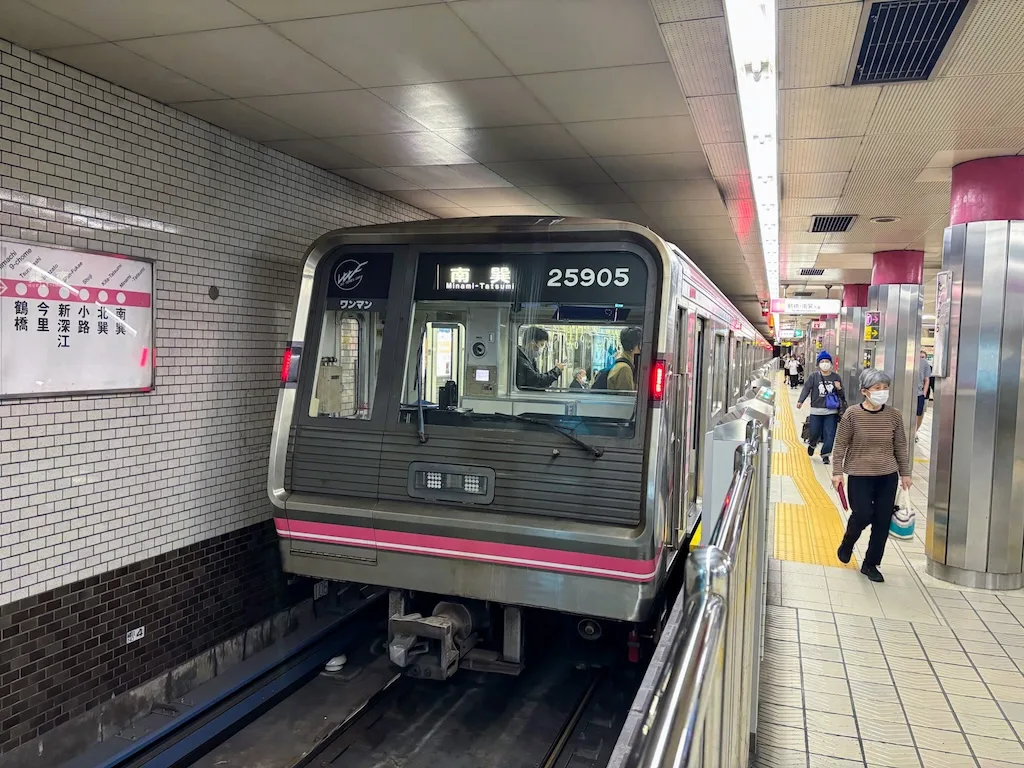
I was surprised by the scale of some stations. Entering Namba Station, for example, feels like walking into a vast single-storey shopping centre full of shops and restaurants.
Google Maps helps with navigation here too, usually showing which exit is most convenient for reaching your destination.
Accommodation
I would personally recommend staying near Namba Station. In my view, it is the most convenient area.
It has a metro station served by several lines, a railway station with a connection to the airport and a number of interesting places within walking distance.
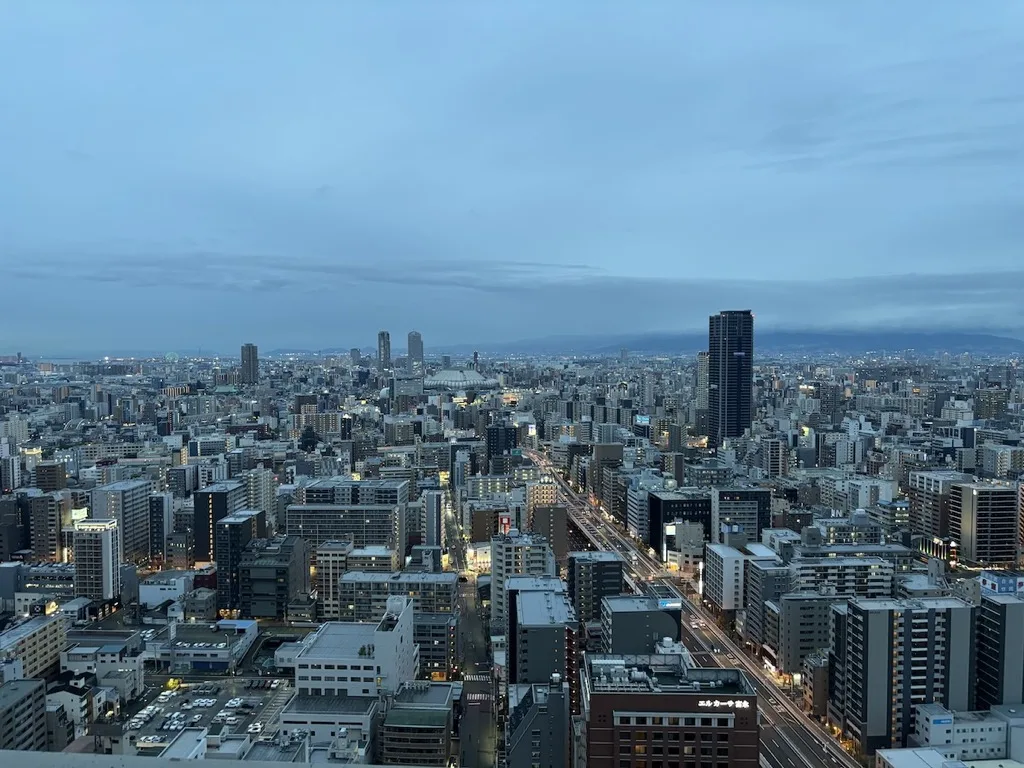
I chose a hotel that seemed to offer a view over Osaka from almost every room. Reception was on the 22nd floor, with the rooms on the floors above it.
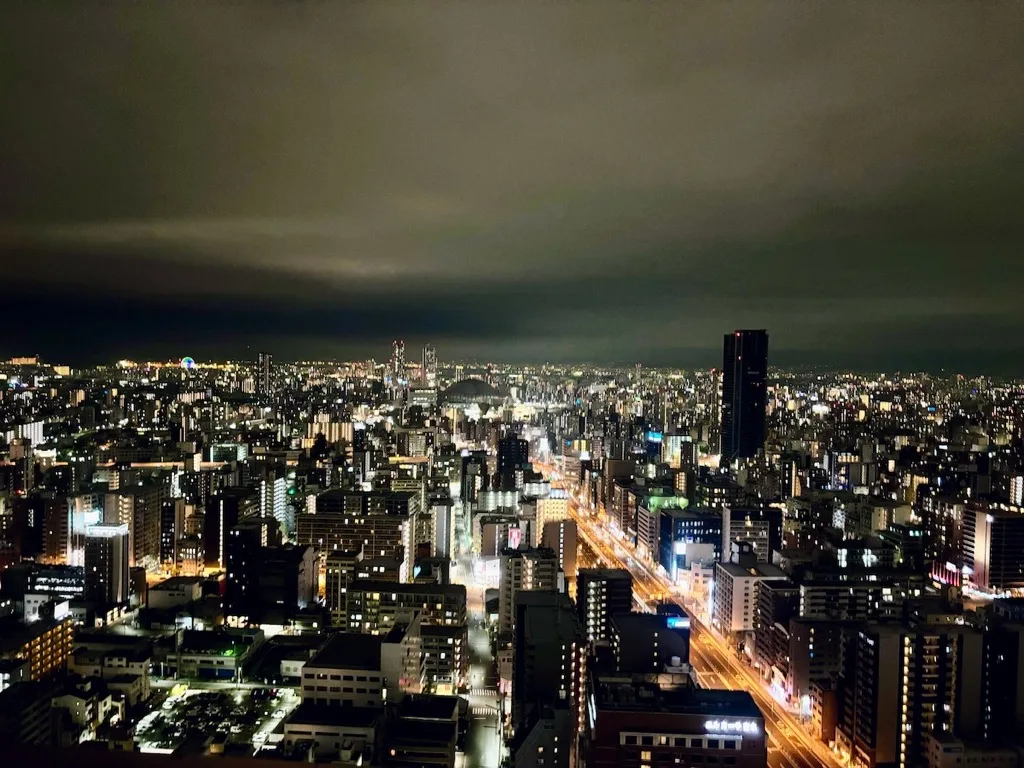
Because the hotel had been paid for in advance, it held my room for the two days that my cancelled flight delayed me.
Dotonbori
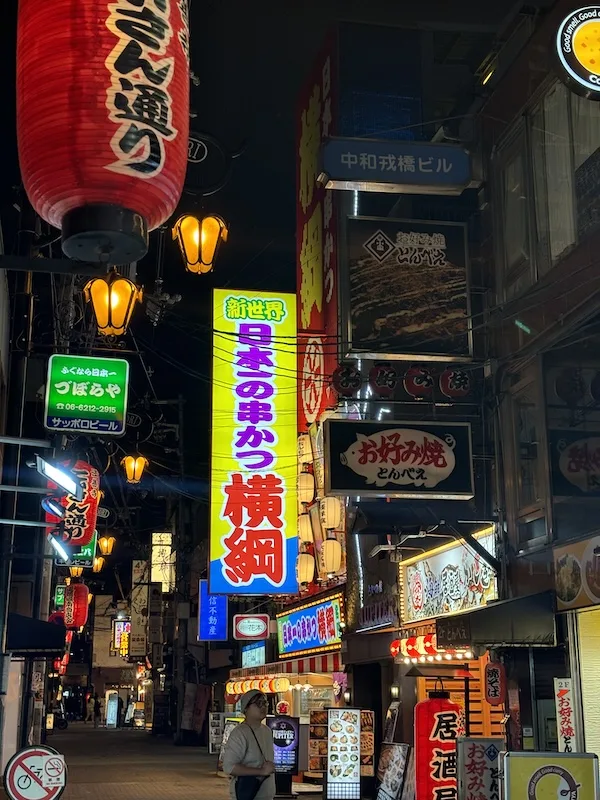
My first stop on the evening I arrived was Dotonbori. Close to Namba Station, it is Osaka’s nightlife centre, filled with enormous neon signs, bars and restaurants.
 |
 |
The ideal way to experience it is to walk beside the river, where both banks are lined with neon, including the famous Glico Man, as well as various unusual structures.
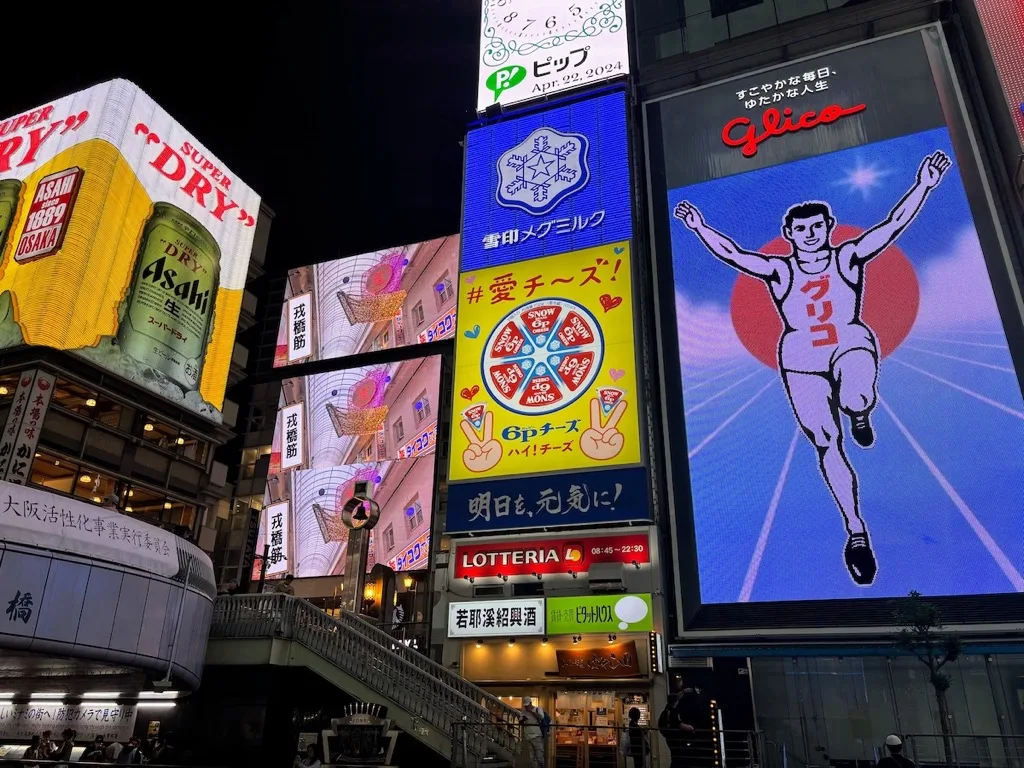
You can also take a boat trip along the river through Dotonbori, both during the day and in the evening.
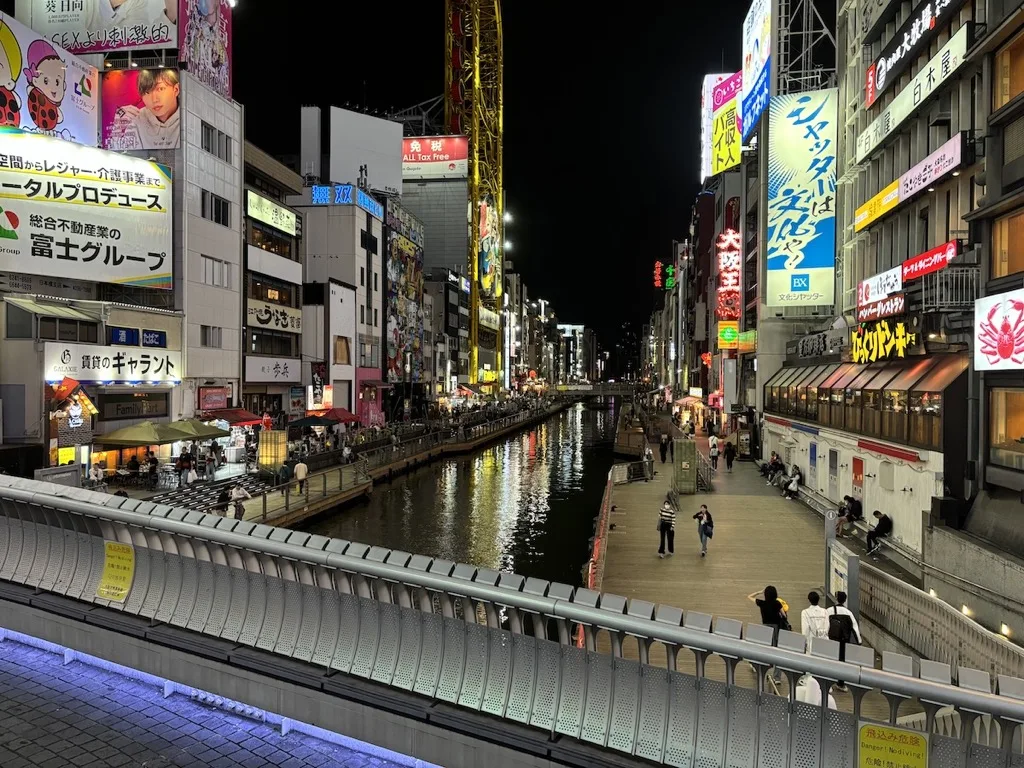
Typical Osaka specialities such as takoyaki and okonomiyaki are available directly on the street.
Takoyaki and okonomiyaki
Takoyaki are battered balls filled with octopus, fried and served with sauce. They are a typical Osaka street food.
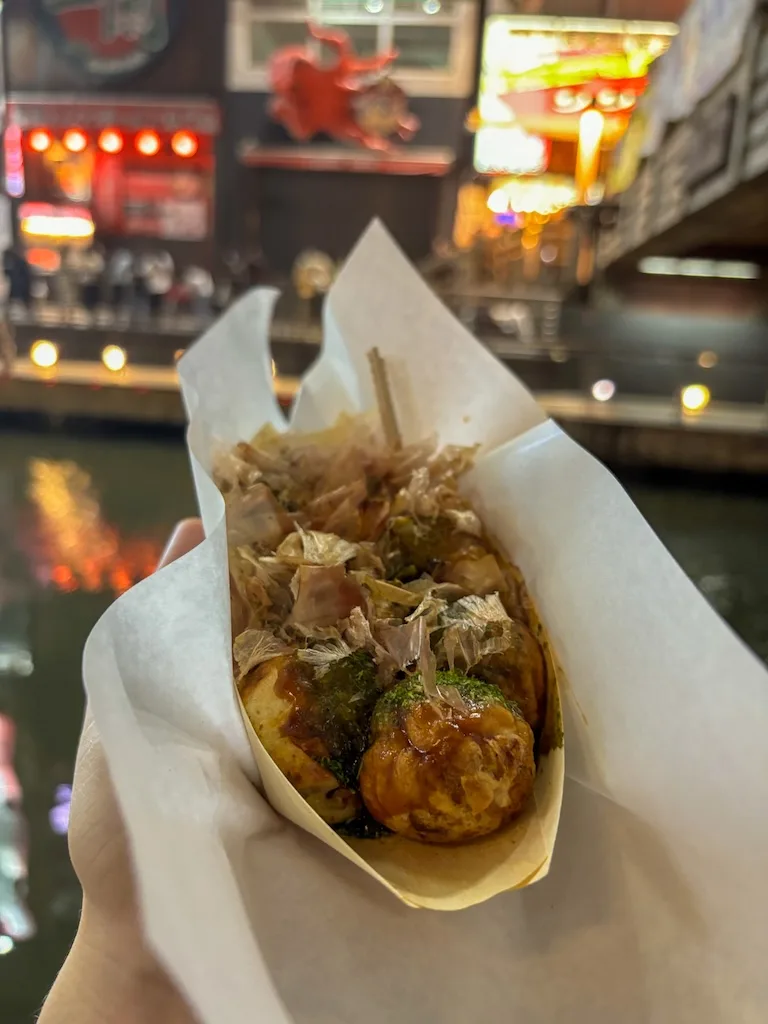
When I told a street vendor selling takoyaki that I had flown in from the Czech Republic, he replied that he knew the country because he had visited Plzeň.
Okonomiyaki is something like a savoury pancake with various fillings.
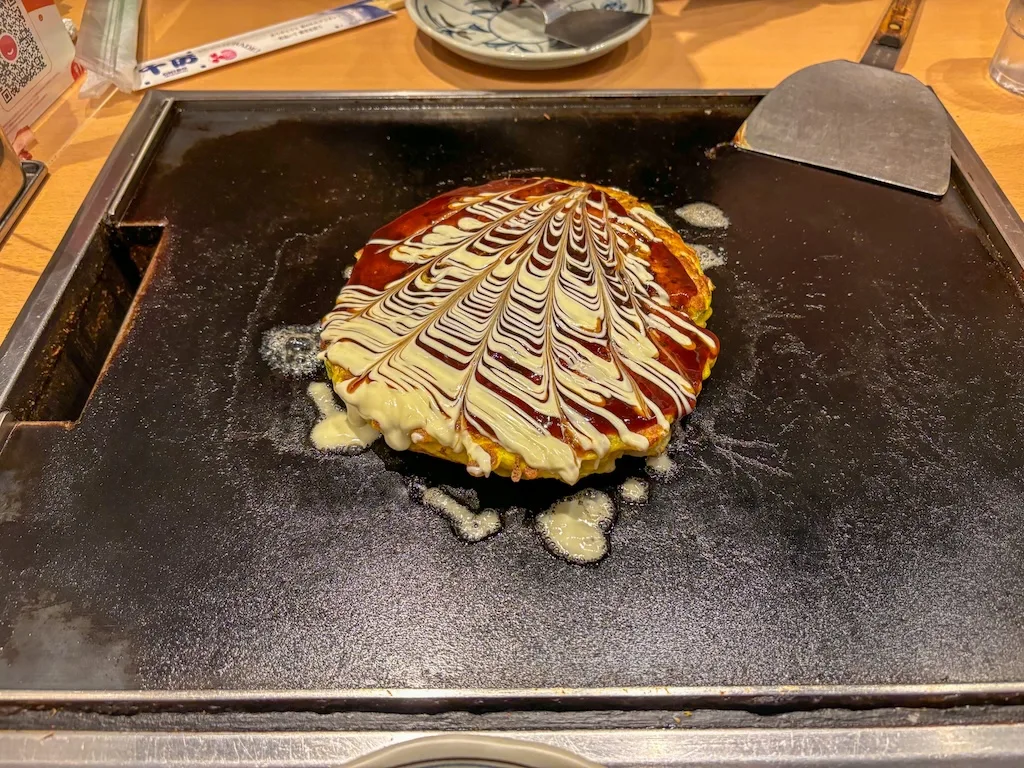
When you order it in a restaurant, it is placed on a hot metal griddle in the middle of the table, from which you serve it onto your own plate.
An okonomiyaki restaurant was also where I encountered my first queue to enter a restaurant. Such queues turned out to be common in Japan at lunchtime and in the evening.
Osaka Castle
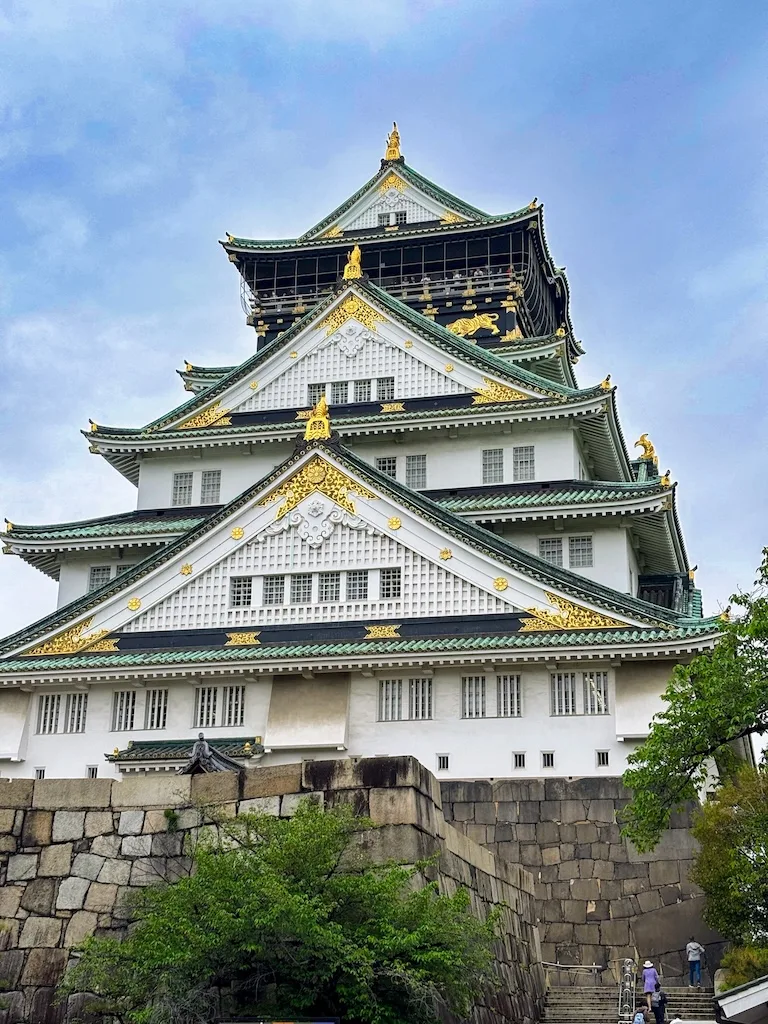
I mainly wanted to see Osaka Castle because of the television series Shōgun, which I was watching at the time and in which part of the story takes place there.
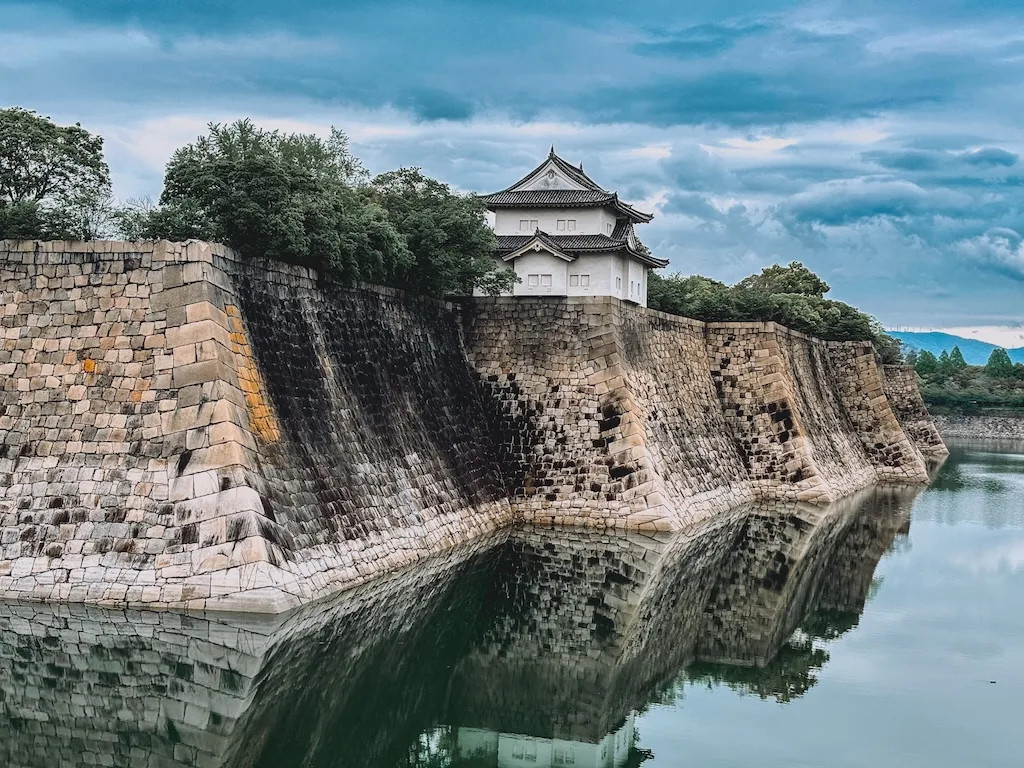
It is an interesting structure with preserved fortifications, moats and a central keep.
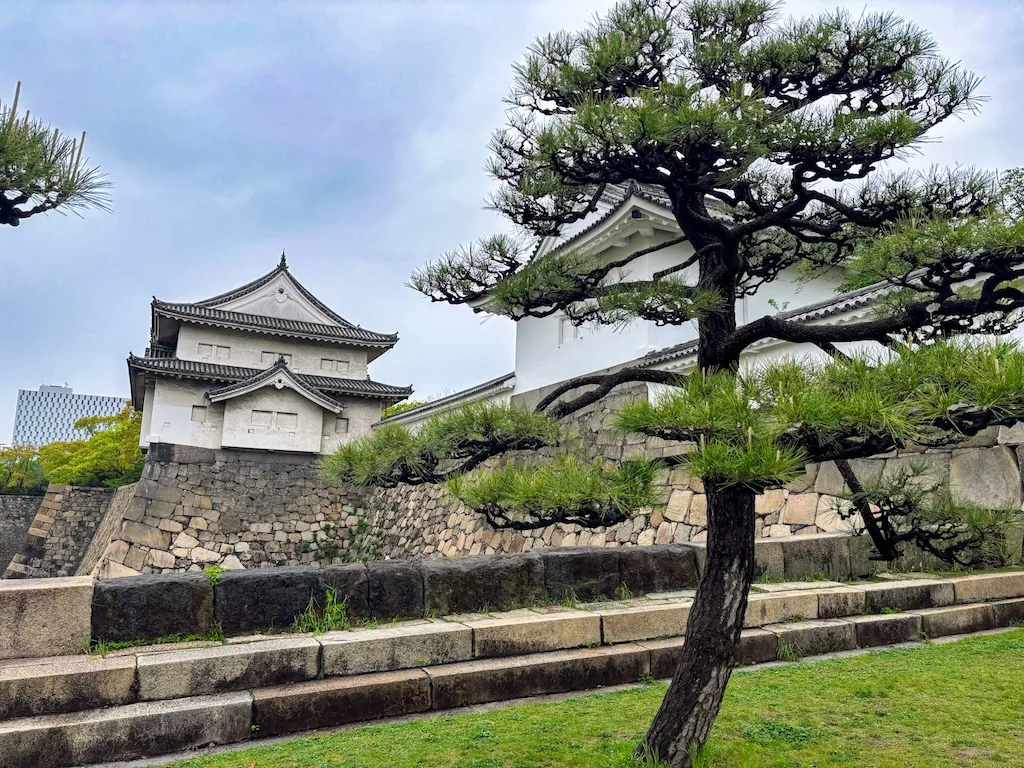
I was a little disappointed that the original interiors had not survived. The floors inside the main building contain only exhibitions.
Shitennō-ji Temple
Shitennō-ji is a 1,400-year-old Buddhist temple.
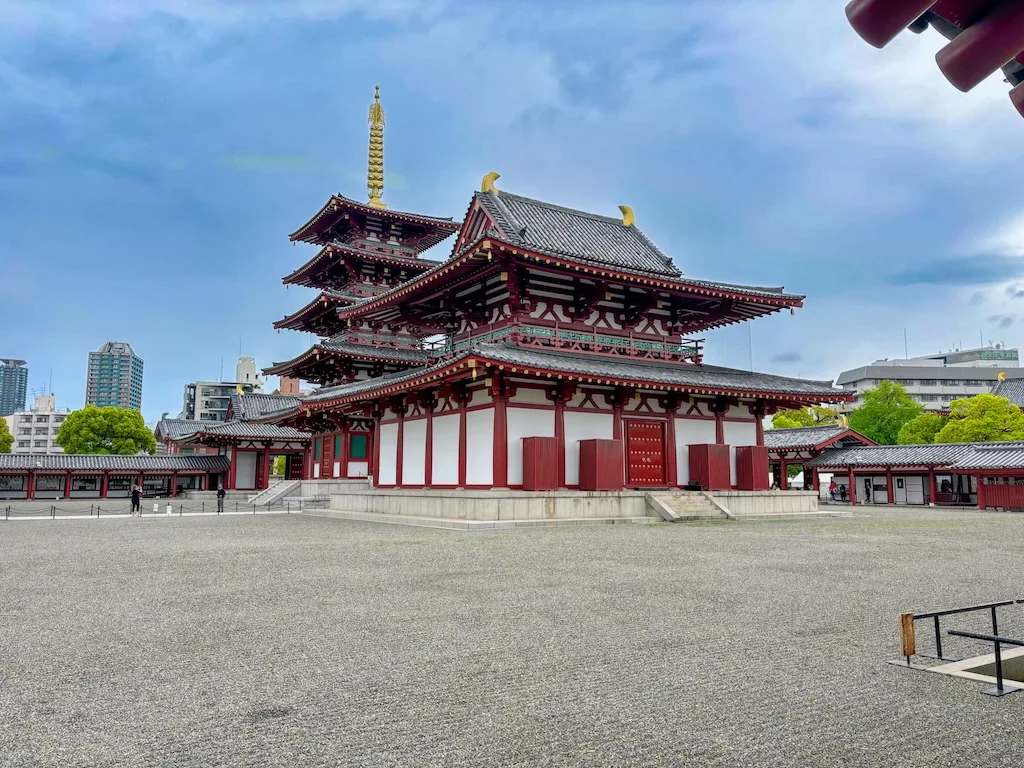
At the centre of the temple grounds is a pagoda that visitors can enter and climb to the top floor.
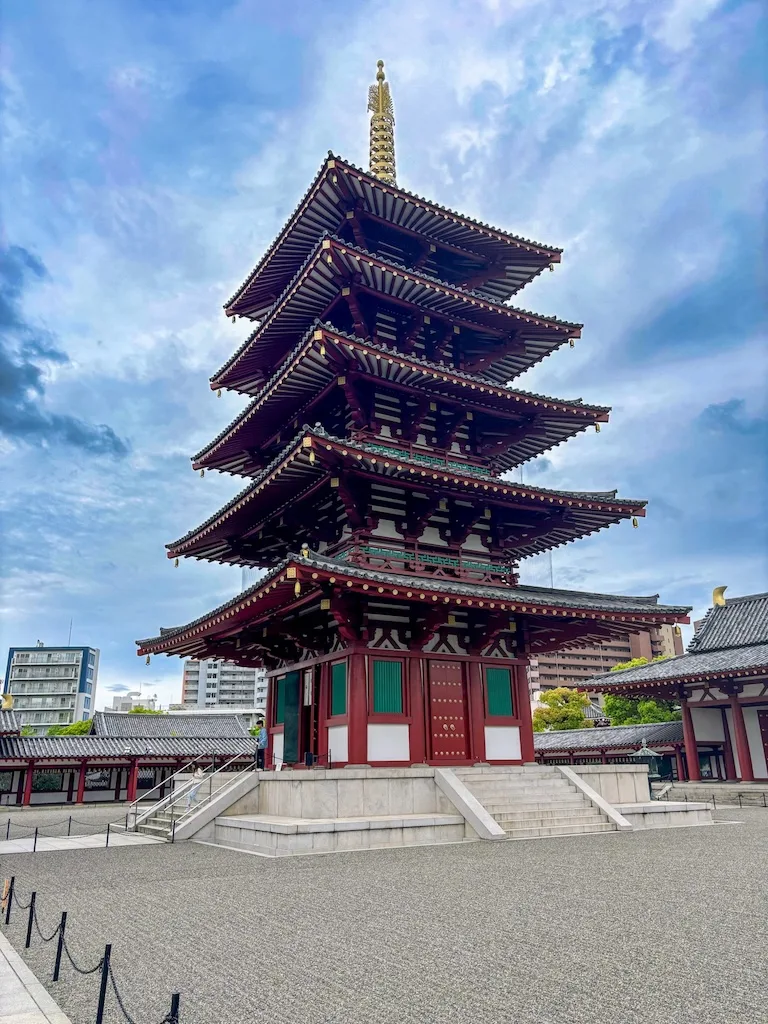
After climbing the stairs to the fifth and highest floor, you discover that there is nothing there—not even a view of Osaka—and can head straight back down.
The Japanese man who reached the top before me said 死んだ and then made his way back downstairs.
Namba Yasaka Shrine
Namba Yasaka Shrine contains a striking structure from 1974 in the form of a lion’s head measuring 12 metres high and 11 metres wide.
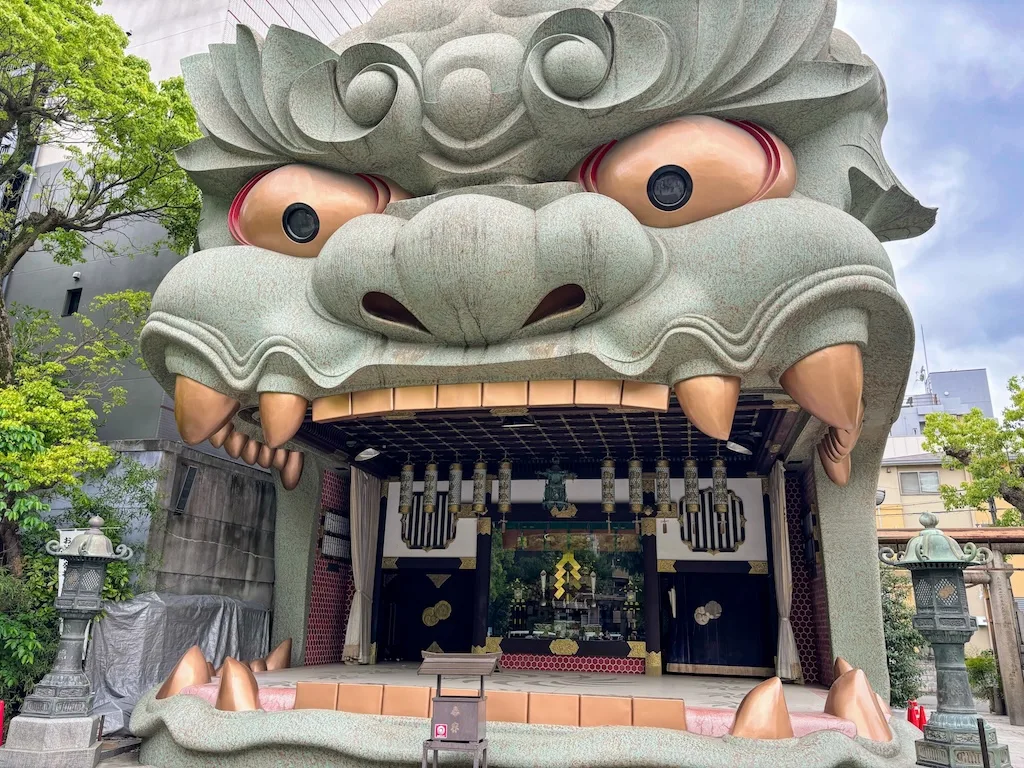
As at most Buddhist temples and Shinto shrines, you can buy an omikuji: a small paper fortune predicting good or bad luck in your life.
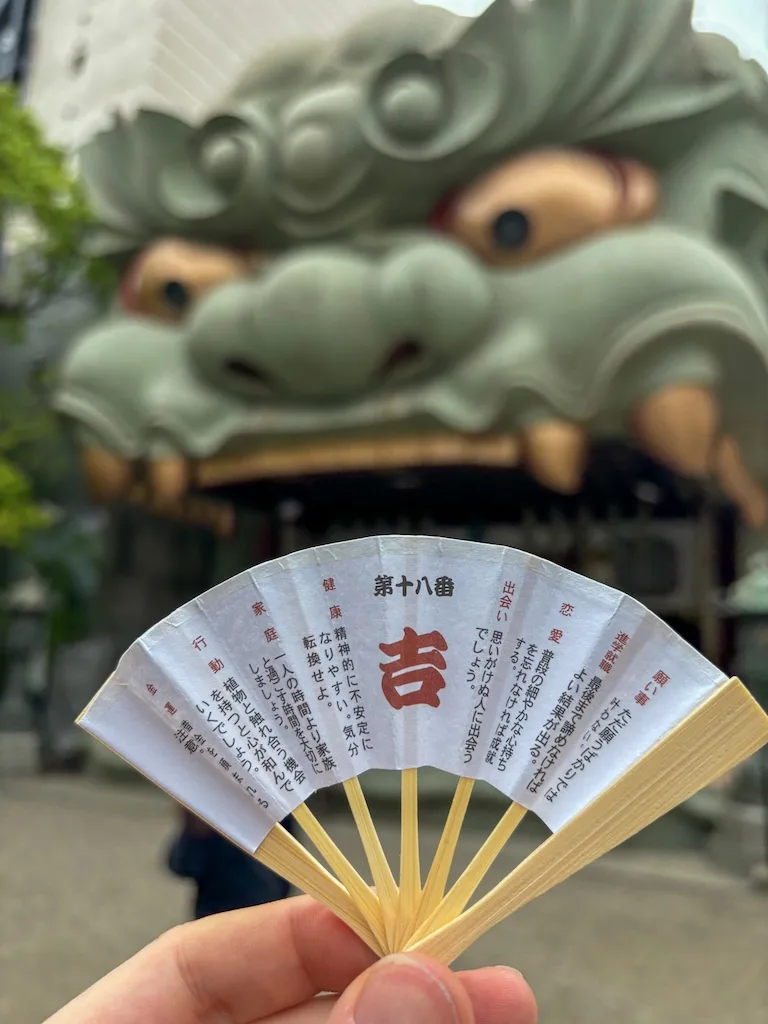
You are meant to keep a positive omikuji, while a negative one should be rolled up and tied to a rope.
Kuromon Market
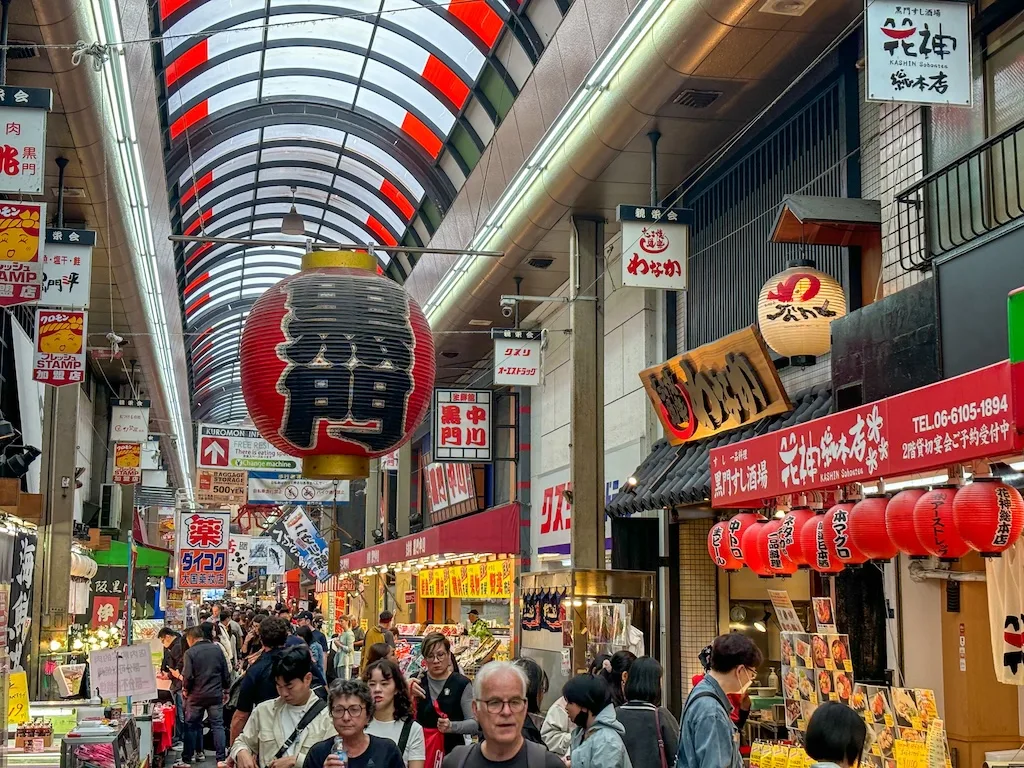
Kuromon Market is a covered market with more than 150 shops where you can try many different kinds of food.
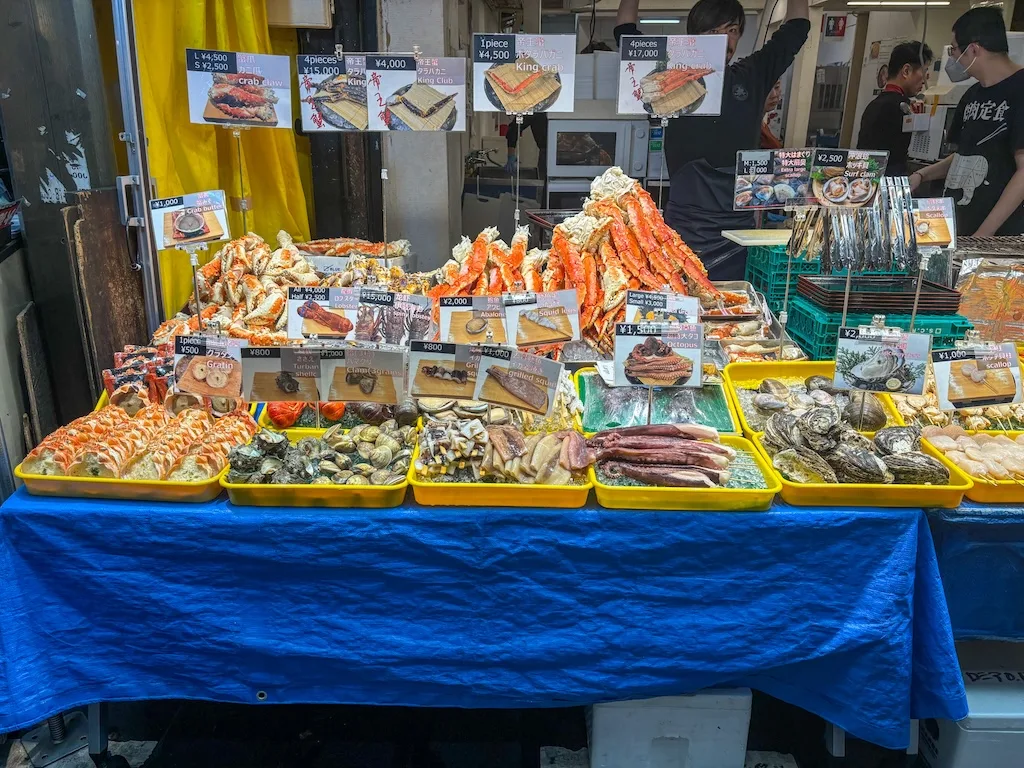
It is always crowded, so you need to take care, especially after buying food that should be eaten beside the stall.
Hōzen-ji Yokochō
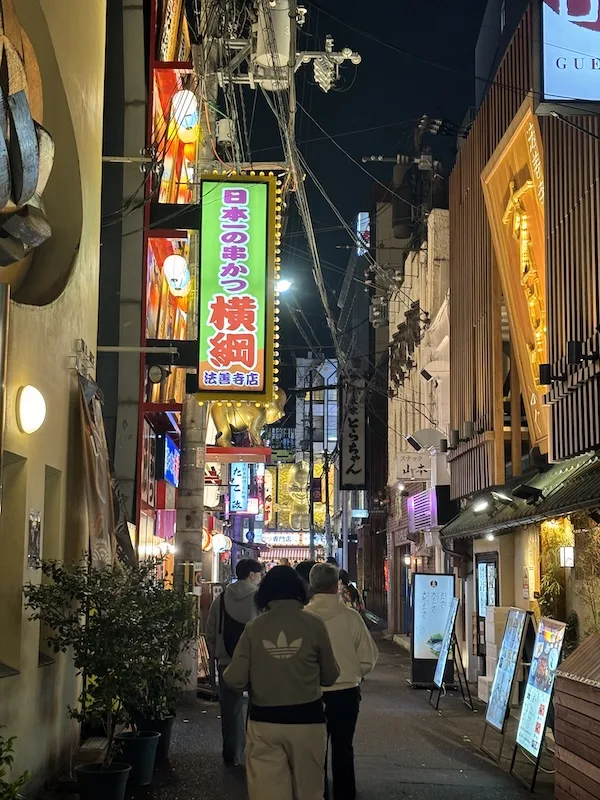
Hōzen-ji Yokochō is a fascinating alley in Dotonbori that takes you from all the modern neon into an atmosphere reminiscent of the Edo period.
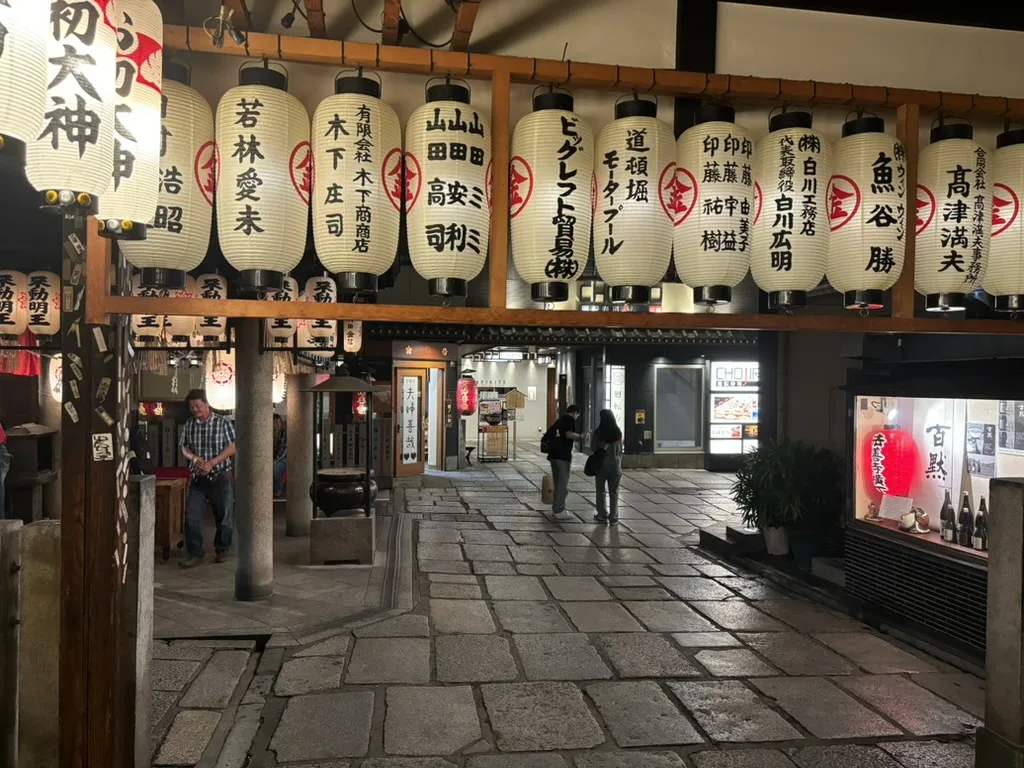
Alongside its bars and restaurants, the alley conceals the small Hōzen-ji Temple.