How I created a zen garden at home
Zen gardens in Japan have always fascinated me. During my travels there, I was drawn to their simplicity, tranquillity and ability to encourage focus. That is why I decided to create a small, quiet corner in my apartment—a place where I could switch off for a moment and find some balance during an ordinary day.
I began with a ready-made Esschert Design 30 × 22 cm zen garden kit. It felt cheap and poorly made, but it gave me a starting point. In the end, the only parts I kept were the concrete tray, the concrete plant pot and the rake, even though it is slightly crooked.
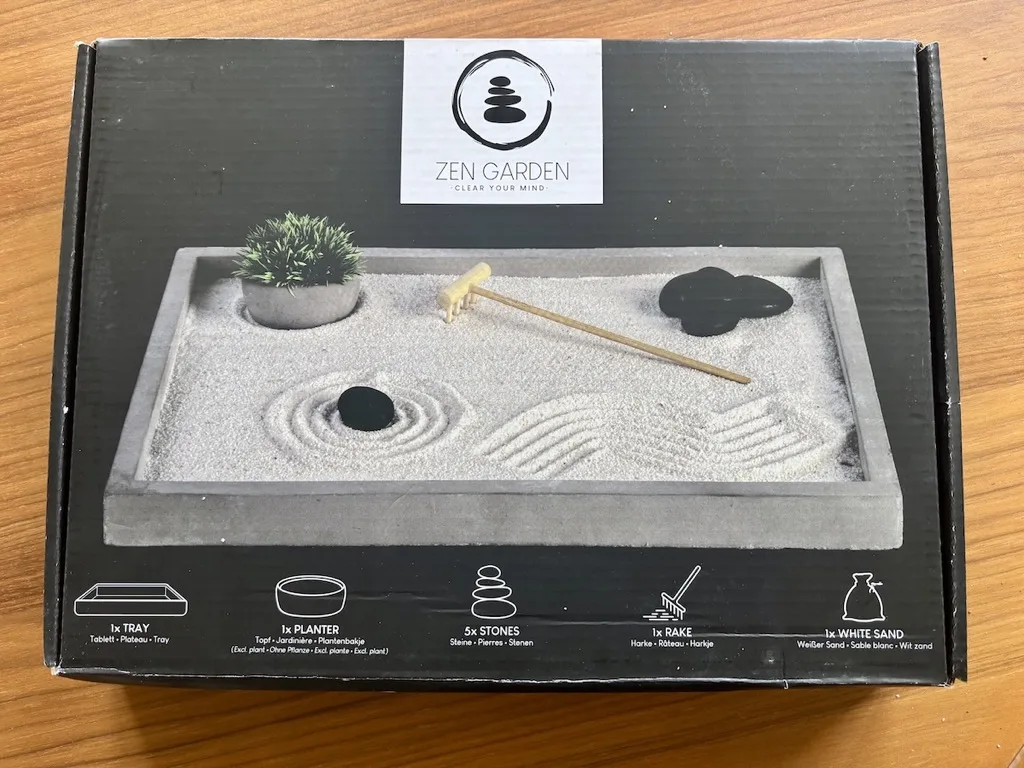
I remember opening the first kit and immediately spilling sand all over the table. It was quite a funny—and slightly frustrating—moment that forced me to start by cleaning up. At least I quickly discovered how much mess a zen garden can make when you are not careful.
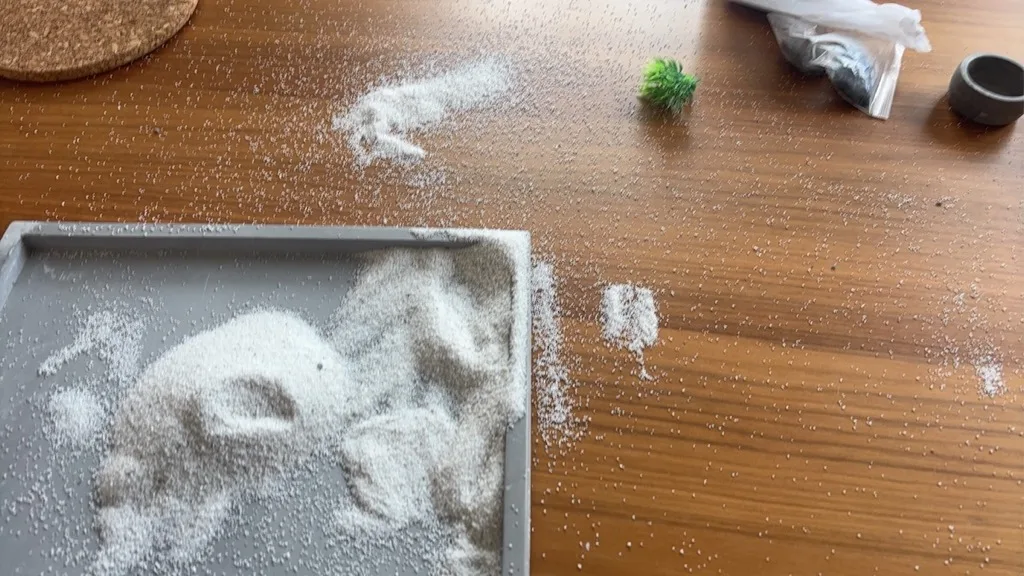
The included sand was also too coarse, while the stones had small defects that made them look as though they had previously been glued together.
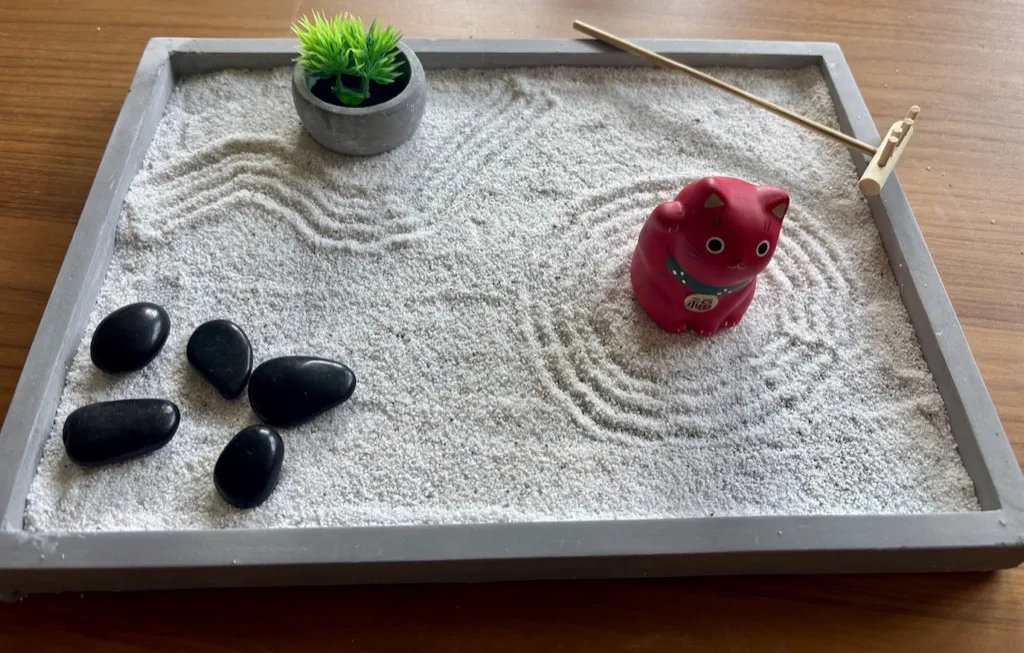
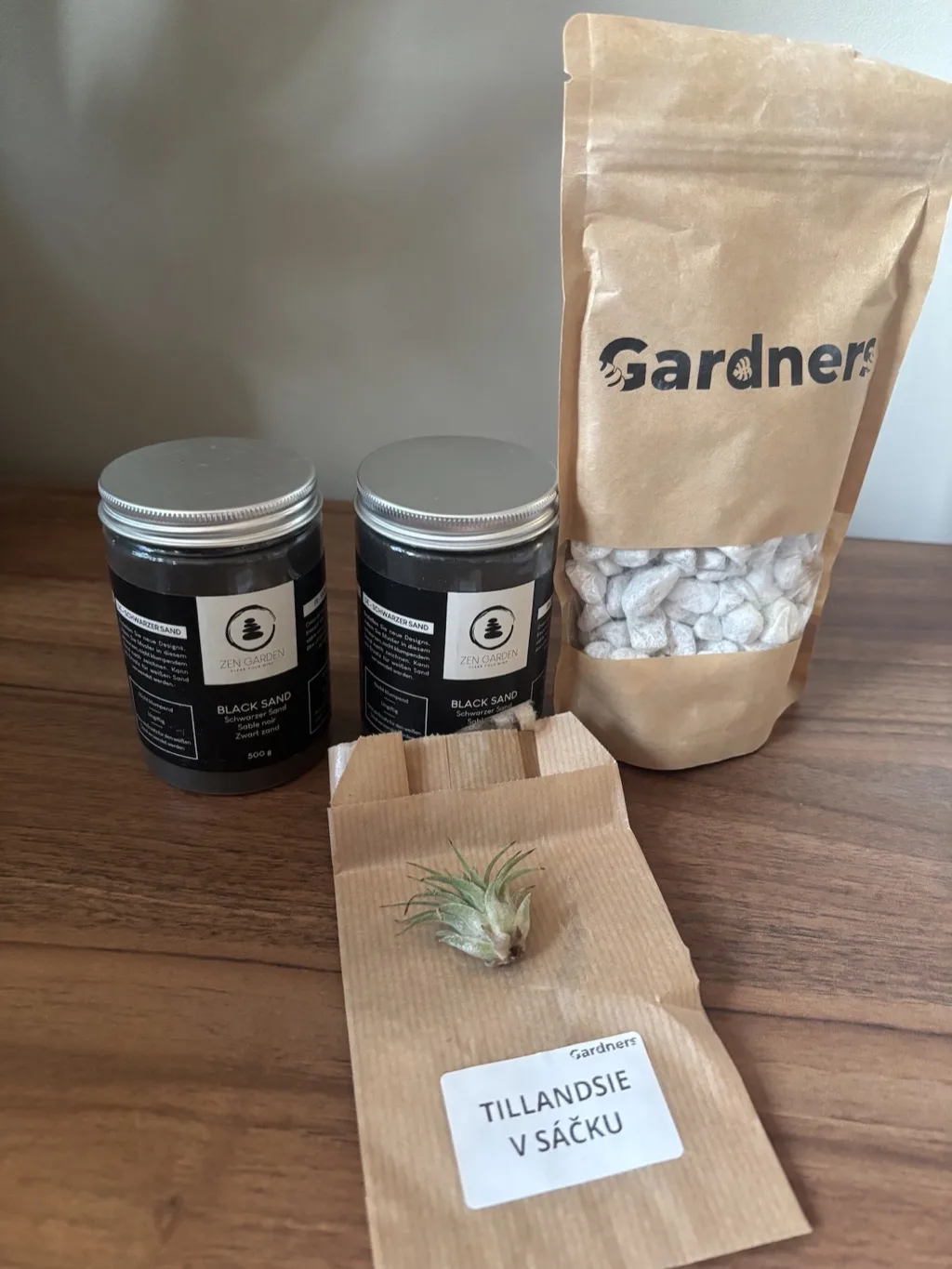
I therefore decided to invest in higher-quality fine black sand and white pebbles. They create a stronger contrast and make it possible to draw finer patterns. Later, I also added a living Tillandsia, which brought a fresh and interesting detail to the garden.
A red maneki-neko figure that I brought home from Kanda Myōjin Shrine in Akihabara during my second visit to Tokyo also became an important part of the garden. It represents a personal memory and gives the garden a distinctive element of its own.
In the traditional Japanese understanding, a zen garden (枯山水, karesansui) represents a dry landscape in which sand and stones depict seas, rivers, mountains or islands. Its purpose is to support meditation and concentration and to create space for contemplation. Even in a small desktop form, it can serve as a visual anchor for the mind during a demanding day.
I came to enjoy several basic motifs when drawing patterns in the sand:
- 直線 (chokusen)—straight lines symbolising a calm sea or inner peace
- 波紋 (hamon)—circles around stones resembling ripples on the surface of water
- 流線 (ryūsen)—flowing lines suggesting a river or the wind
I draw each pattern with the rake or simply with a wooden stick. Creating them has become a short daily ritual that helps me focus and slow down for a moment.
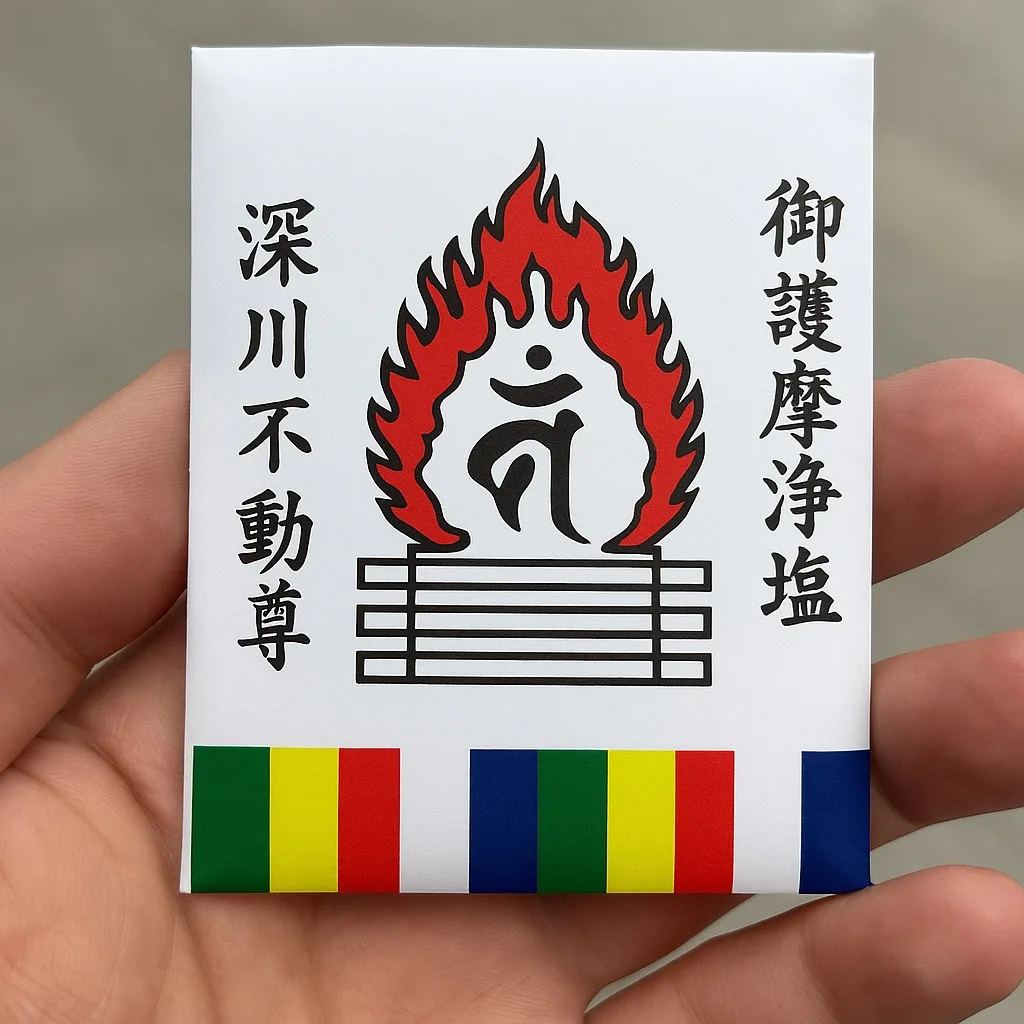
I later decided to add another symbol to the zen garden: purification salt (御護摩浄塩, goma jōen) that I brought back from a goma fire ritual at Fukagawa Fudō-dō Temple. I placed the salt in a small ceramic bowl at the edge of the garden rather than sprinkling it directly onto the sand, where it would disturb its texture. The bowl of salt serves as a quiet symbol of purification and protection, much as salt is used in Shinto and Buddhist rituals. This small gesture gave the garden another layer of personal meaning.
The zen garden has become a simple but effective way to create a little space for calm and reflection in my apartment. If you are considering something similar, I recommend not relying entirely on a ready-made kit. Choose high-quality sand and stones that suit your own taste.
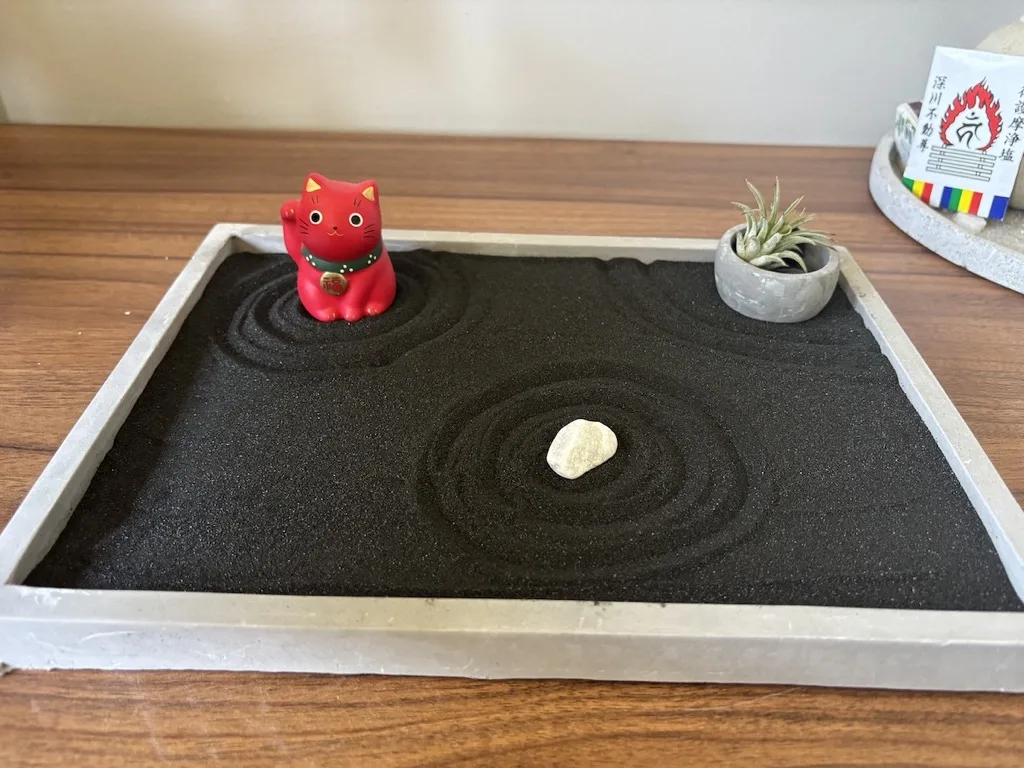
Even small details, such as a personal symbol—in my case, the maneki-neko—can create a distinctive atmosphere.