Ollee Watch: giving a 30-year-old Casio A158W a new life
Last year, I came across a project called Ollee Watch. It is a replacement module for classic Casio digital watches that adds a few modern features while preserving their original look and character.
I found it interesting but did not take it any further. Ordering from outside the EU means exactly the sort of hassle I did not want to deal with: customs duties, VAT and long waits. Besides, I did not own a suitable watch where a module like this would make sense, even though watches have been one of my favourite hobbies for years, ever since I switched from the Apple Watch back to traditional watches.
That changed this year.
My grandfather’s Casio
I inherited my grandfather’s Casio A158W, which he had brought back from the US at some point in the 1990s. That makes the watch roughly 30 years old today.
I knew it very well. For years, I would set the time for him when I visited, usually twice a year when daylight saving time began or ended. Later, he stopped wearing it as much and moved on to various versions of the Xiaomi Mi Band that I bought for him over the years.
When I picked up the Casio, it was still running. The only problem was that the main button was stuck. All it took was opening the watch, cleaning it and freeing the button. A few years ago, I probably would not have attempted it, but after taking a beginner’s watchmaking course, it was nothing too daunting.
That was exactly when I remembered Ollee Watch and ordered one. Since the A158W is one of the supported models, it made perfect sense.
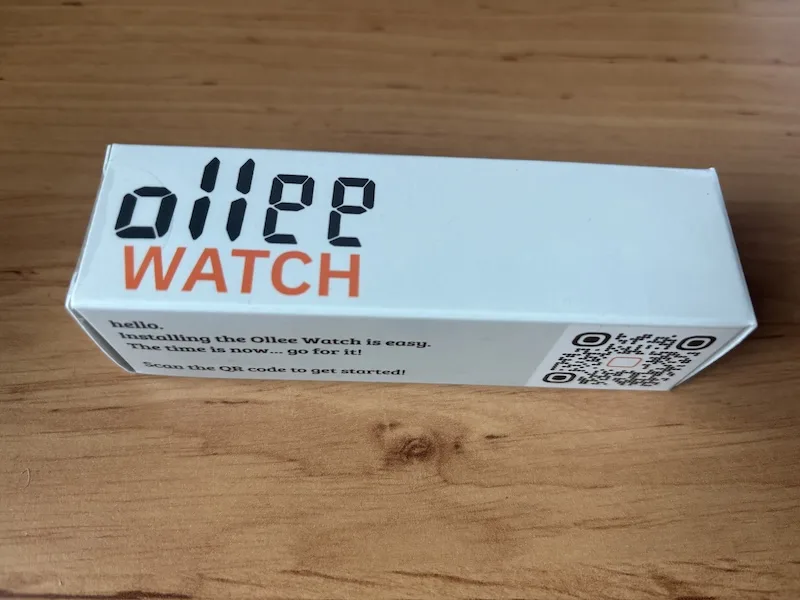
What exactly is Ollee Watch?
Ollee Watch is not a new watch. It is replacement electronics that take the place of the original Casio module.
According to the manufacturer, the Ollee Watch one is designed for Casio watches using module 593. Models tested directly include the F-91W, A158W, F-84W, A159W, A171W, W-59, A163W and A164W.
For me, it was a way to upgrade my grandfather’s old A158W, but it could make just as much sense in a brand-new watch. If you like the design of one of the supported models but miss some modern features, Ollee Watch offers an interesting way to add them.
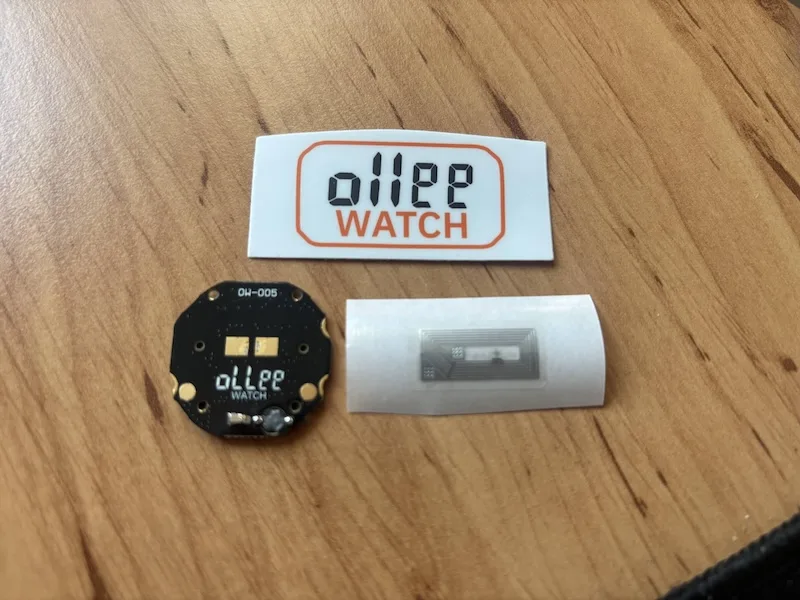
The DIY module is not the only option, either. Ollee Watch also sells complete F-91W watches with the module already installed, so that is another route if you do not want to replace it yourself or do not have a suitable Casio at home.
The idea is very simple. You keep the original case, display, buttons and the overall feel of the watch, but gain features you would not normally expect from a Casio like this.
These include:
- time synchronisation over Bluetooth
- configuration through a mobile app
- world time
- a countdown timer
- a step counter that syncs with Apple Health
- location-based sunrise and sunset times
- a configurable backlight, including its colour and intensity
- new sounds
The most interesting part of the project is that all of this has to work within the limitations of the original Casio LCD: a display that was never designed for anything like it. The result is a range of rather creative ways to show information even when the available display segments are not really up to the task.
Installation
Replacing the module is very straightforward. The manufacturer says it takes around ten minutes, and that is about right.
You simply unscrew the case back, remove the battery, take out the original module, insert the new one and close the watch again. There is no soldering involved, just a little care and a set of small screwdrivers.
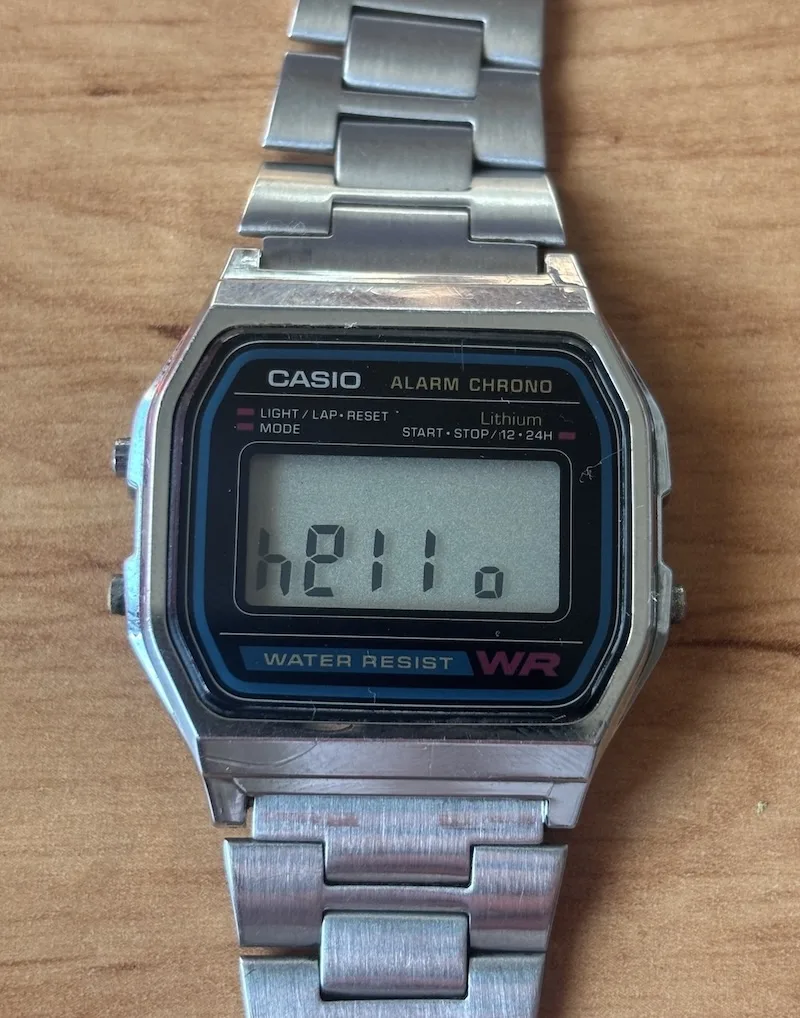
On first boot, the display shows a simple hello, which is a nice touch. The photo also shows the condition of the watch after all those years. The scratches and wear have not disappeared, but they are part of its story.
The package also includes an NFC tag that can be placed behind the display. I did not install it in the A158W, however. Ollee Watch explicitly says that it works only with all-resin models such as the F-91W, not the A158W. It would not make much sense inside a metal case anyway.
Using it
Once I had fitted it to the A158W, what surprised me most was how natural the whole thing felt. It is not another smartwatch trying to do everything. It feels more like a subtle extension of the original Casio.
For me, the most useful feature is Bluetooth time synchronisation. It is very convenient when switching between summer and winter time or travelling across time zones. Changing settings through the app is also much easier than clicking through them with the watch’s buttons.
I also like how the Bluetooth status is handled directly on the display. When the connection is active, the LAP indicator appears. It may be an unusual choice, but it works reliably and feels completely natural after a few days.
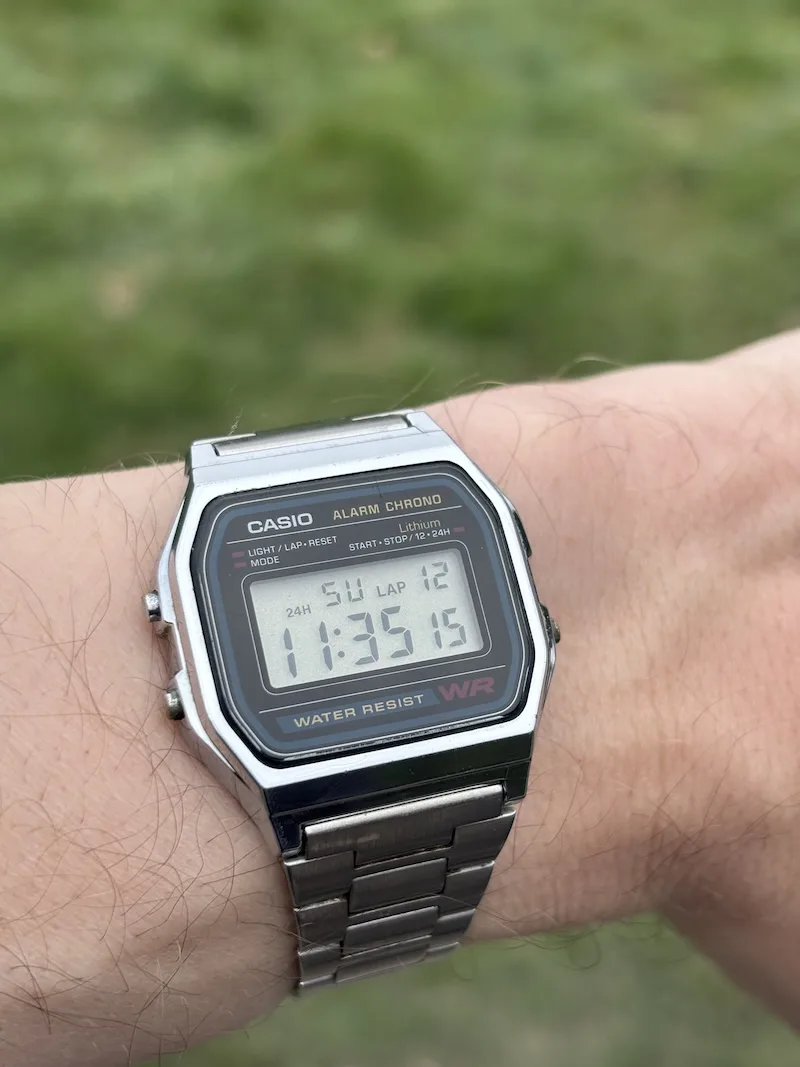
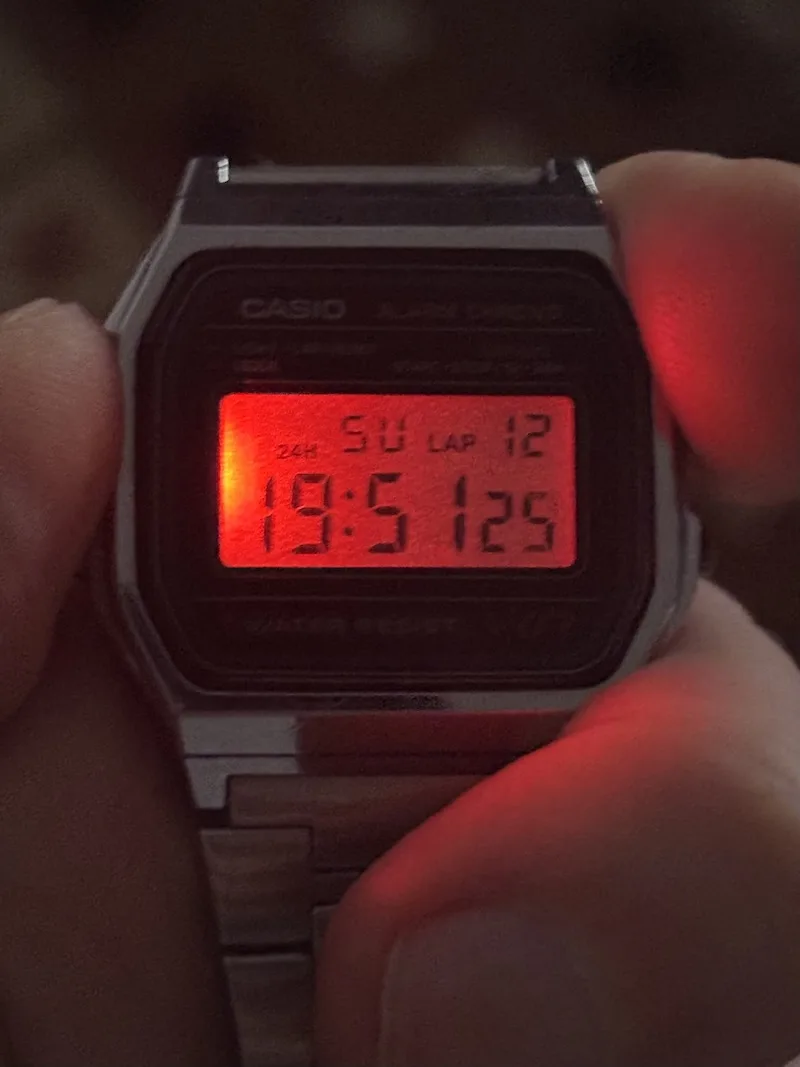
Another nice detail is the ability to change the backlight colour. The default green looks good, but on this A158W I eventually settled on red, which I think suits it better.
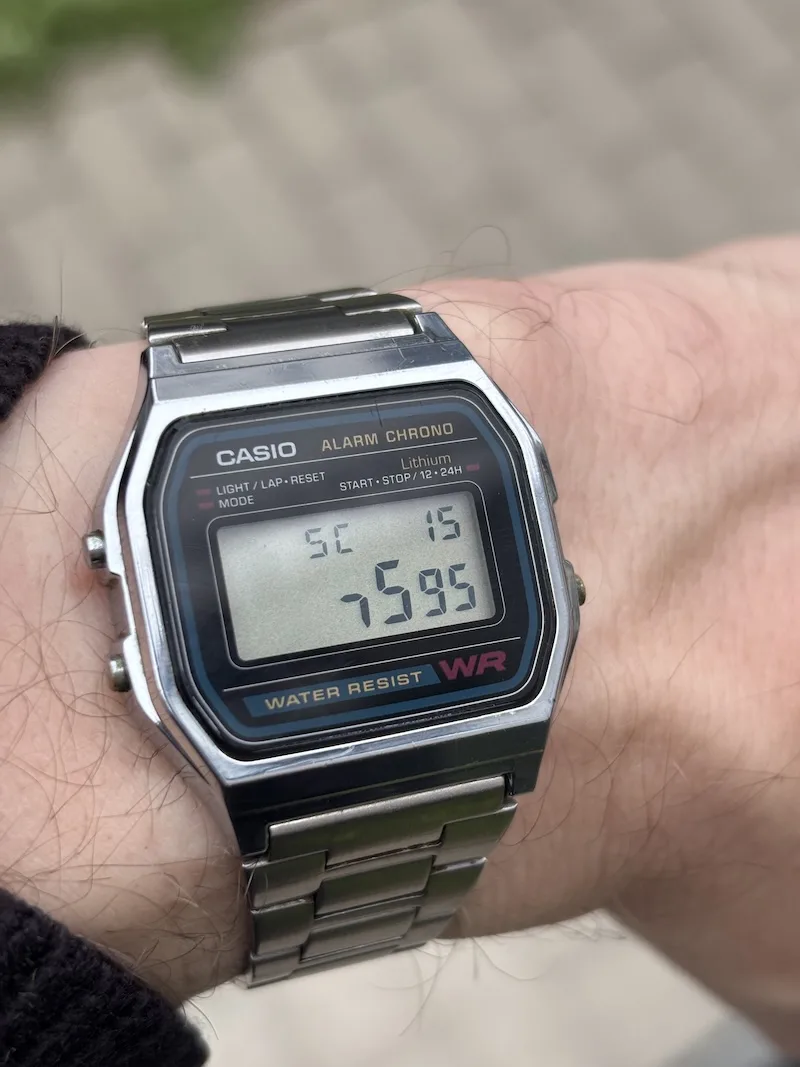
At first, I saw the step counter as little more than a bonus, but in practice it proved more useful than I expected. That is especially true at home, where my iPhone often sits on a desk and does not count my steps. A watch that stays on my wrist makes much more sense for this.
The step counter also reveals the limitations of the original LCD. With certain values, such as around 7,595 steps, the leading digit can look a little odd. It is exactly the sort of compromise Ollee handles creatively, although not always elegantly.
Battery life is an interesting compromise. The manufacturer claims around ten months with normal use and the default settings. Disabling some features and using more aggressive power-saving modes can extend that, but it is still obviously less than the roughly five years offered by the original Casio module.
On the other hand, it is clear that power consumption has been carefully considered. The watch uses its motion sensor to turn off the display when it is not moving. If it is simply lying on a table, the display goes dark and wakes up when the watch is picked up. It is quite an elegant way to save power without becoming annoying in everyday use.
The iPhone app works well, as does synchronisation. It has a few quirks, though, and occasionally feels a little unfinished. Nothing serious, just small issues with its behaviour and interface.
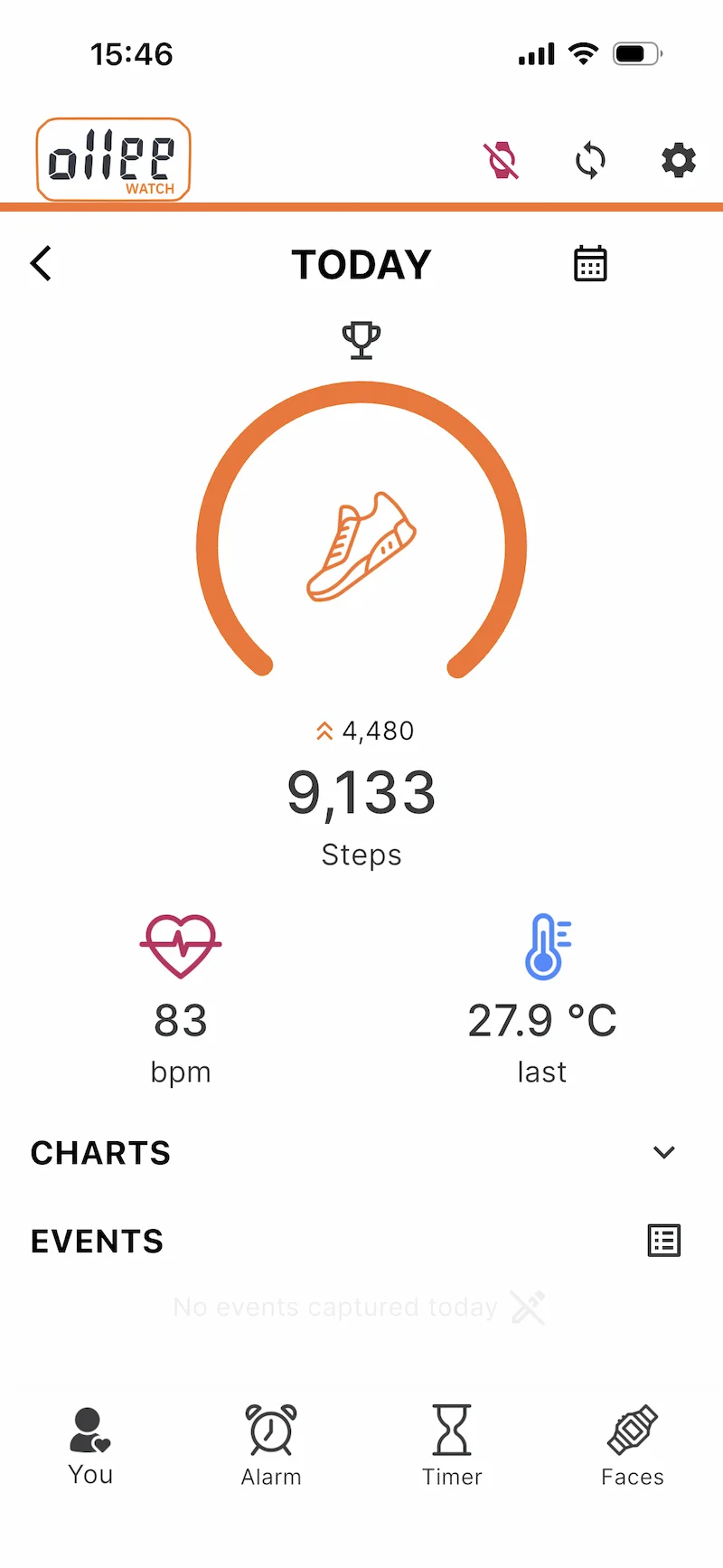
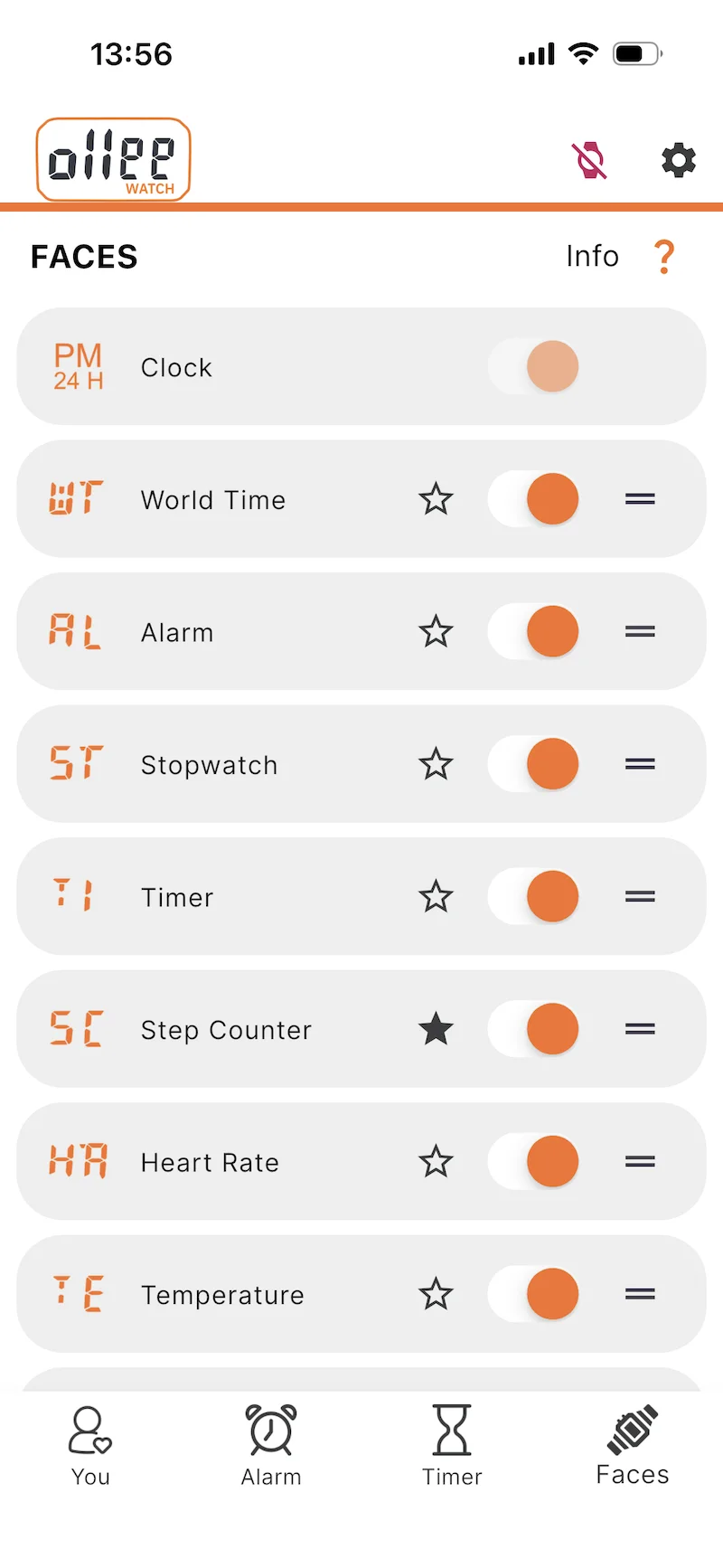
The dashboard is practical. One screen shows your steps, calculated heart rate, last recorded temperature and daily statistics, which is quite enough for a quick check during the day. The watch faces section is useful too, letting you enable, disable and rearrange the screens you want available on the watch.
| Dashboard | Faces |
|---|---|
 |
 |
The same applies to the watch itself. It is obvious that the creator had to find some rather creative ways around the limitations of the original Casio design, so some information is displayed in unconventional ways. But that is precisely what makes it interesting. Rather than having a large display and powerful hardware, there is a very limited foundation from which someone has tried to extract as much as possible.
Quite successfully, too.
Heart-rate measurement is one of the best examples of this approach. At first glance, it sounds as though the watch has a heart-rate sensor, but it does not. It is more like a digital version of a traditional pulsometer. You start the measurement with a button or a wrist gesture, find your pulse on your neck or wrist, count 20 beats and then stop the measurement. The watch uses the elapsed time to calculate the result in BPM.
It is a little unusual, but also rather fun and entirely in keeping with the spirit of the project. Instead of pretending to have fitted a full-fledged health sensor into a Casio, the creator came up with a simple way to provide a similar function without any additional hardware.
Does it still make sense?
This was the question I thought about most.
Would I be ruining the watch? Would it still be my grandfather’s Casio, or just some modded gadget?
After wearing it for a few days, I felt that concern had been unnecessary. It was still the same watch: the same display, the same buttons, the same steel bracelet and the same feeling on my wrist.
It simply had something inside that gave it a new life after 30 years.
And that seems like a much better fate than leaving it in a drawer.
Conclusion
Ollee Watch is an unusual product. It is not cheap, it is not mainstream and ordering from outside the EU is still a hassle. It also comes with compromises, whether in battery life compared with the original module or in the creative ways some of its features have to work.
Even so, it makes a surprising amount of sense as an upgrade for an old digital Casio.
Not because it turns the watch into a full-fledged smartwatch. Quite the opposite: because it lets the watch remain what it has always been while making it a little more useful today.
With this A158W, it does not feel as though I have diminished the original watch. It feels more like a sensible way to keep wearing it.