Learning to photograph Tokyo at night with just an iPhone 🇯🇵
During my second trip to Japan, one of my goals was to improve my photography. I may only be an amateur, but I really enjoy taking photos when I travel. I decided to look for an interesting photography course in Tokyo.
Choosing a course
Since I now shoot exclusively with an iPhone and believe that the best camera is the one you always have with you, I looked for a course where an iPhone would be enough. It also had to be in English because my Japanese was not good enough for something like this.
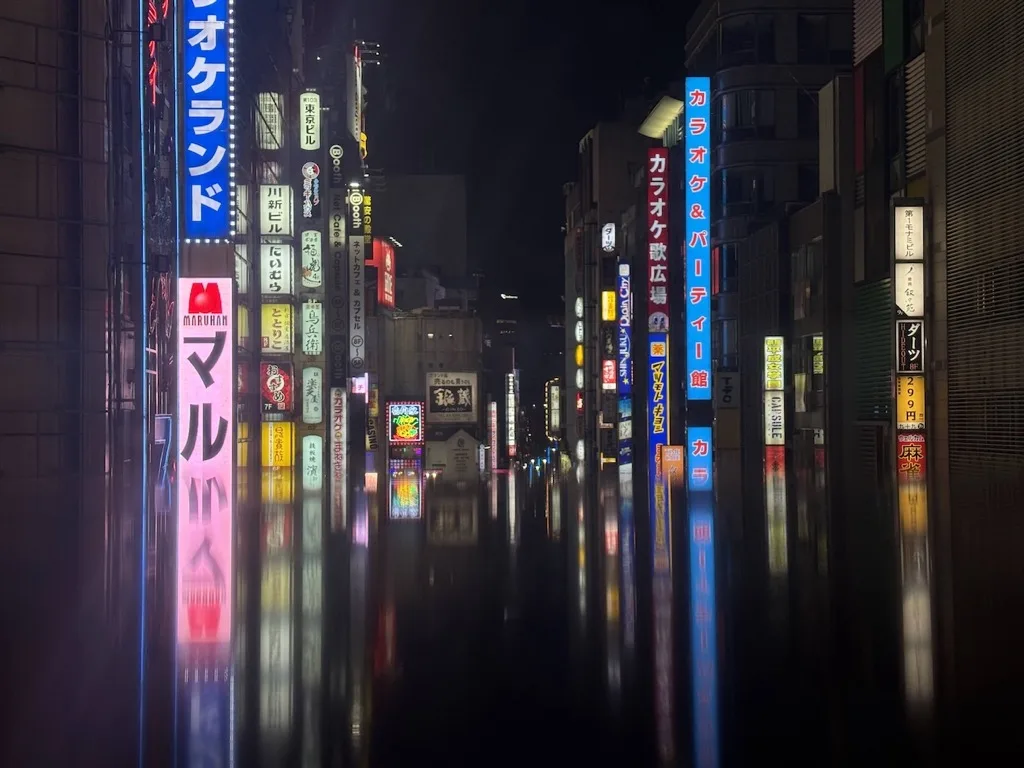
Eventually, I found the smartphone-friendly courses from EYExplore. Of the available options, Tokyo Cyberpunk Streets, which focuses on night photography, caught my attention. Night photography is what I struggle with most, so the choice was clear.
Tokyo Cyberpunk Streets
The course takes place in Shinjuku and Shibuya, iconic parts of Tokyo filled with neon lights. It lasts three hours, from 7 pm to 10 pm, and costs ¥28,000. The maximum group size is six, although reviews suggested that participants often end up being the only person booked onto a session.
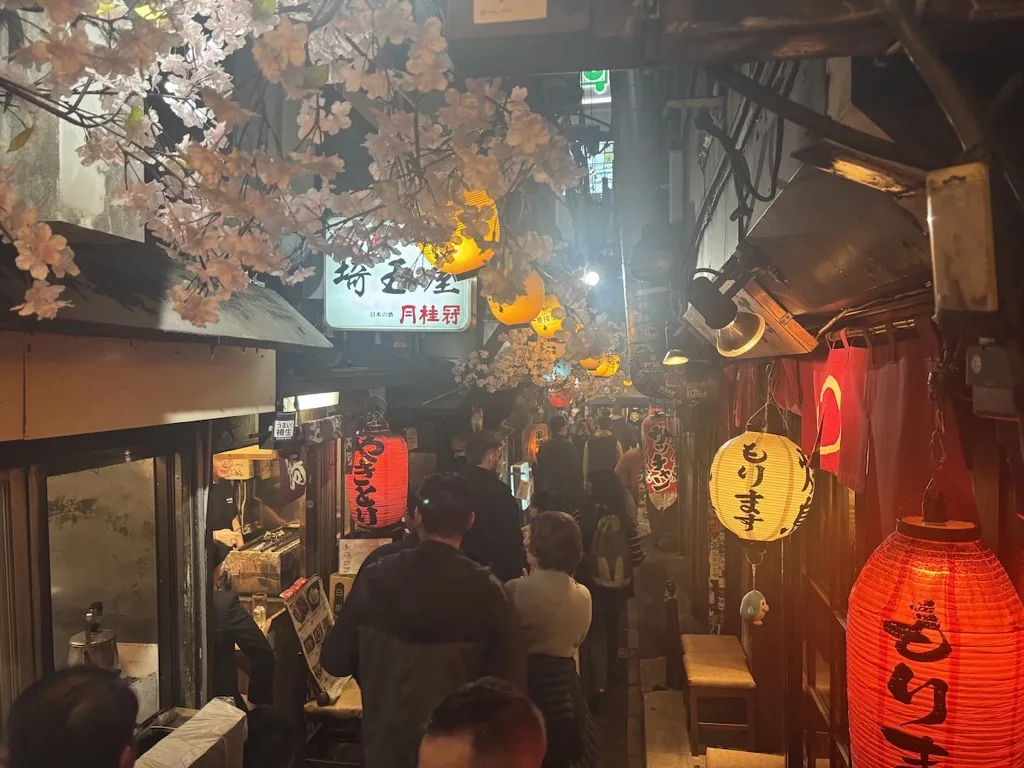
That is exactly what happened to me, so I essentially had a private course for the price of a group one. I took it on a Friday evening, when Shinjuku and Shibuya were full of people.
What the iPhone can do
At the start, my instructor, Lukasz, showed me a few basic iPhone features such as AE/AF Lock and manual exposure adjustment. I was already familiar with all of them, but it was useful to go over them again.
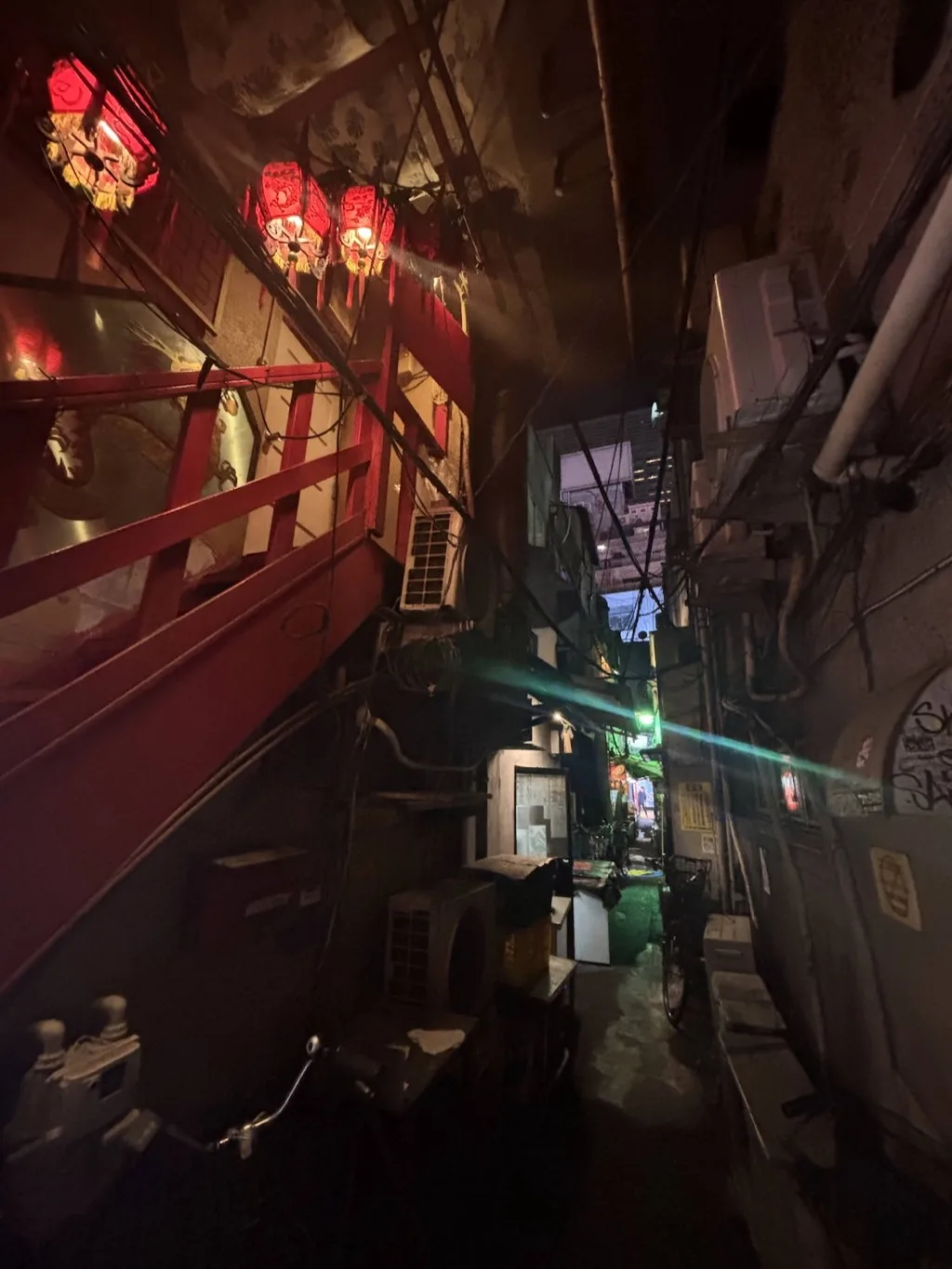
Since Lukasz does not use an iPhone, he did not know about the Live Photos trick for easily creating long-exposure images, for example.
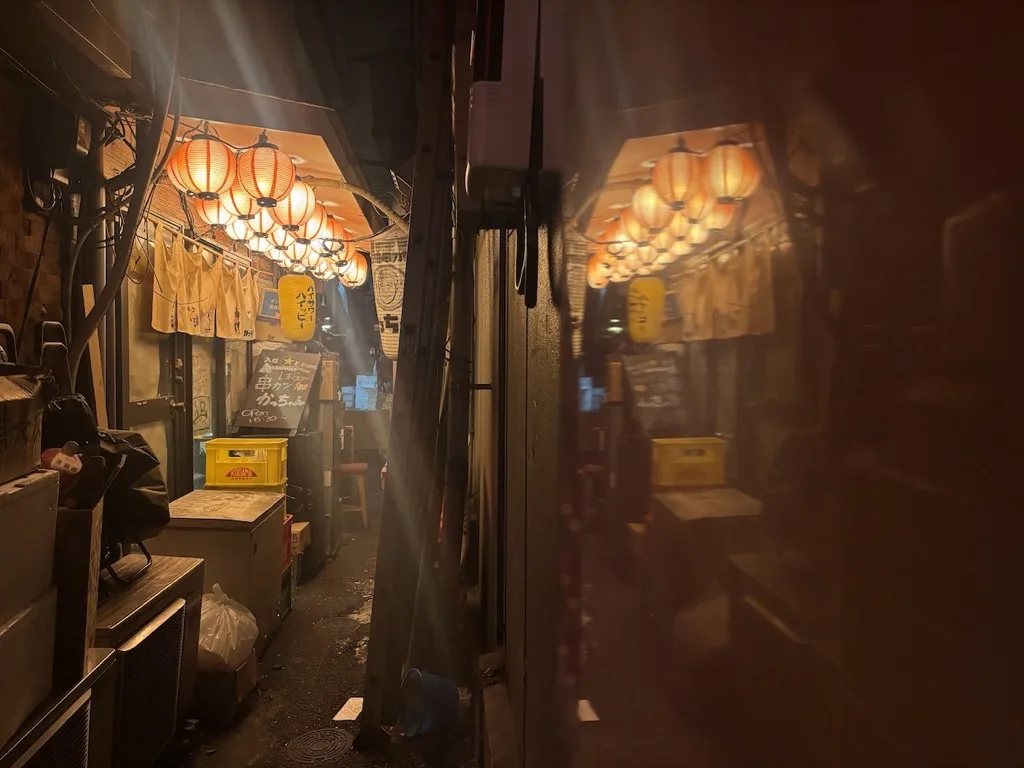
I occasionally encountered the iPhone’s limitations, though. For some scenes, I would have appreciated more manual controls and better dynamic range.
How the course worked
Lukasz would first explain a concept, such as using reflections or photographing silhouettes, and then we would move to a location where I could try it for myself.
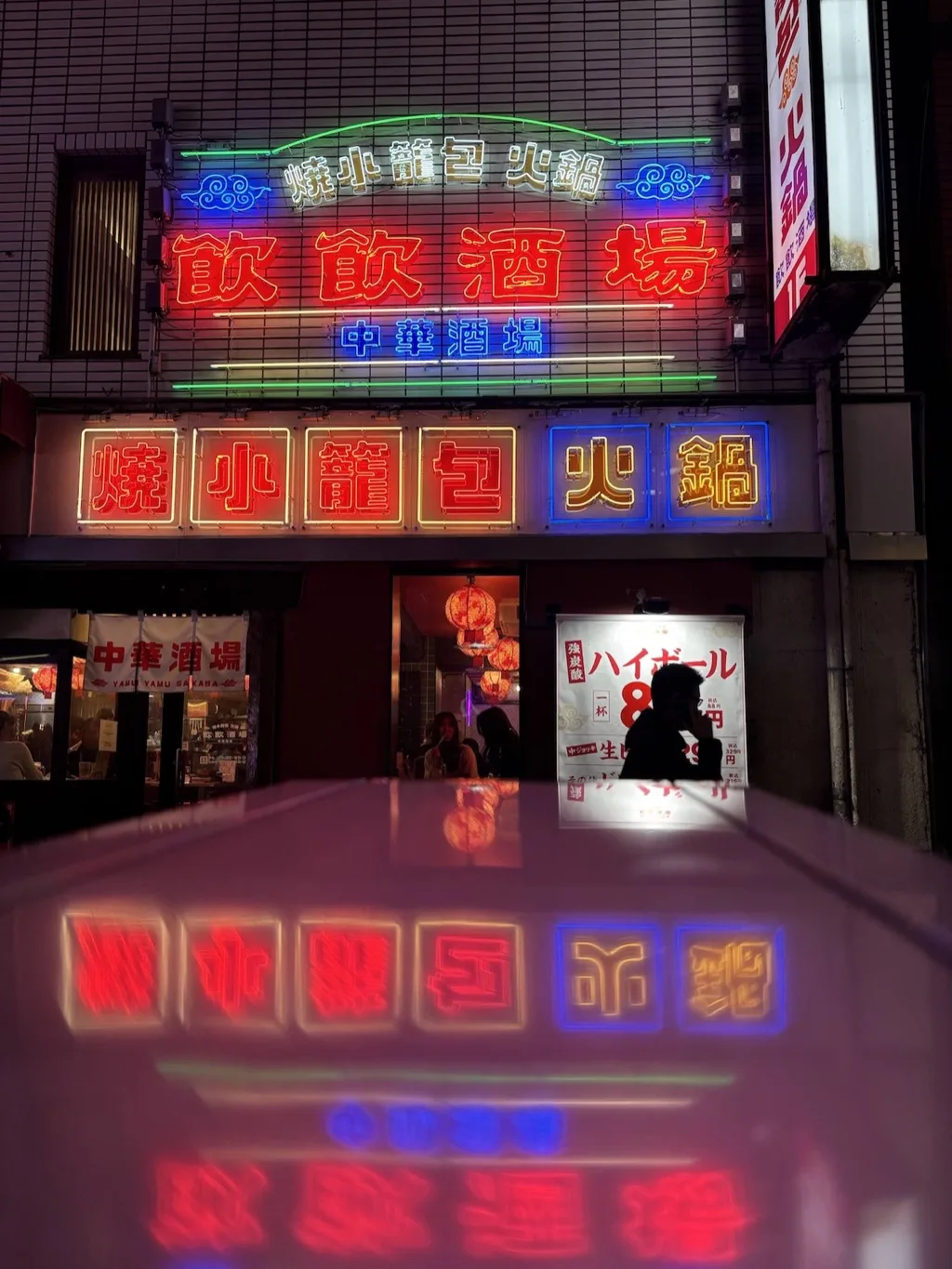
One of the first exercises was capturing silhouettes in neon light. I stood in the middle of a street, knelt down and pointed my iPhone upwards at a building covered in flashing neon signs. The aim was to capture a person in motion as a dark silhouette against the lights. I took around 80 photos, but only one seemed good enough.
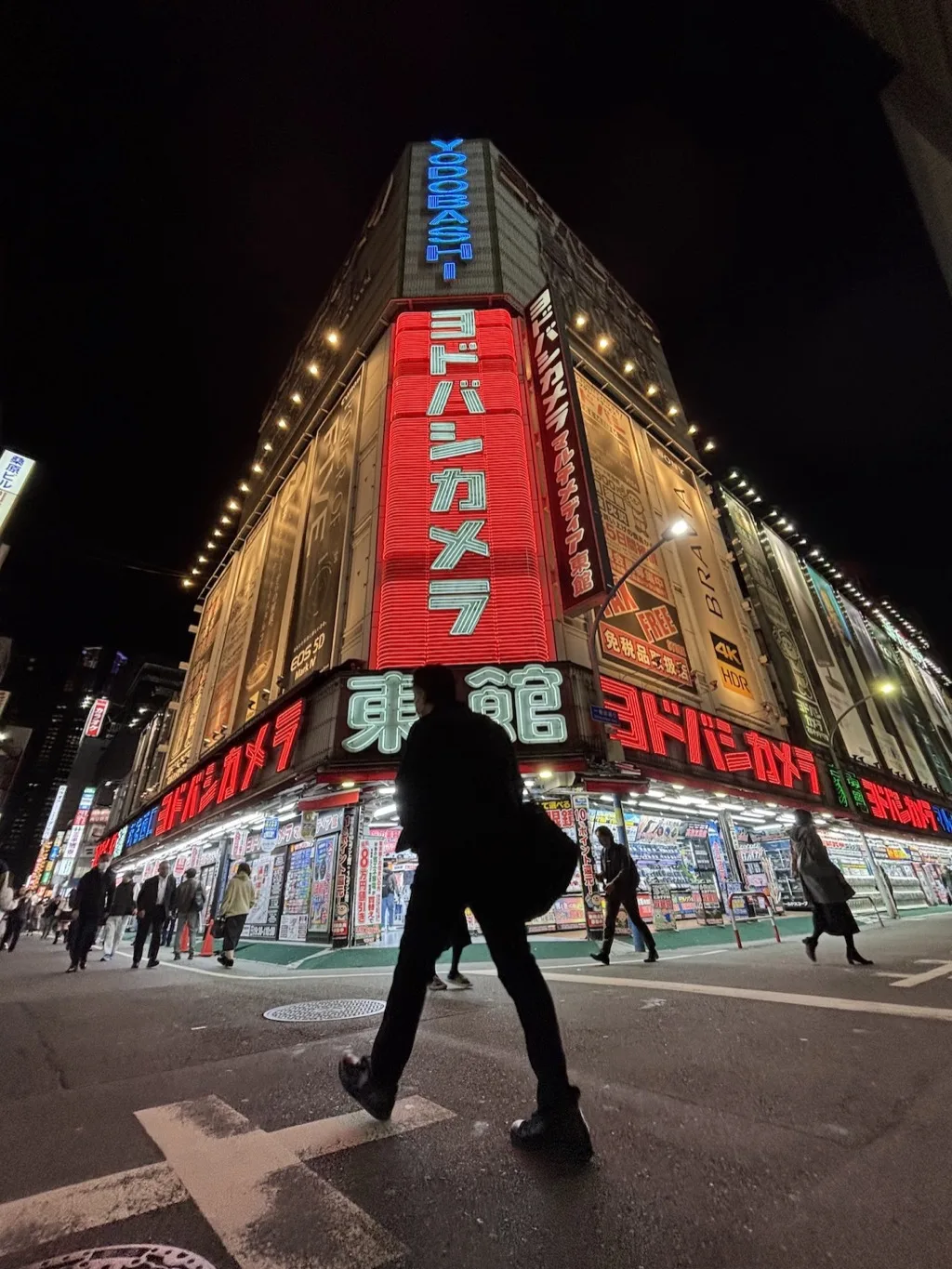
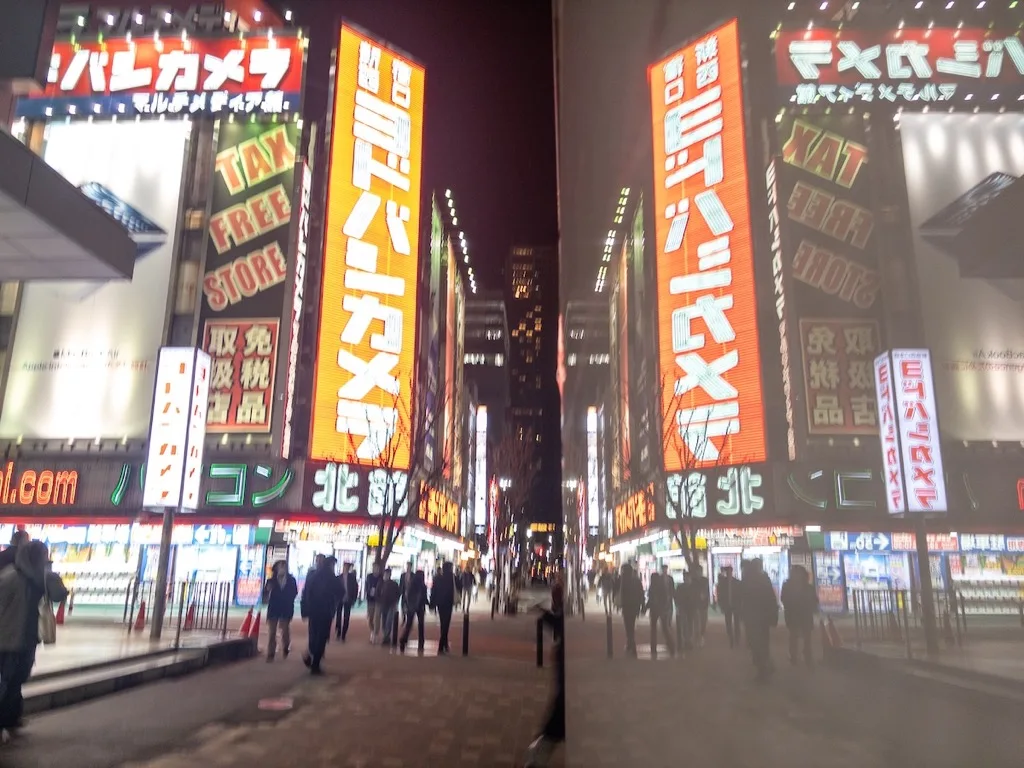
Another interesting approach was to use reflections. Reflections off drain covers, in glass shopfronts and on metal railings gave the images greater visual depth. Some scenes required lowering the exposure or using Lightroom Mobile for better control over the light.
Photographing people in Golden Gai was a challenge for me. On my own, I would never have dared to stand a metre from a stall and photograph a chef at work. Lukasz already knew which establishments did not mind, however, and advised me on how to capture the situation discreetly.

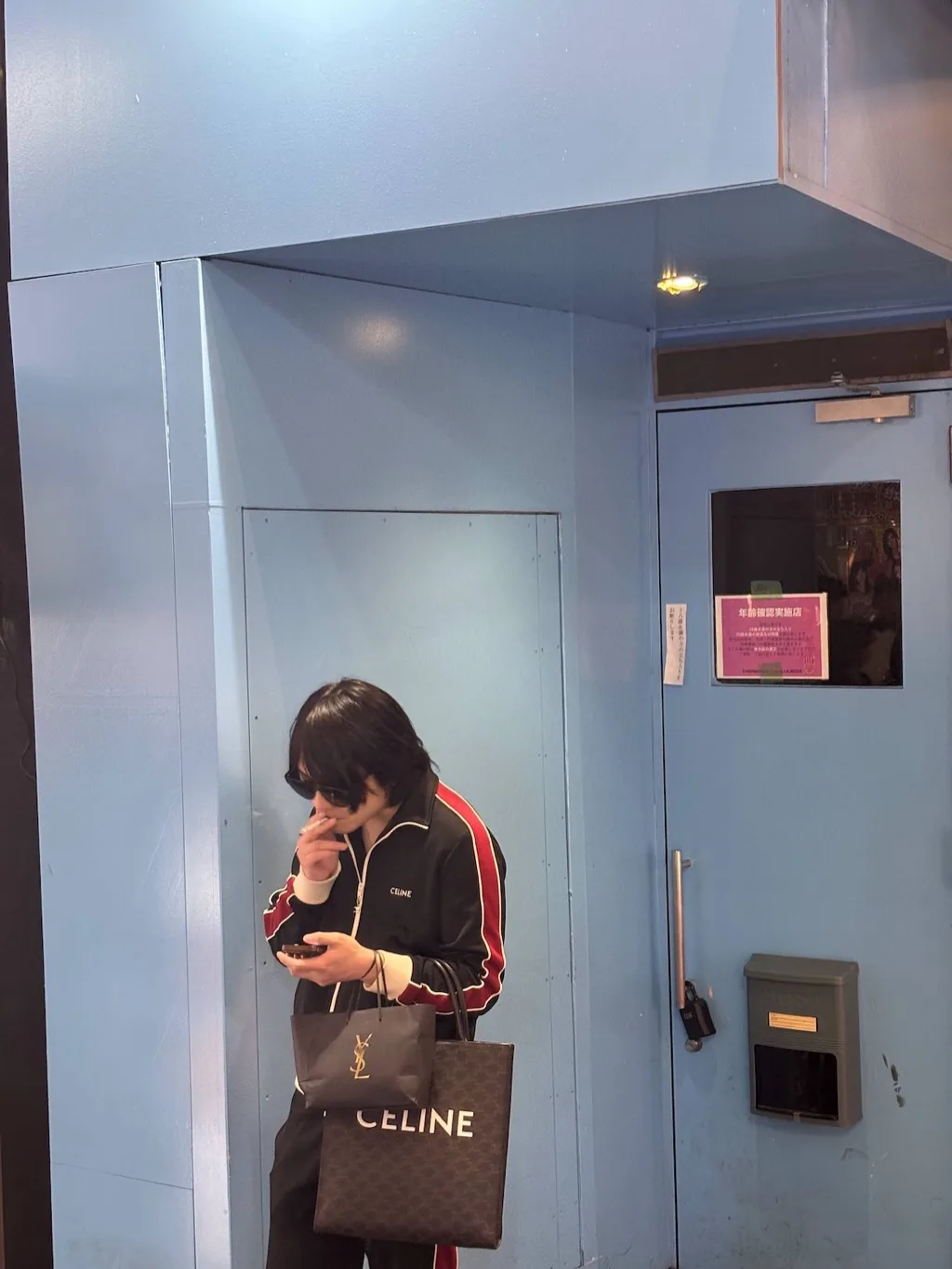
There were unplanned moments during the course too. Outside one building, a man smoking suddenly appeared in front of the blue entrance to a club, creating an exceptional atmosphere. It was simply a matter of being in the right place at the right time and reacting quickly.
After moving to Shibuya, we came to a building full of girls’ clubs. We waited on the stairs to see whether someone interesting would appear in the lift doorway, ideally framed together with people on the staircase.
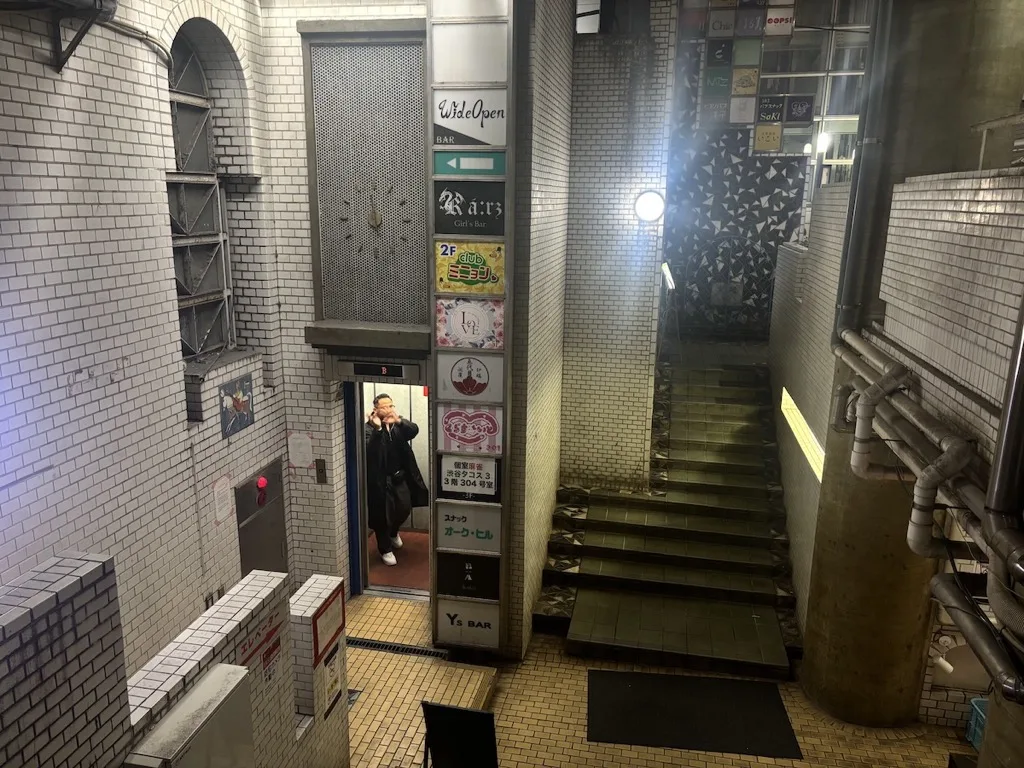
The right composition never materialised, but it was still an interesting place to experiment.
Conclusion
The Tokyo Cyberpunk Streets night photography course was definitely worthwhile. I learnt a great deal and came away with some interesting photographs.

Whether I will be able to repeat the results without a guide is another question. Mastering the technique is only part of it. Choosing the right location and waiting patiently for the right moment matter too, and both require an experienced photographer’s eye.
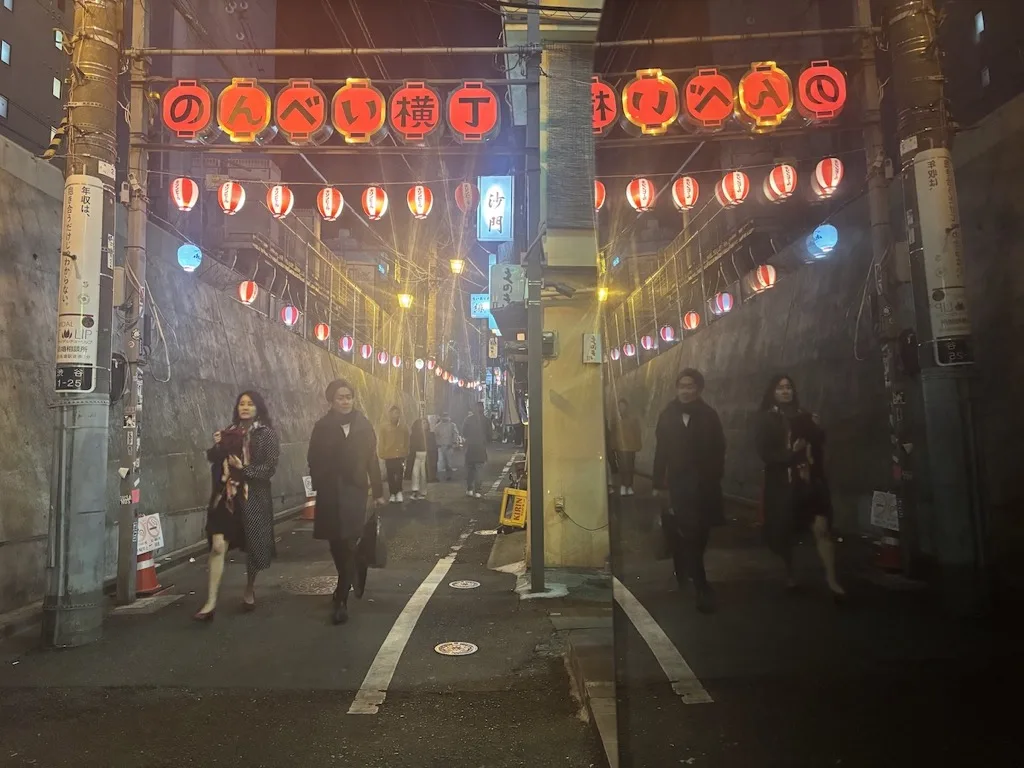
One of the most valuable lessons was not to stare at the screen the entire time. It is better to pay attention to your surroundings, watch what is happening and take advantage of an opportunity at the right moment. Constantly checking the screen can make you miss the moment that matters.