A day trip to Miyajima 🇯🇵
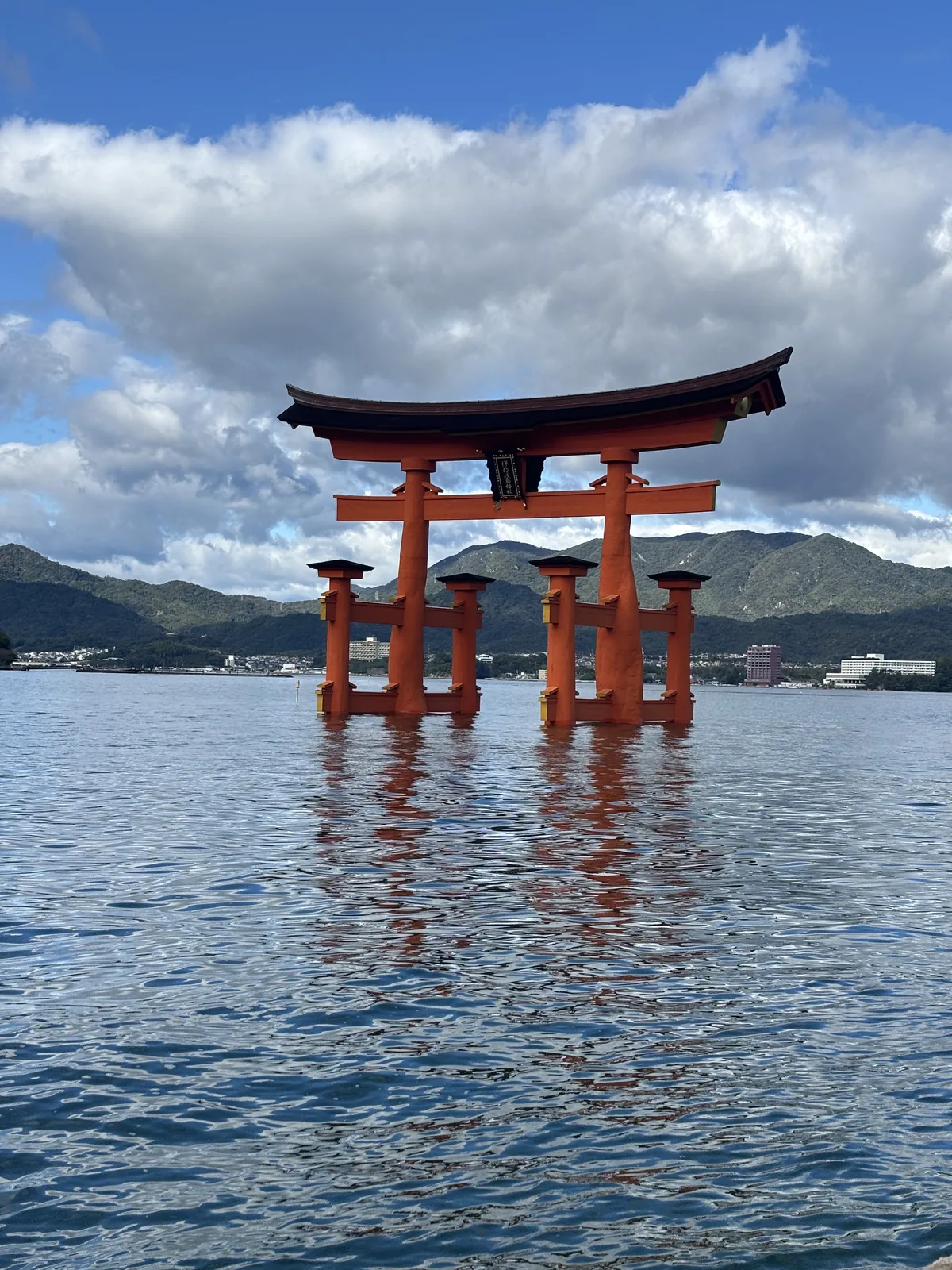
When I got to Itsukushima Shrine that morning, there was green water under the wooden walkways. The tide was so high they’d closed the shrine. A few hours later I walked right up to its torii gate.
I spent three nights in Hiroshima on my third trip to Japan and set aside a day for Miyajima. It’s about half an hour by train from Hiroshima to Miyajimaguchi Station, then another ten minutes by ferry.
You can use Suica for both the train and the ferry. On the way to the island, the ¥100 visitor tax comes out of your balance along with the ferry fare.
I reached the island at around 9:30.
Deer on Miyajima
The deer on Miyajima roam freely, just like the ones in Nara. I saw one pulling doughnuts out of a pushchair some tourists had left unattended.
Unlike in Nara, you can’t buy deer crackers here. You’re not supposed to feed them at all.
Itsukushima Shrine
Itsukushima is a Shinto shrine with wooden buildings and walkways raised on pillars over the sea. Its best-known feature is the large red torii gate, which appears to float at high tide.
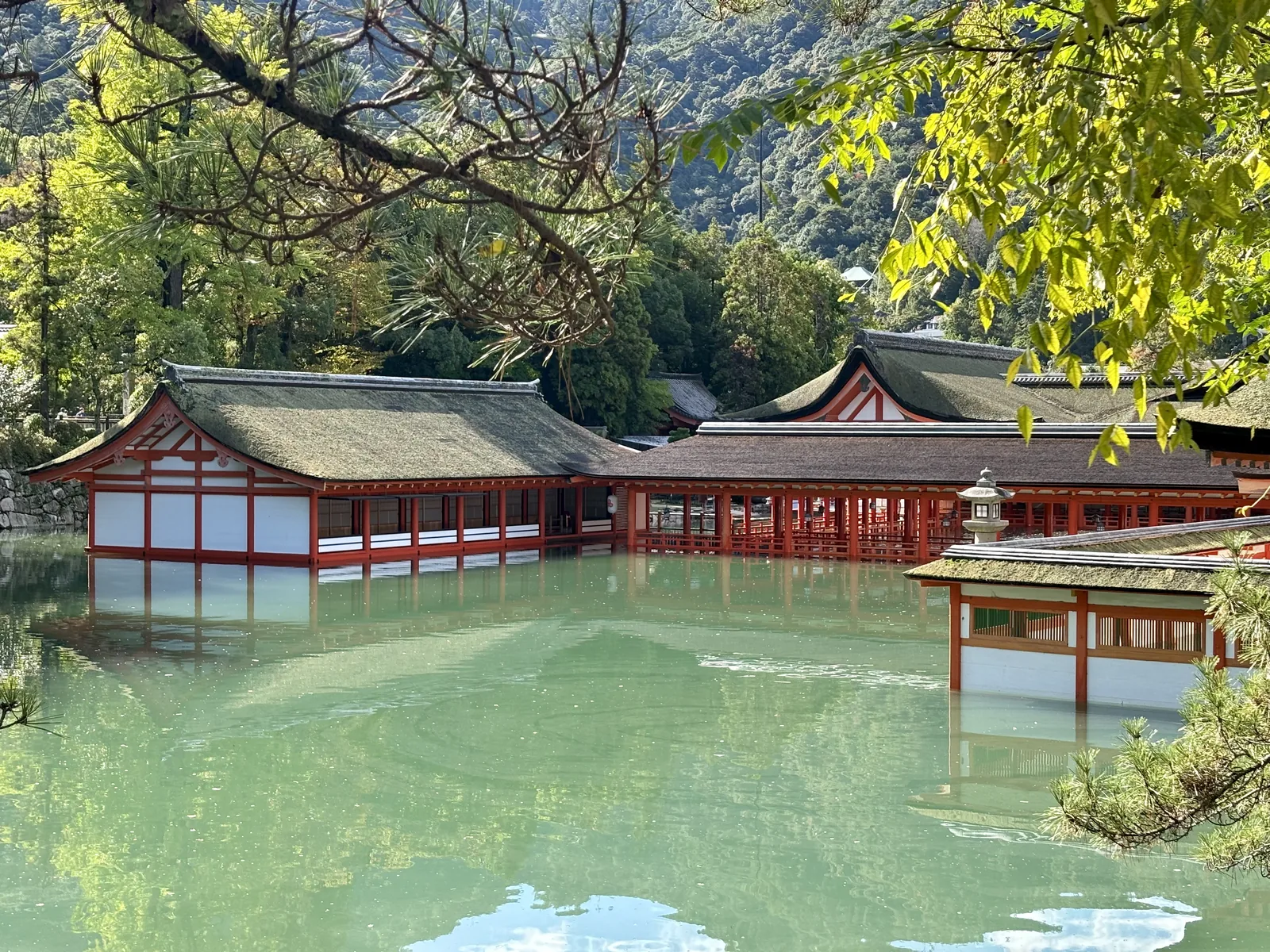
I waited a while to see if the water would go down. When a long queue started forming outside the entrance, I went to Daishō-in instead.
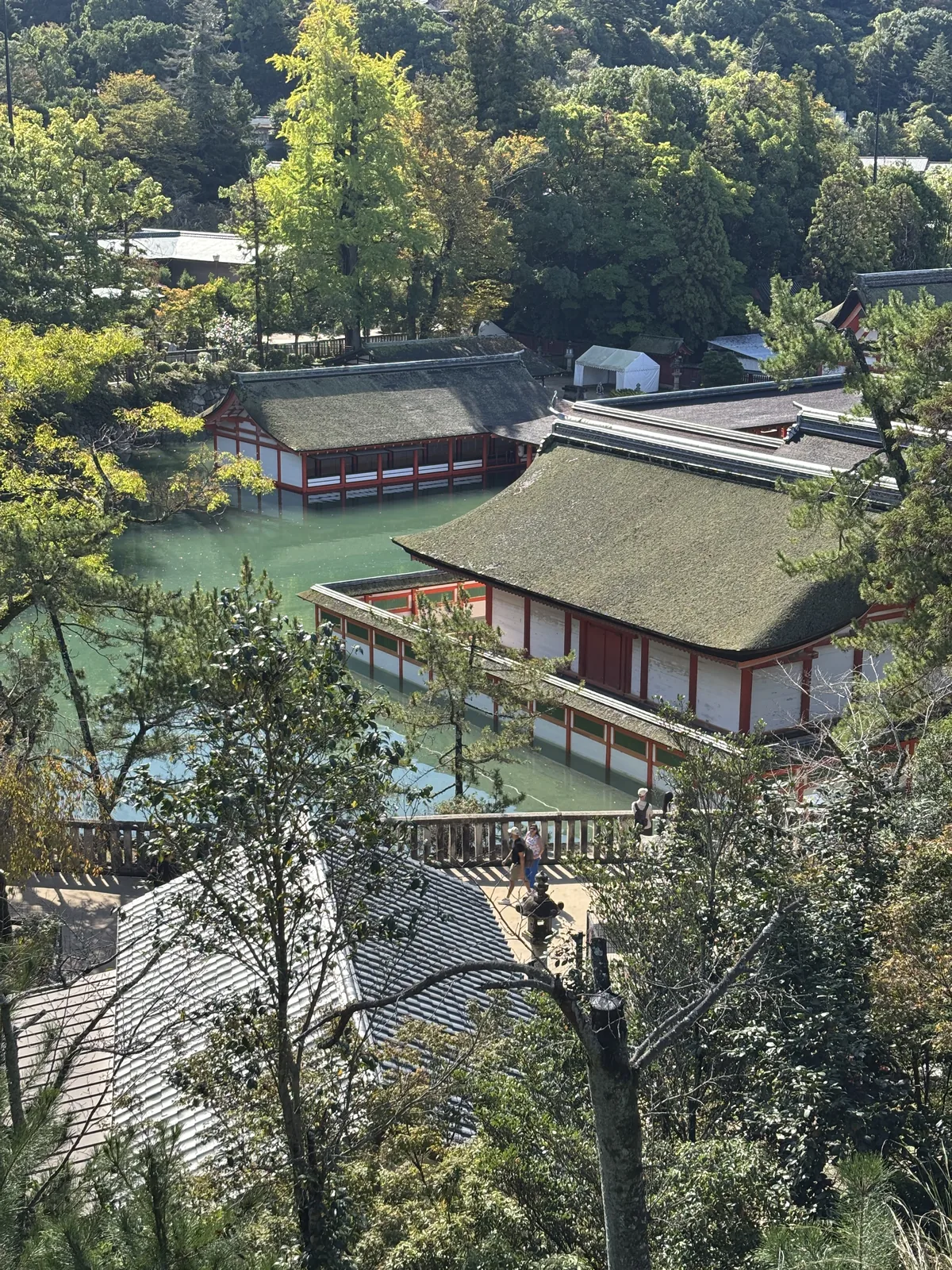
Daishō-in and the surrounding area
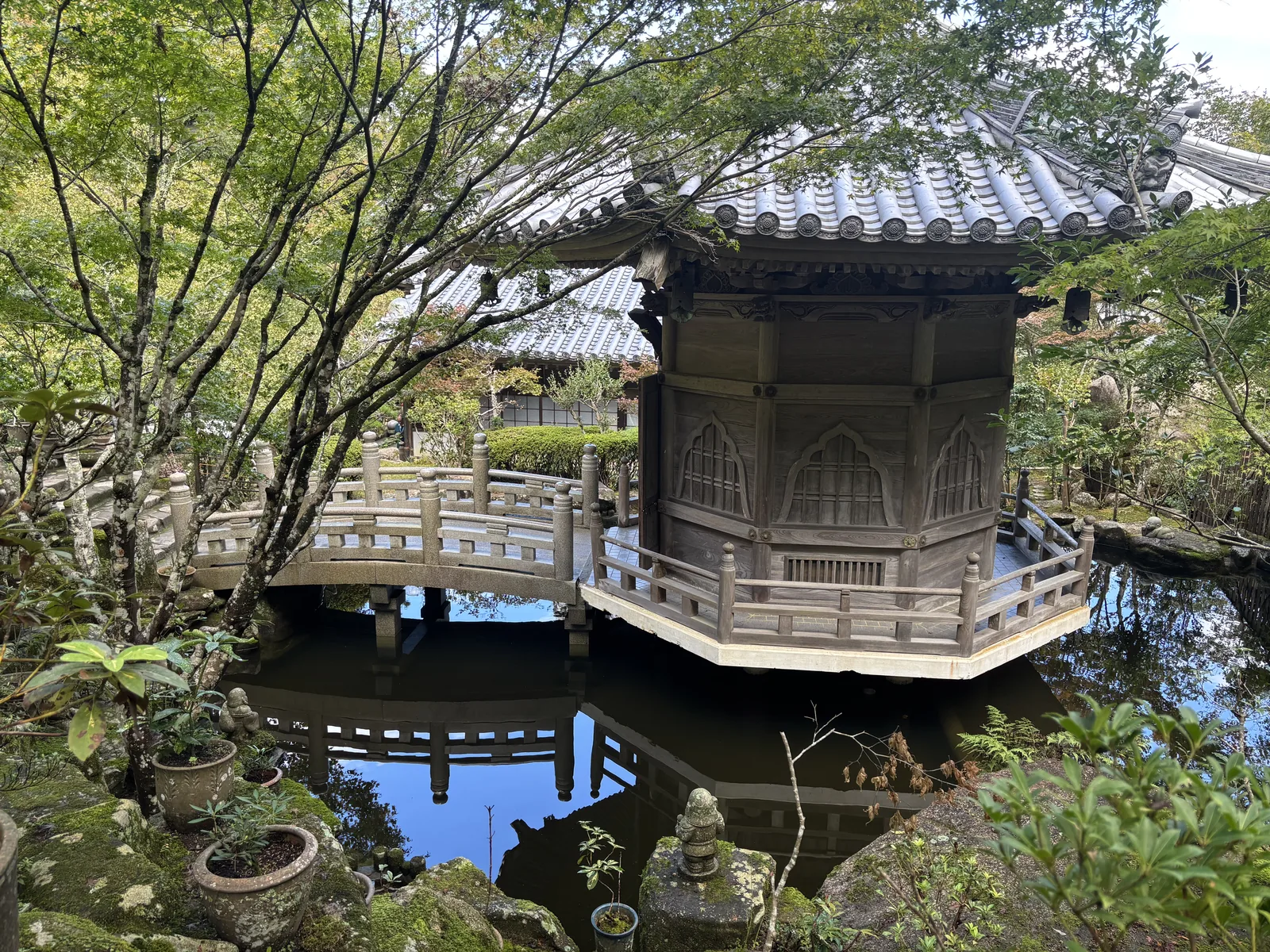
Daishō-in is a Buddhist temple at the foot of Mount Misen. I didn’t plan to stay long.
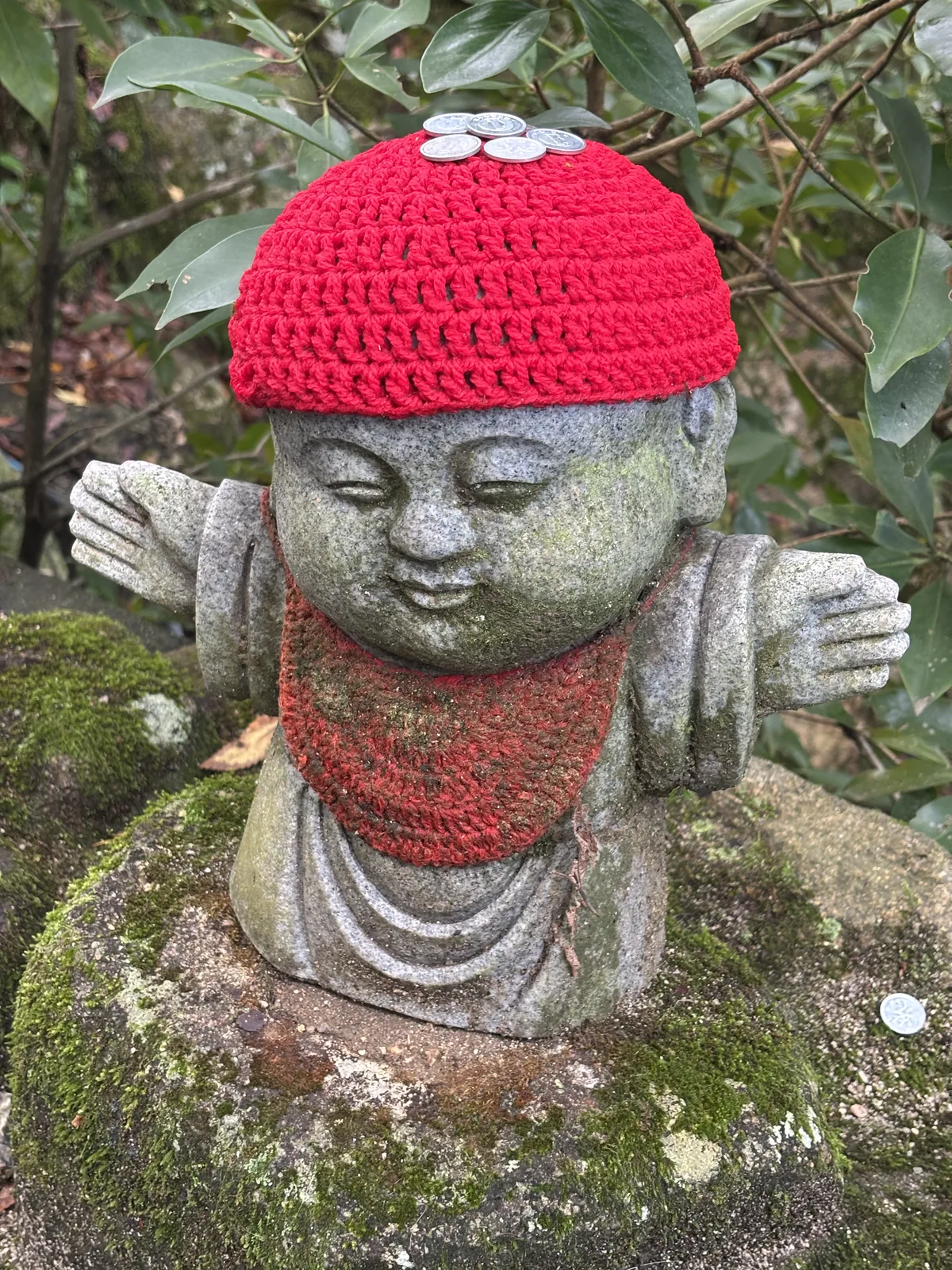
I particularly liked the little stone statues in red knitted hats.
I also had a chance to ring a large temple bell. Unlike the church bells I am used to, it has no clapper inside. Instead, you ring it by striking it from the outside with a wooden beam.
Under one of the temple buildings is a narrow passage called Kaidan-meguri. It was so dark I couldn’t see my hand in front of my face. I felt my way along until some tourists started using their phone screens to see. A shame, really. The dark was the whole point for me.
I also wandered through some of the smaller gardens around the shrine and went to see Tahōtō Pagoda on the hill above it.
Food and tea on Miyajima
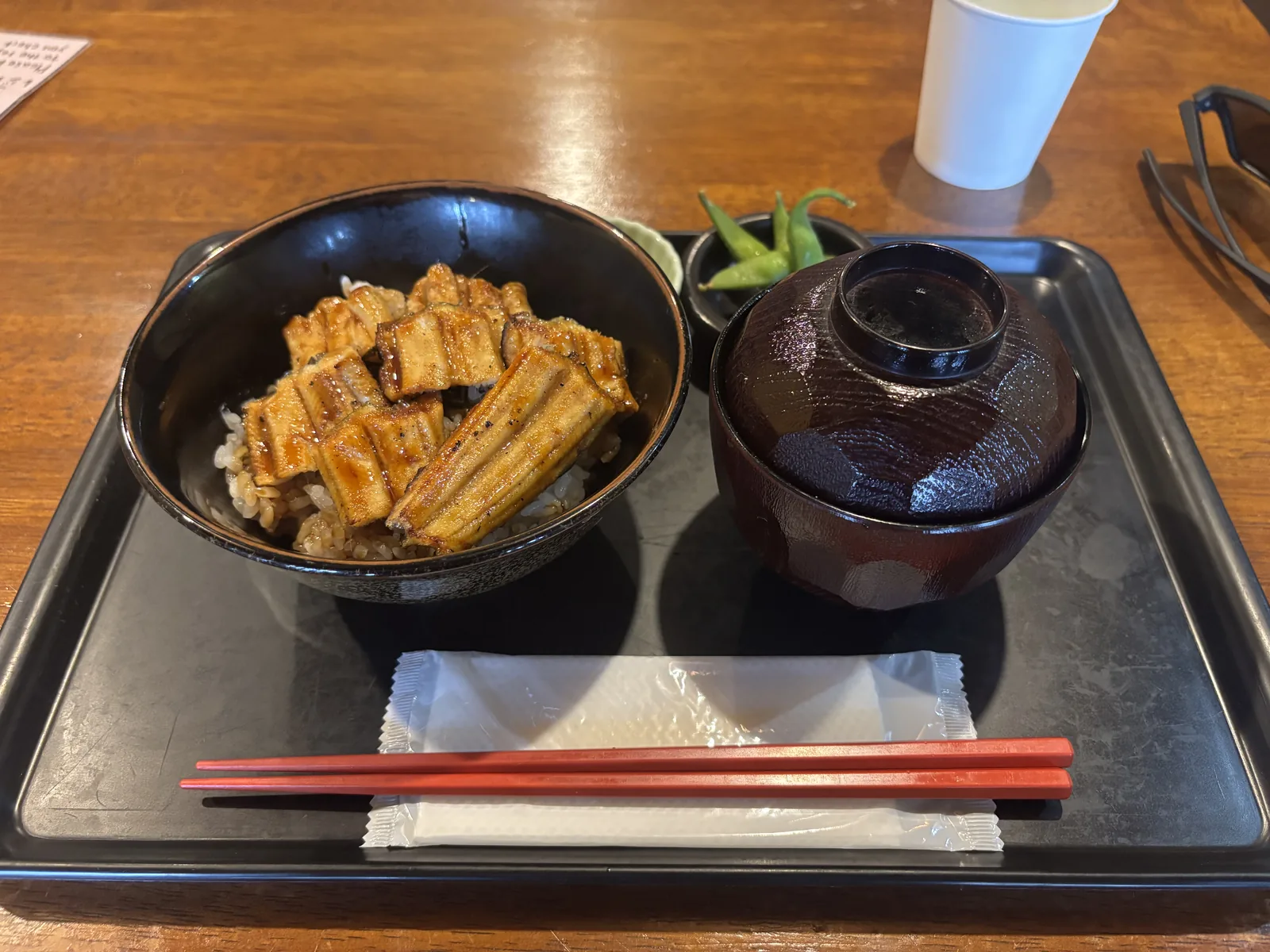
Miyajima is known for oysters and anago-meshi, or conger eel on rice. I don’t eat oysters, so that was an easy choice. One restaurant managed its long queue with a tablet that was only in Japanese. The staff called out numbers. I ended up having anago-meshi at Miyajima Base.
After lunch I went to Momijidani Park, but it was chilly, so I went looking for a teahouse instead. Google Maps said several were open. They weren’t.
I was the only customer at Miyajima Saryo Senkei, near the park. I felt a little self-conscious at first, but I ended up glad of the quiet.
I ordered matcha and a set to make my own daifuku and monaka. There was soft rice dough for the daifuku and crisp, maple-leaf-shaped wafers for the monaka. I could choose from sweet bean paste, fruit and a few other fillings.
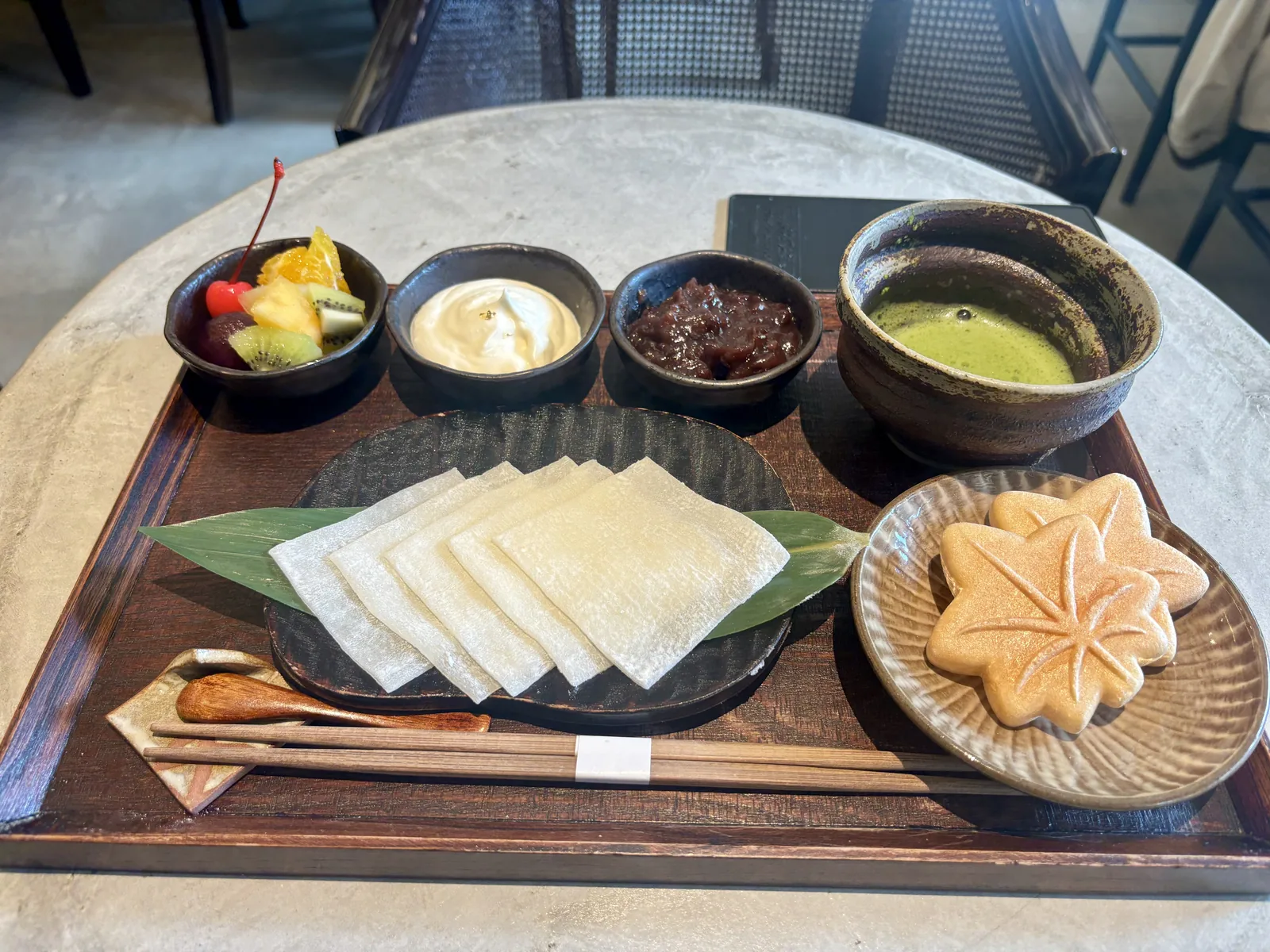
Not exactly a light dessert after lunch.
The shrine and torii gate at low tide
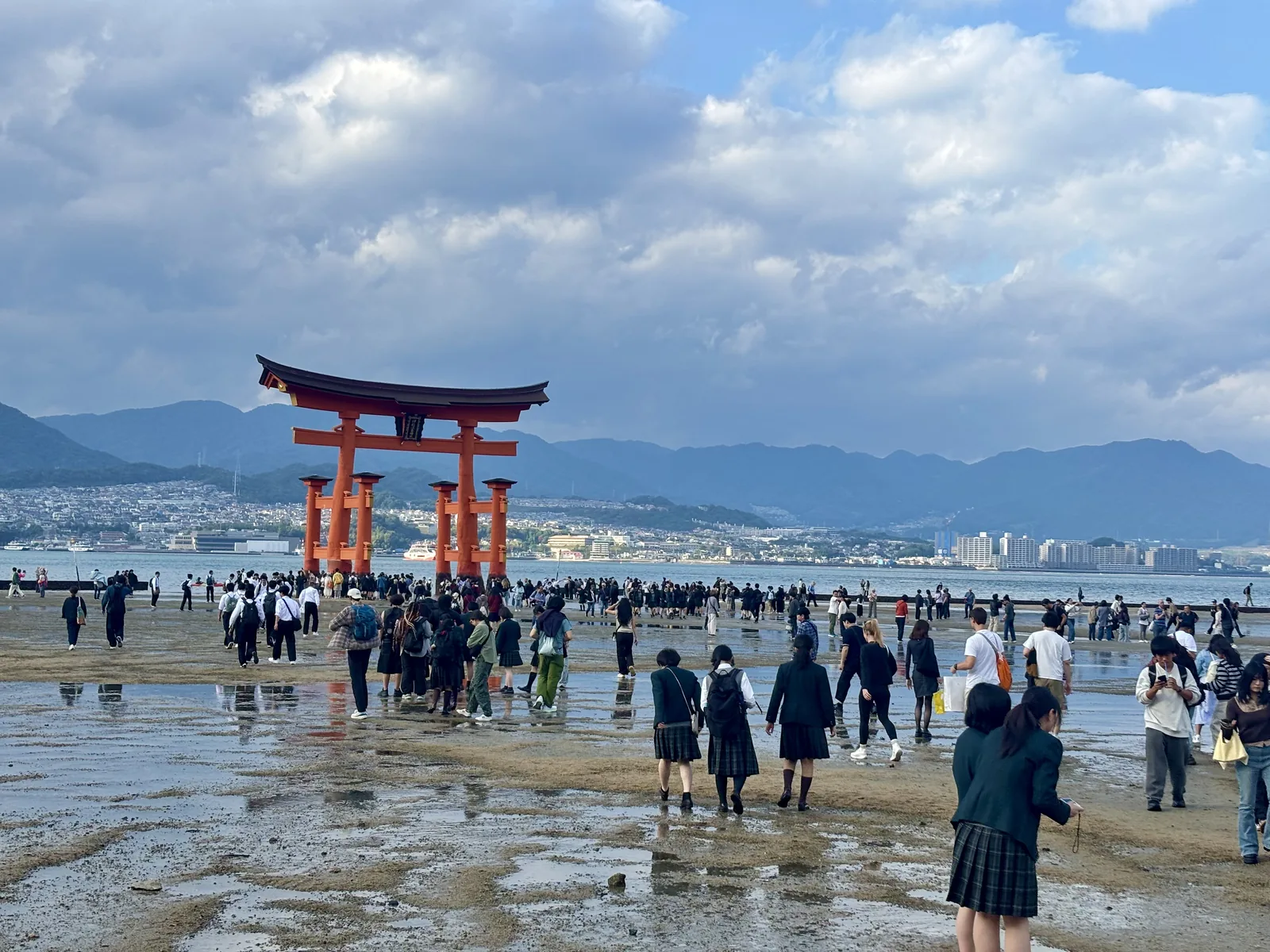
The shrine reopened at around 11:45. By the time I went inside that afternoon, there was mostly mud where I’d seen green water under the walkways that morning.
The tide had gone out far enough to walk across the seabed to the gate. I got my shoes a little wet on the way. Up close I could see just how massive the wooden pillars were.
Back to Hiroshima
I spent about six hours on Miyajima. I had considered staying until sunset, but with the sky overcast, I decided to head back to Hiroshima earlier.
Of course, as soon as I was on the ferry, the sun broke through the clouds and lit up the torii gate.