Visiting Kennedy Space Center 🇺🇸
As a fan of spaceflight, NASA and everything related to them, I had wanted to visit the Kennedy Space Center Visitor Complex at Cape Canaveral in Florida for years. This year, I finally did.
Tickets
A one-day ticket cost $57. It is impossible to see everything in a day, so I planned a two-day visit. There was no two-day ticket, but an annual pass cost $82—less than two one-day tickets. As everywhere in the United States, the listed prices excluded the six per cent sales tax.
The annual pass also included a voucher for one free parking visit, normally $10, and a physical pass that could serve as a souvenir.

Day one
Rocket Garden
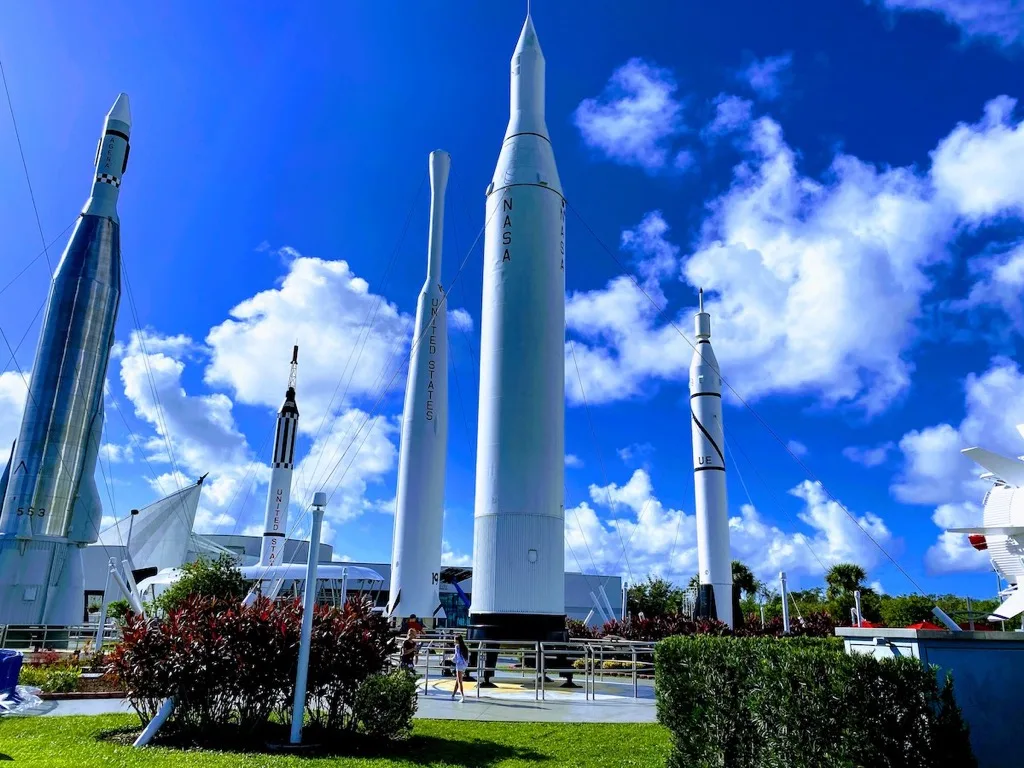
The Rocket Garden is immediately inside the entrance and contains full-size American rockets from the Mercury programme through to Saturn IB. Seeing how their designs—and particularly their size—changed over time is fascinating.
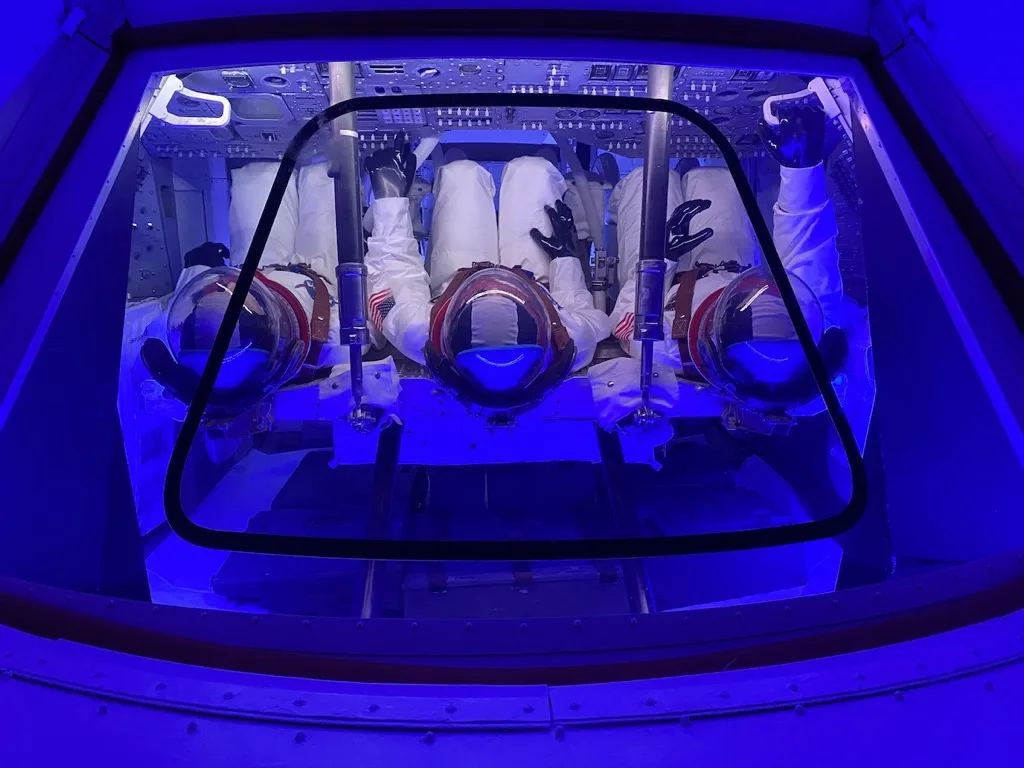
You can try sitting, or rather lying, inside a landing capsule.
A guided tour runs every hour, during which a NASA employee explains a little about each rocket.
Bus Tour
The Bus Tour is effectively the main attraction and draws the most people, so it is worth doing early.
In about 40 minutes, a bus takes you through parts of the complex closed to the public. To your right is the enormous Vehicle Assembly Building, where rockets are prepared.
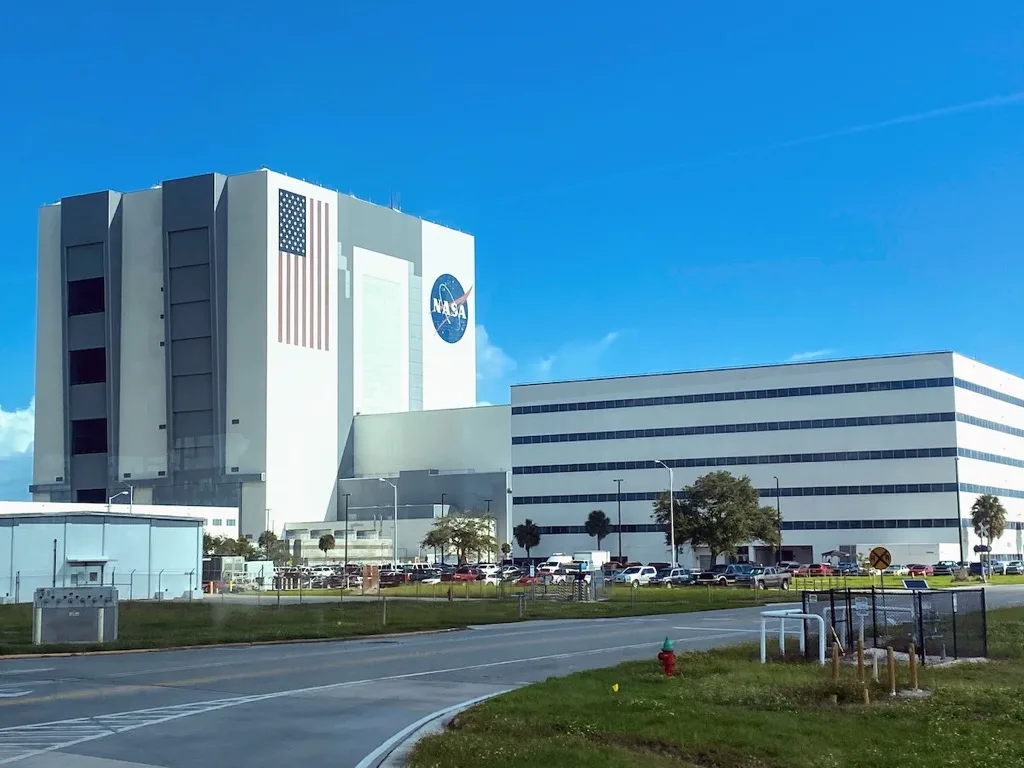
To your left is Launch Complex 39A, from which Apollo 11 launched and which SpaceX was leasing at the time.
The bus eventually drops you at the Saturn V exhibit.
Saturn V
At nearly every exhibit, visitors enter the building in small groups at regular intervals. The first room usually contains a film telling its story before the main attraction is revealed with suitable drama.
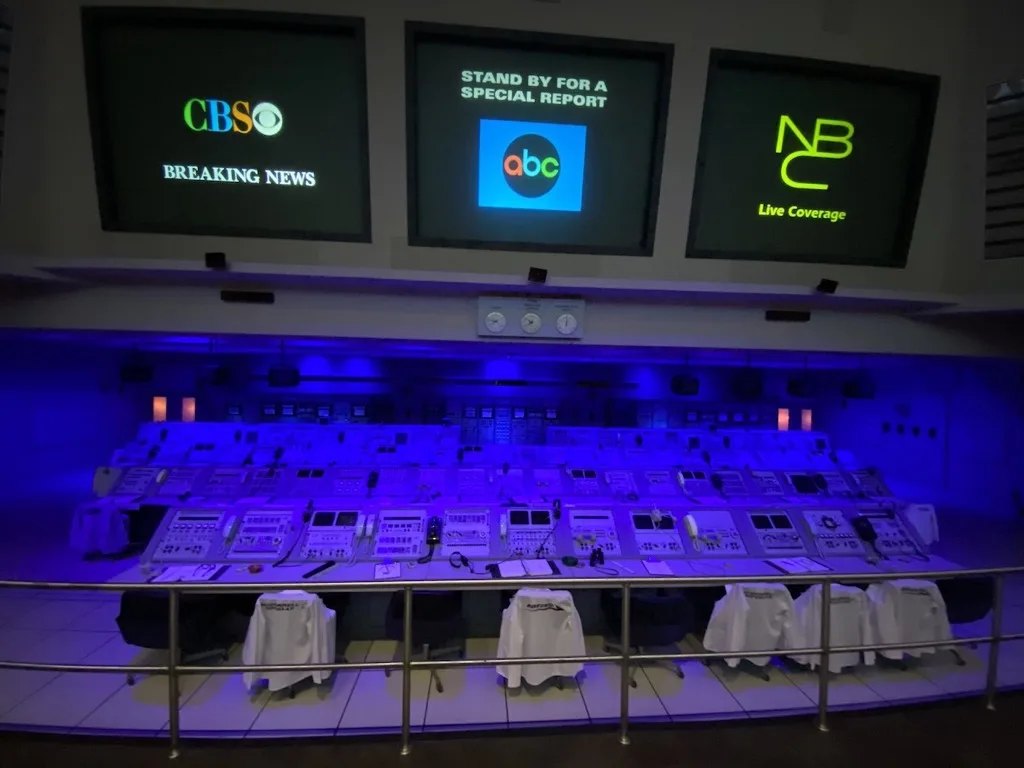
The Saturn V exhibit begins with the usual film and continues into a recreated control room showing a launch. The room comes alive around you as you follow the launch, including vibrations through the bench on which you sit.
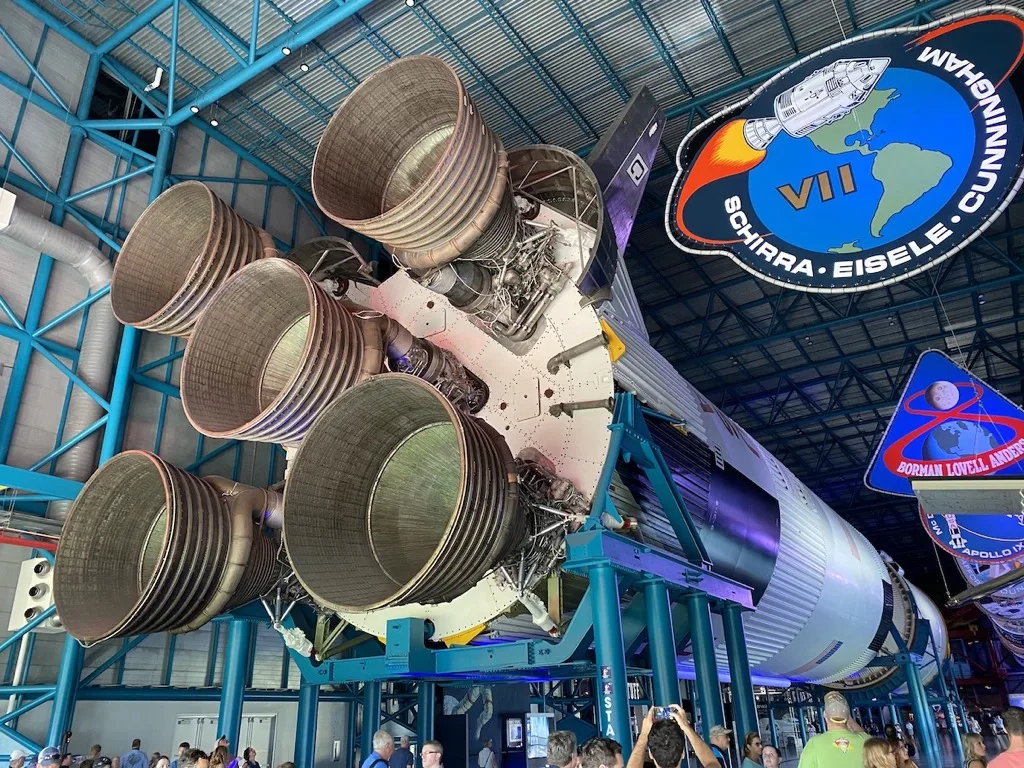
You then enter a vast hall containing the Saturn V itself. Its stages are separated, making it even longer than the rocket’s original 110 metres and offering a detailed view of each stage’s engines.
An Apollo command module stands to one side, while a real lunar module sits at the end of the hall—rather larger than my LEGO version.
An hourly guided tour is available here too. Among other things, you learn that the lunar module at the end of the hall is genuine. It was originally intended for Apollo 15, but another was ultimately used because of the lunar rover.
A retired NASA engineer is always present to answer questions. You can also touch a real piece of rock brought back from the Moon.
Returning from the Saturn V centre to the main complex again requires a bus, although this time it is only a short direct ride.
Space Shuttle Atlantis
Space Shuttle Atlantis was easily my favourite exhibit. After a short film about the shuttle’s history and development, doors open to reveal Atlantis, a real spacecraft that flew into space many times.
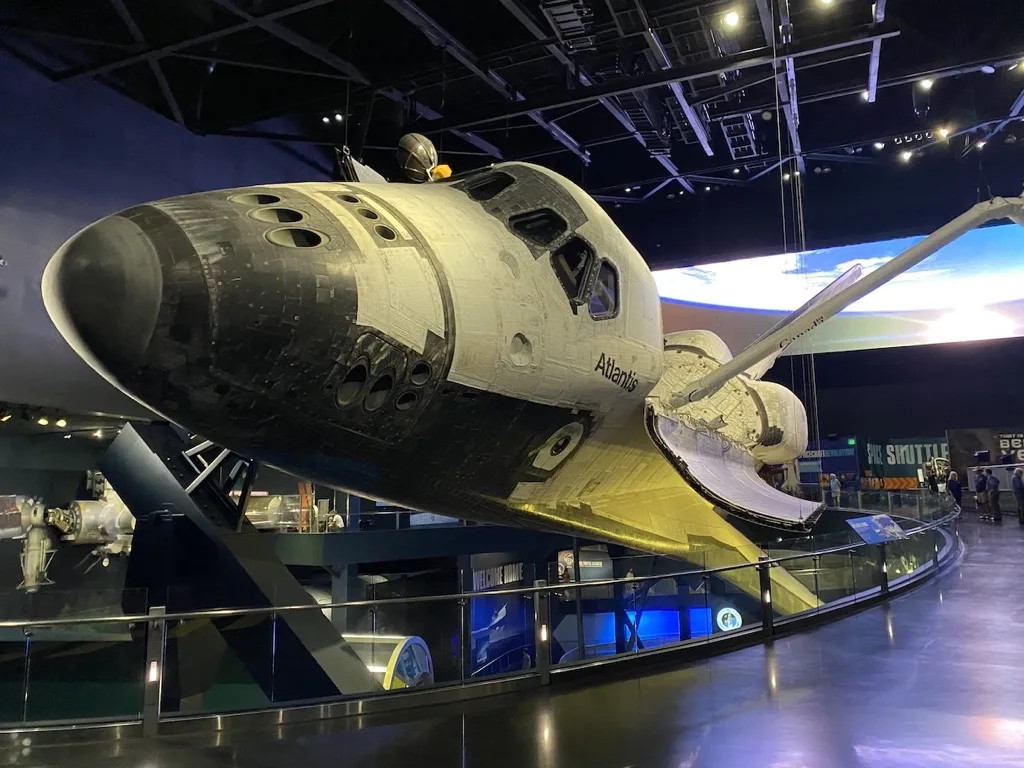
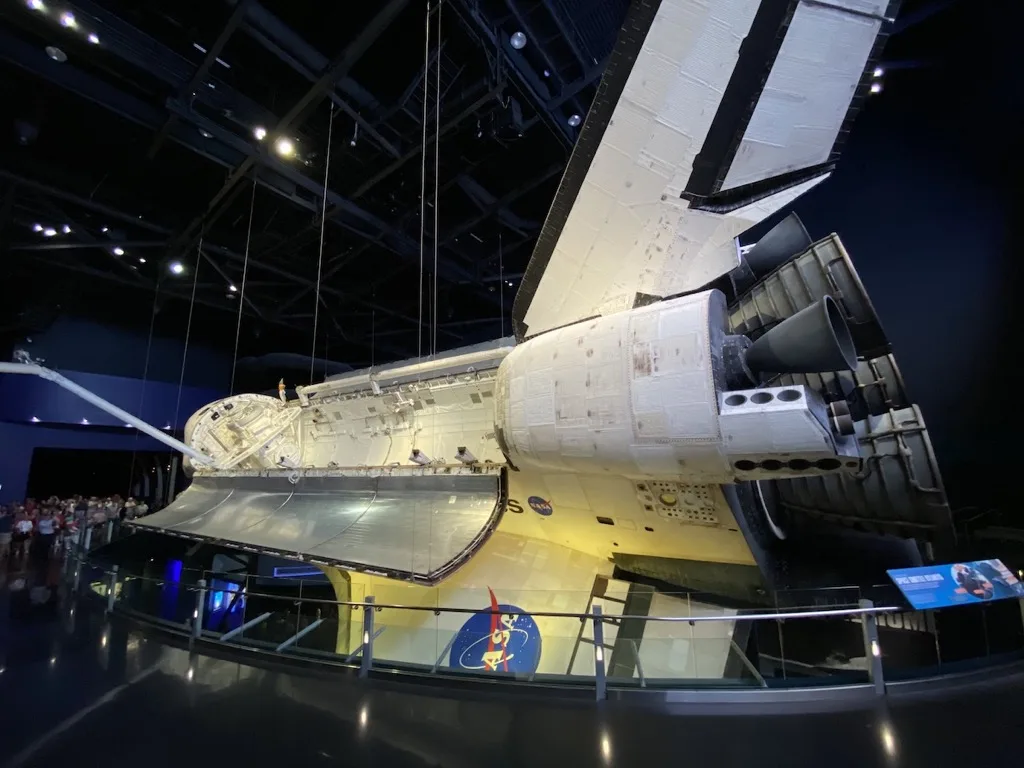
Atlantis is suspended in the middle of the hall, allowing you to view it from practically every angle. A set of tyres is displayed separately, with their points of contact with the runway clearly visible.
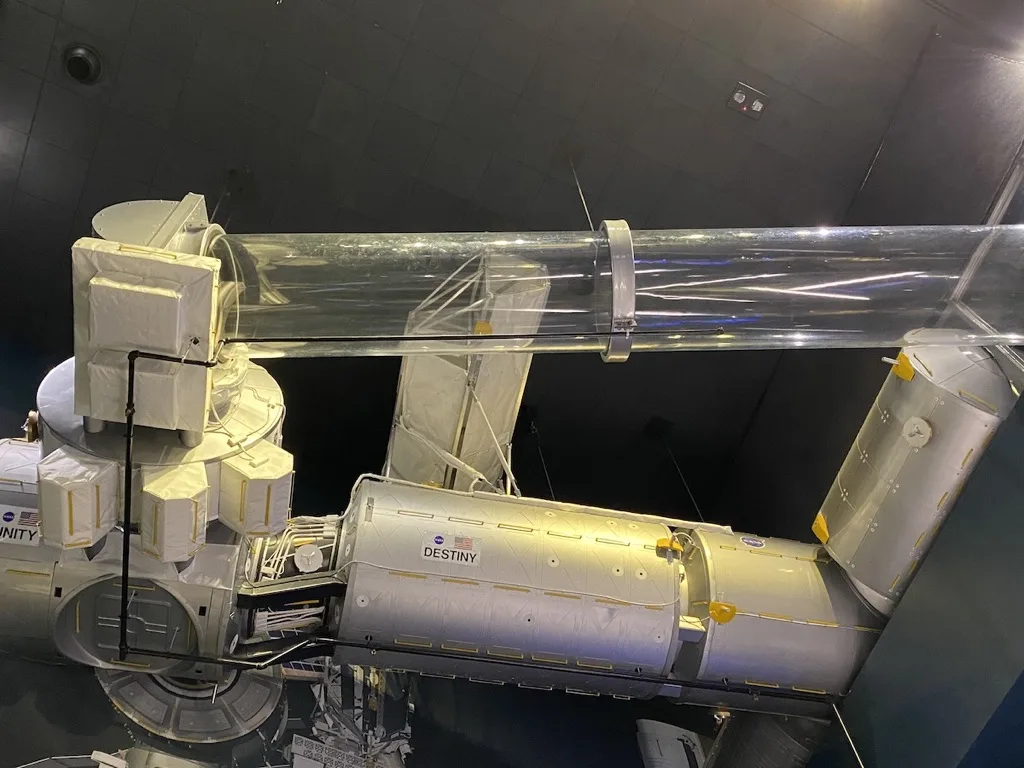
The exhibit contains many other interesting experiences. You can see a full-size model of the Hubble Space Telescope and walk—or rather crawl—through a section of the International Space Station suspended tens of metres above the floor. Its final section is a transparent tube that makes the height very apparent.
Children and adults can use a slide demonstrating the shuttle’s descent, approximately seven times steeper than a conventional aircraft landing.
The highlight, however, is the Shuttle Launch Experience. This motion simulator seats a group in chairs and recreates a shuttle launch from the vertical position, in which you are practically lying on your back, through all the vibrations on the journey into space.
An hourly guided tour is available here as well.
Day two
Heroes & Legends
Heroes & Legends is a multimedia exhibit beside the Rocket Garden near the entrance. It celebrates American astronauts and the qualities they displayed.
After a short film about the history of spaceflight, you enter a room with a huge screen, put on 3D glasses and watch a presentation described as 4D because it includes several physical effects.
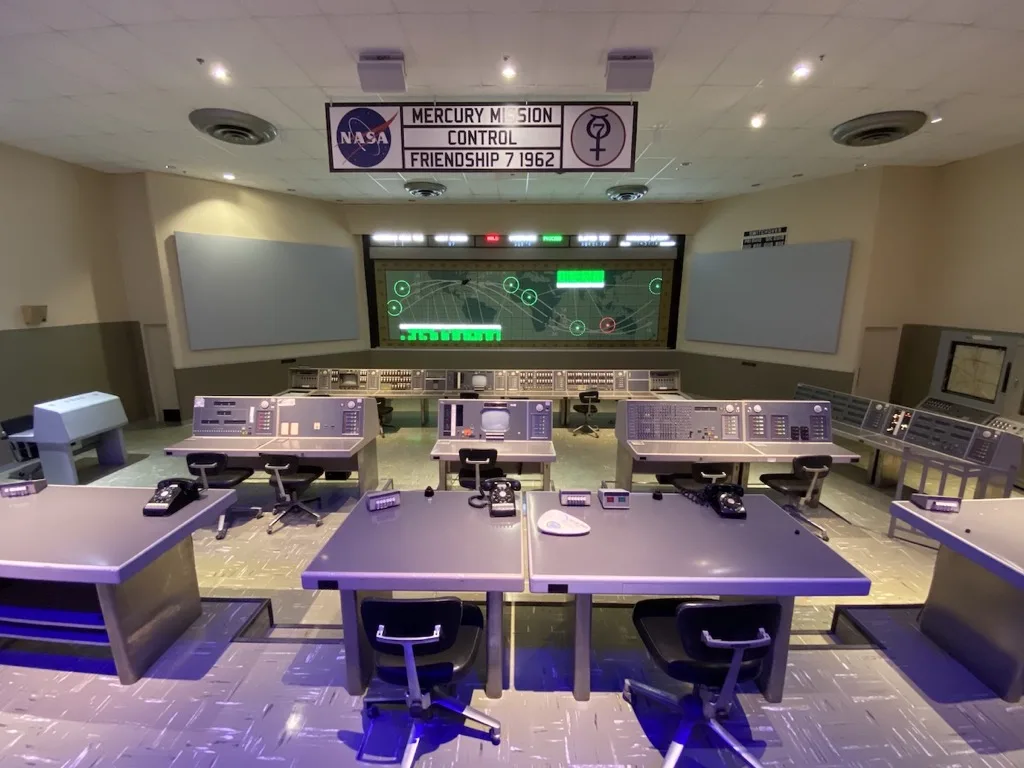
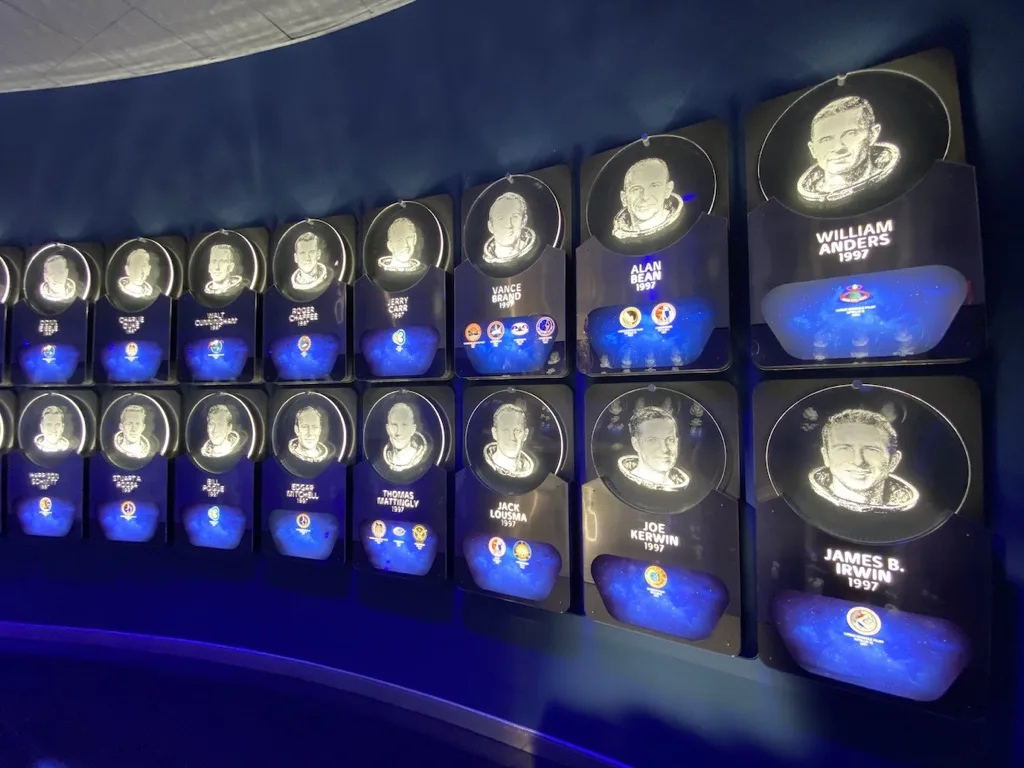
The next room contains the Sigma 7 and Gemini 9 capsules and the U.S. Astronaut Hall of Fame.
Journey to Mars: Explorers Wanted
Journey to Mars: Explorers Wanted is aimed primarily at children. It explains travelling to Mars, living there and the related challenges.
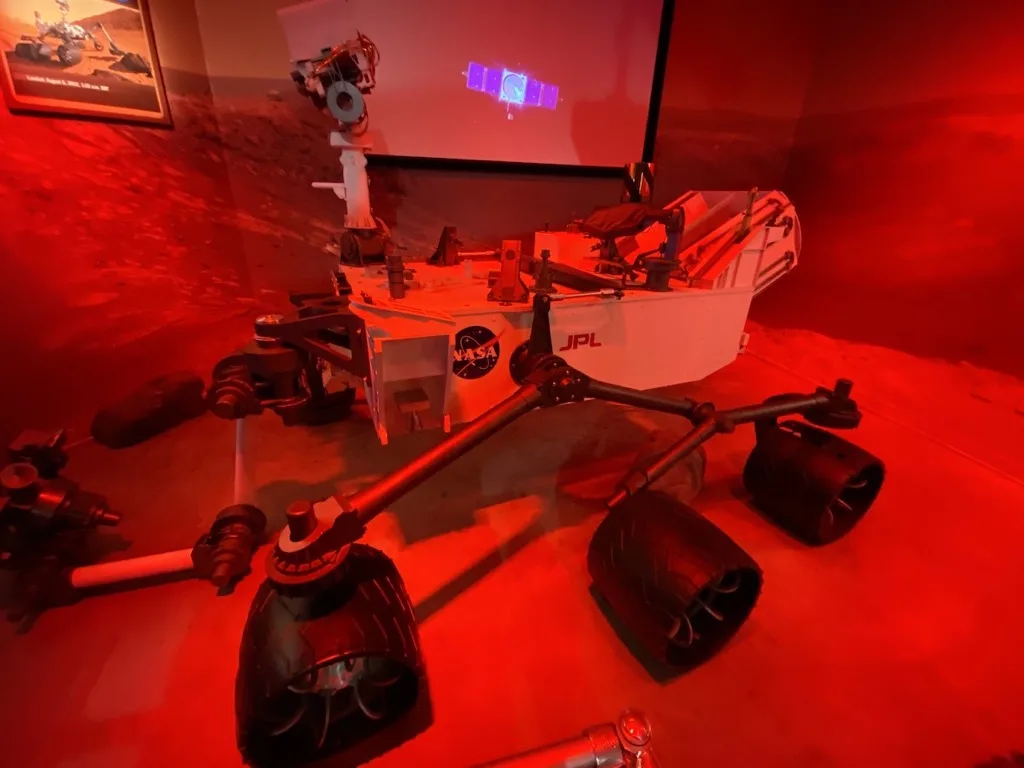
Adults can inspect models of the Sojourner, Curiosity and Opportunity rovers.
An hourly live show also discusses the journey to Mars.
IMAX
The IMAX cinema was showing two films. The first, Journey to Space, is a 3D film covering NASA’s achievements, present work and future plans, narrated by Patrick Stewart. Overall, however, I did not find it particularly interesting.
The second was Apollo 11: First Steps Edition, more of a documentary about Apollo 11 from launch and the Moon landing through to the return to Earth. The film consists of period and new footage, which fit together brilliantly. This film is genuinely worth seeing.
NASA Now
The building containing the IMAX cinema also houses a small NASA Now exhibit presenting current programmes. It includes the Orion capsule used with SLS, Boeing’s Starliner and SpaceX’s Dragon.
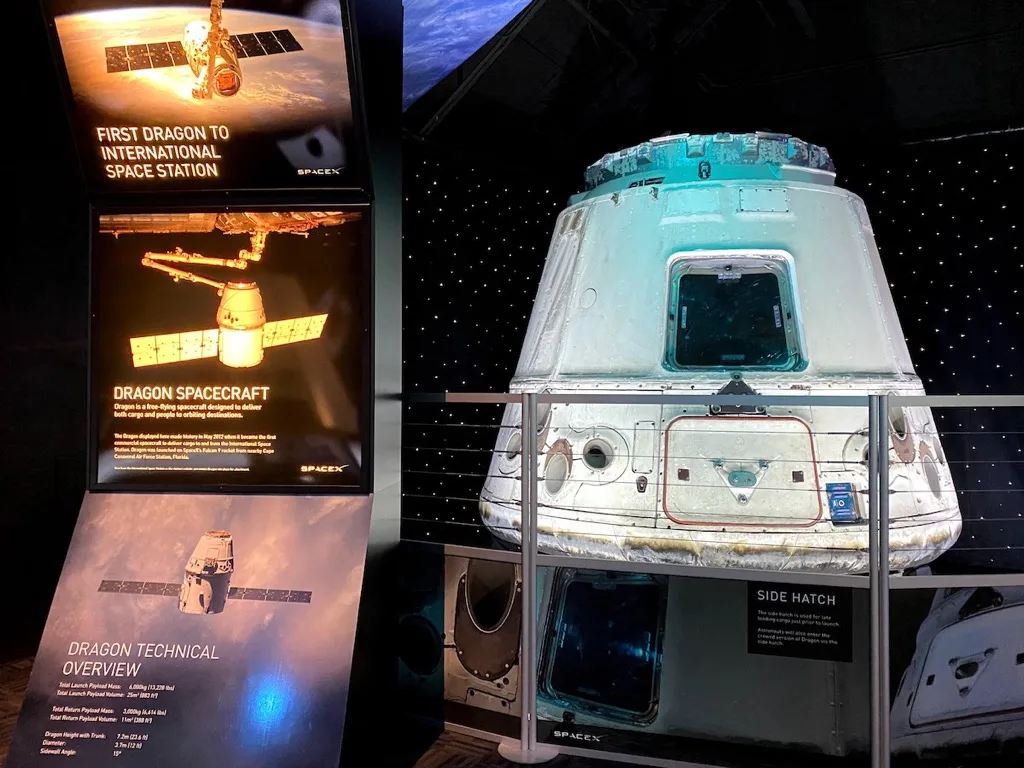
The Dragon capsule is genuine and was used in a test flight to the ISS and back.