Visiting JAXA Tsukuba Space Center 🇯🇵
On my birthday this year, I visited the mission control room for Japan’s Kibo module on the International Space Station. Visiting JAXA’s Tsukuba Space Center seemed like a pretty good birthday present.
During my visit to Kennedy Space Center in Florida in 2019, I saw the Saturn V rocket and Space Shuttle Atlantis. On my first trip to Japan, though, I had no idea you could visit a space centre there too. It was only later, after I told a Japanese acquaintance about Kennedy Space Center, that she recommended Tsukuba.
I wanted to go during my second trip in spring 2025, but the main exhibition hall, Space Dome, was closed for renovation throughout my stay.
It finally worked out on my third trip to Japan, on 5 November 2026.
Booking the tour
Tsukuba Space Center has a free exhibition in Space Dome and a few other areas open to the public. To visit the astronaut training facilities and the control room for Kibo, Japan’s module on the International Space Station, you need to book a paid guided tour.
At the time of my visit in November 2026, most tours were in Japanese. There was just one English tour a week, on Thursdays at 11:30. During my stay in Tokyo, that happened to fall on my birthday.
Check JAXA’s official website for the latest tour times, prices and booking requirements before you go.
Bookings for November opened at midnight Japan time on 1 October, which was 17:00 Central European Summer Time on 30 September.
As soon as bookings opened, the website was overloaded. When I finally reached the form, I found that it was partly in English and partly in Japanese. Classic Japan.
The form asked for a phone number. Twice, in fact. Naturally, it would not accept a foreign number, only a Japanese one.
So I had to look up the format of Japanese phone numbers and make one up. Even that was not enough. The form required the number to be split across three separate fields, so I also had to find out how Japanese phone numbers are divided up.
Eventually, I managed to complete the booking and received a confirmation email for 5 November.
The tour cost just ¥500, paid in cash on arrival.
Getting from Tokyo to Tsukuba
Tsukuba is northeast of Tokyo. The Tsukuba Express makes it an easy train journey from Akihabara Station.
Getting from Tsukuba Station to the space centre itself is a little more complicated. The bus that stops closest to the centre runs roughly every half hour, so some planning helps.
Rocket Square and Planet Cube
Just inside the entrance is Rocket Square, where a real Japanese H-II rocket, approximately 50 metres long, is on display.
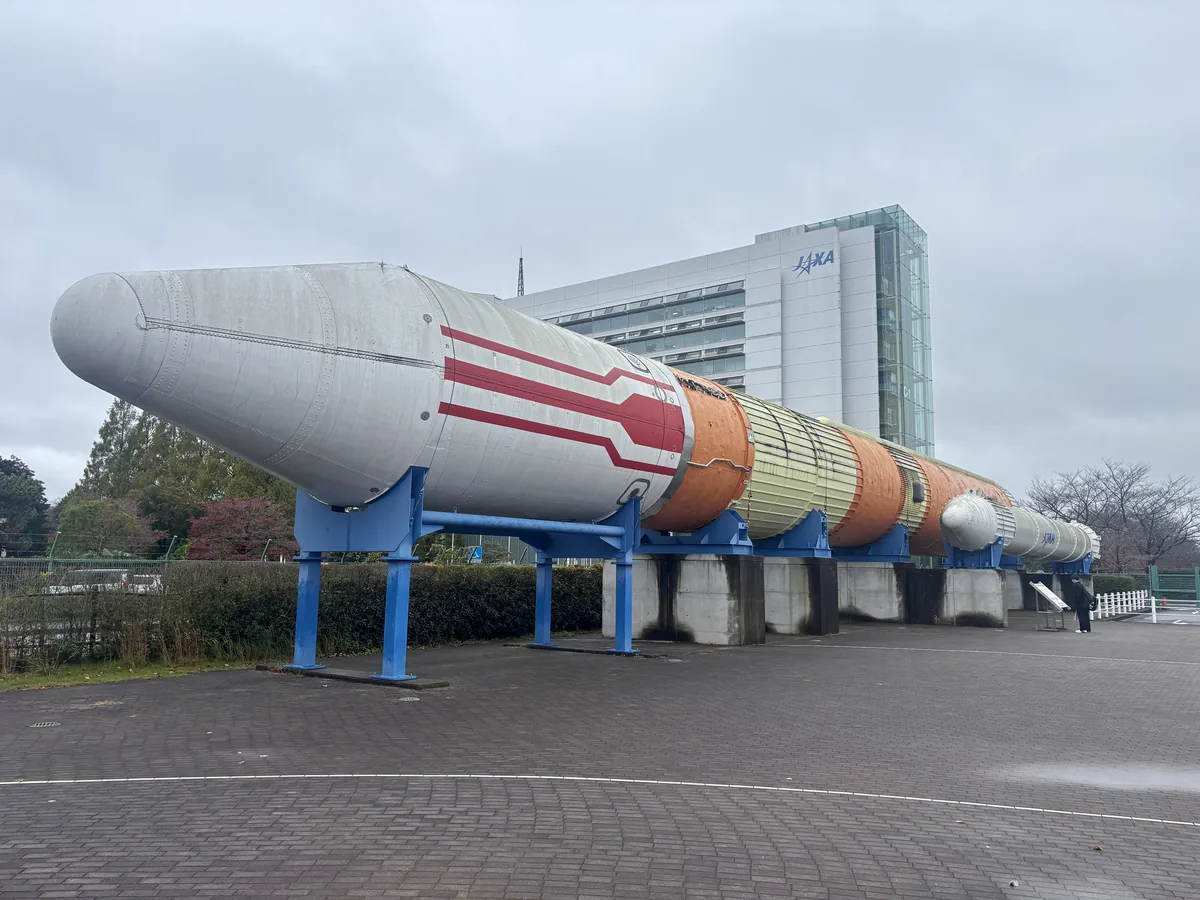
After seeing the enormous 111-metre Saturn V at Kennedy Space Center, though, I did not find it quite as imposing. If anything, it looked surprisingly ordinary.
My next stop was Planet Cube, where I expected to find a small exhibition. At the time of my visit, however, there was not much there apart from the souvenir shop.
I bought a T-shirt with an interesting design and some Japanese space curry. The shop sold other kinds of space food too.
There was also a vending machine selling space souvenirs, including models of probes and space curry. It only accepted cash, not even Japanese IC cards such as Suica.
Checking in for the tour
When I arrived at reception, I discovered that having a booking confirmation was not enough.
First, I was sent to another room to write my name and booking number on a paper form. I then took the completed form back to reception, showed my ID and paid ¥500 in cash.
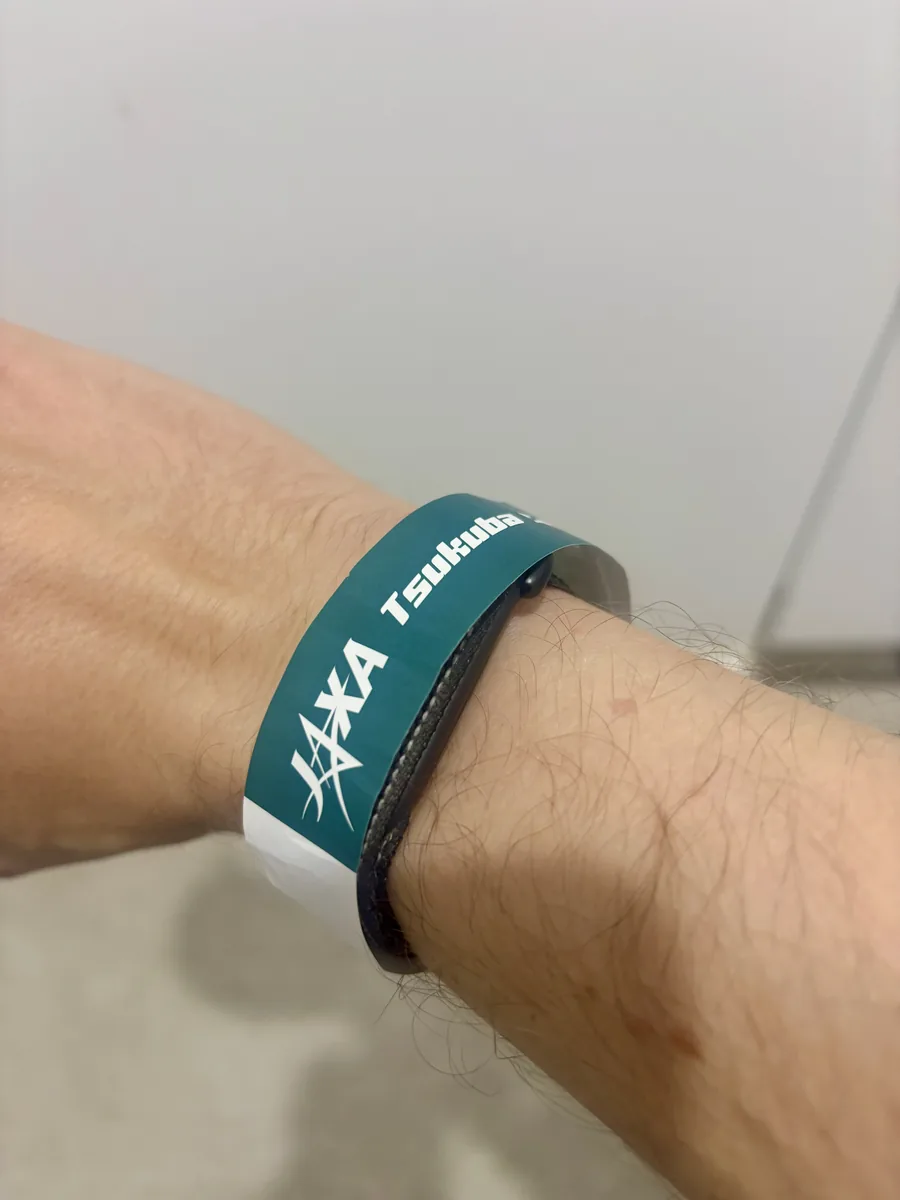
Everyone received a paper wristband to show when boarding the bus and entering the buildings.
Here I was, visiting a space agency that sends probes to asteroids, yet I had to walk between rooms carrying paper forms and cash. Not quite what I had expected.
The guided tour
The tour began with a short video about the space centre. It was in Japanese with English subtitles, which were rather difficult to read unless you were sitting in the front row.
We then boarded a bus that took us to the astronaut training centre.
On display inside was a NASA spacesuit designed for spacewalks, or extravehicular activity (EVA). Through a window, we could also see an isolation chamber used for astronaut training.
The guide explained some of the scientific experiments Japanese astronauts carry out on the ISS. One interesting example involved studying bone loss in mice during exposure to microgravity.
The guide kept checking his watch, and we did not have much time at each stop. Before long, we were boarding the bus again.
Kibo mission control
Our next stop was the control room for Kibo, Japan’s laboratory on the ISS, which also has its own robotic arm and an external experiment platform.
Security restrictions in this building were fairly strict.
We were not allowed to take photographs from the bus, of the building’s exterior or even of the models in the entrance hall. The reason given for that last restriction was that the glass display cases could reflect the building’s surroundings.
Given that practically anyone could book a tour online, I was surprised by how extensive the photography restrictions were.
Before entering the room overlooking mission control, we had to hand over our phones and cameras.
This was probably the most interesting part of the tour for me.
Through a large window, we could watch the real control room from which JAXA operates Kibo on the ISS.
Kennedy Space Center is an active launch site with a strong focus on the history of American spaceflight, while Tsukuba is primarily a research and mission control centre, closer in that respect to Johnson Space Center in Houston.
I was a little unlucky with the timing, though. It was midday in Japan, but the astronauts on the ISS were in the overnight part of their daily schedule and asleep.
There were only four people in the control room, keeping an eye on the monitoring systems. No dramatic exchanges with astronauts, no emergencies to deal with.
Even so, it was interesting to see a real, working mission control room. It reminded me a little of the control room in Apollo 13, although on a much smaller scale.
The guide then took us back to the bus, and the tour was over. It lasted around 70 minutes. There was plenty to see, but not much time to take it all in.
The space centre cafeteria
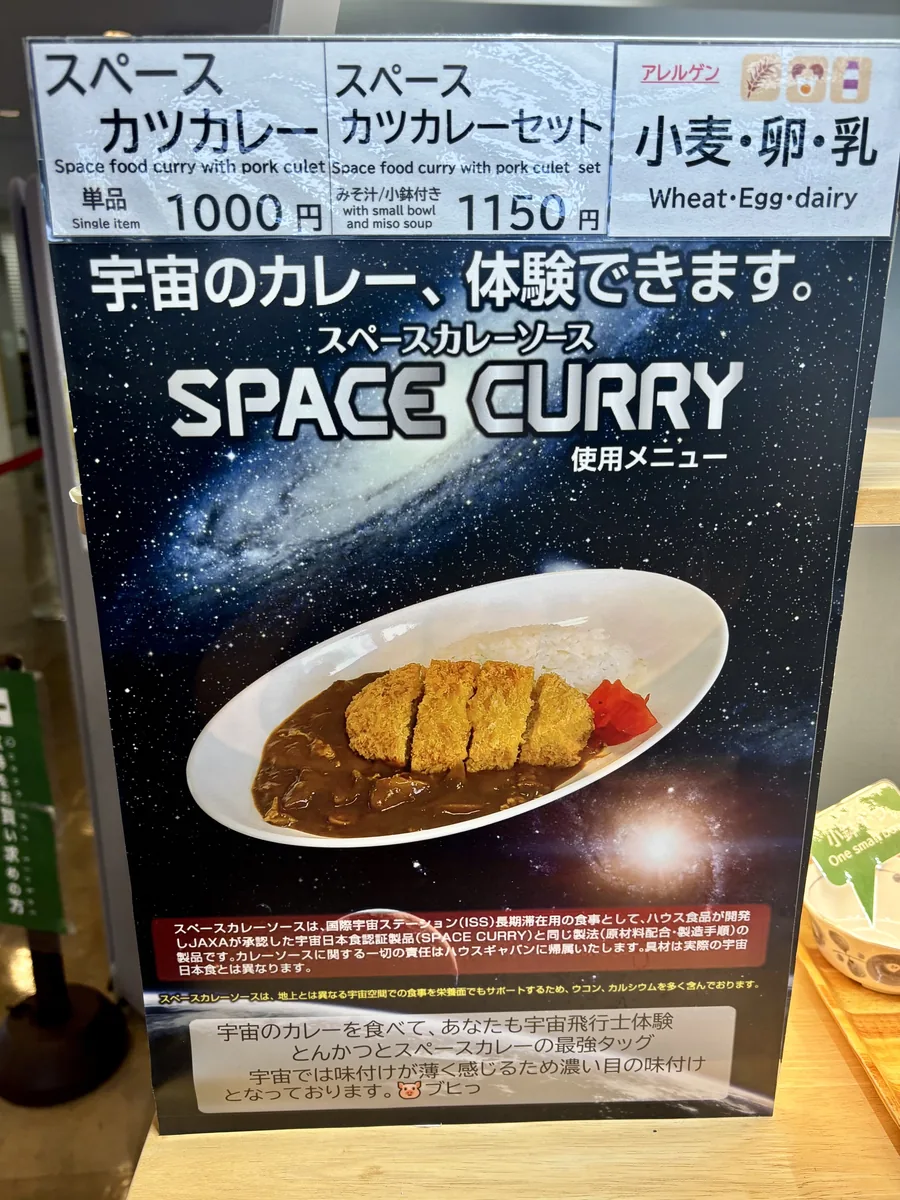
As it was a weekday, the space centre’s cafeteria was open too. Alongside the usual meals, the menu offered space curry with a pork cutlet for ¥1,000, or ¥1,150 as a set with miso soup and a small side dish. The curry sauce was made using the same production method as JAXA-certified Japanese space curry.
So this was not a packaged astronaut meal, but an ordinary katsu curry with a sauce based on space food.
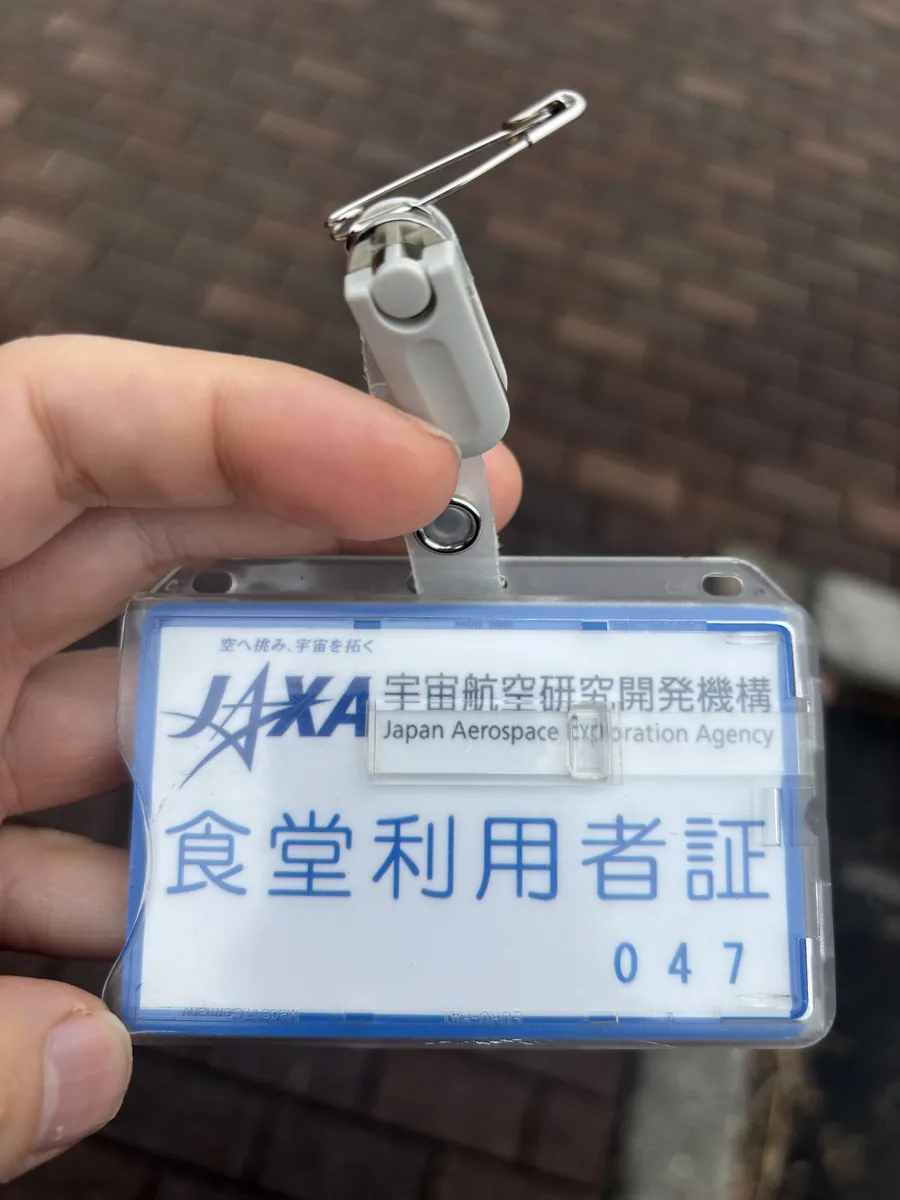
To enter, though, I once again had to write my name on a piece of paper and receive a numbered access pass in return. Another paper form, then.
| Space curry | Cafeteria access pass |
|---|---|
 |
 |
Space Dome
After the guided tour, I headed to the main exhibition hall, Space Dome, which is free to visit and does not require a booking.
This was where I learnt the most about Japan’s space programme.
Before visiting, I mainly knew about Hayabusa2, which brought samples from the asteroid Ryugu back to Earth, and Japan’s Moon landing with the SLIM probe.
I knew relatively little about Japan’s other rockets, satellites and space probes. Its space programme gets nowhere near as much coverage in international media as NASA or SpaceX.
Space Dome contains models of Japanese satellites and space probes, some of them full-size, along with exhibits from the history of Japan’s space programme.
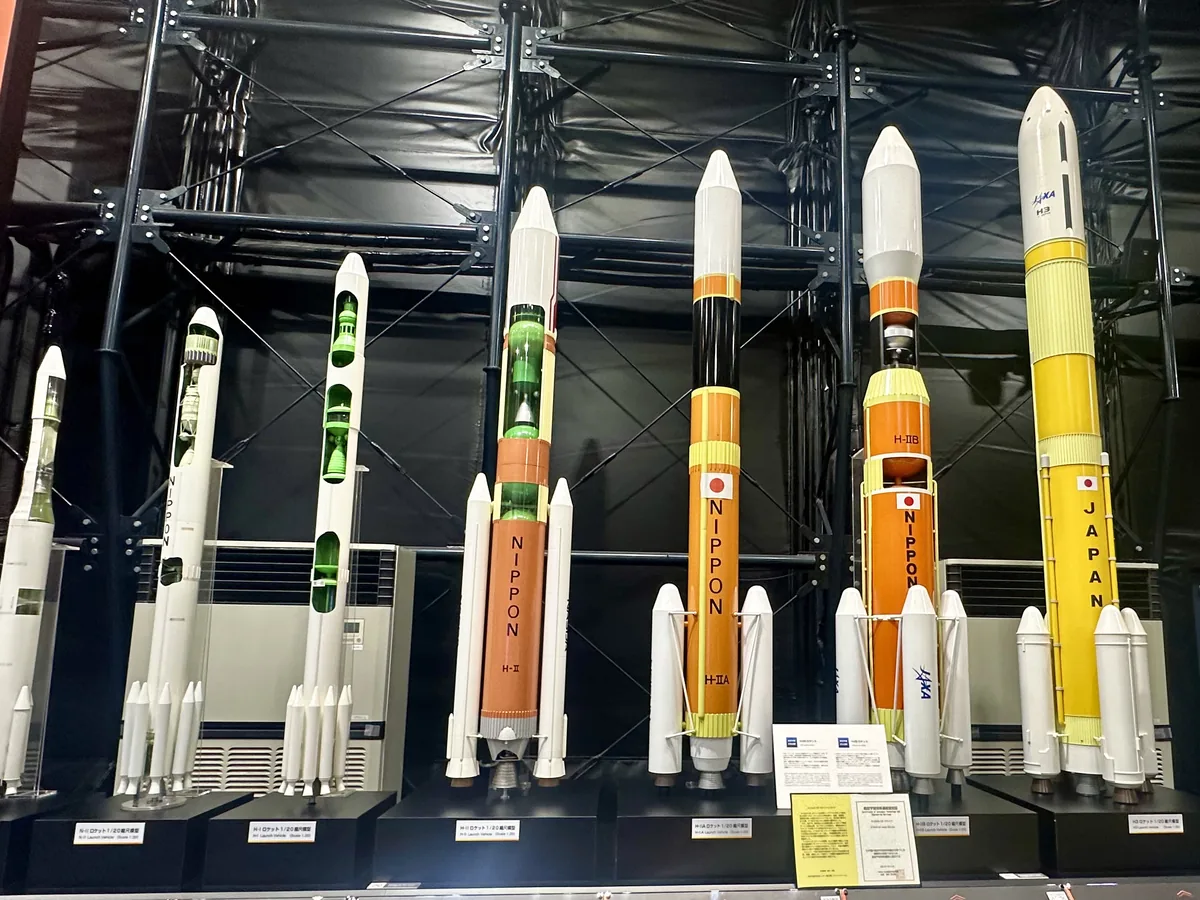
I particularly liked the collection of rocket models showing the development of Japanese launch vehicles, from older designs through to the new H3. There were also H-II, H-IIA and H-IIB rockets, as well as the smaller solid-fuel Epsilon.
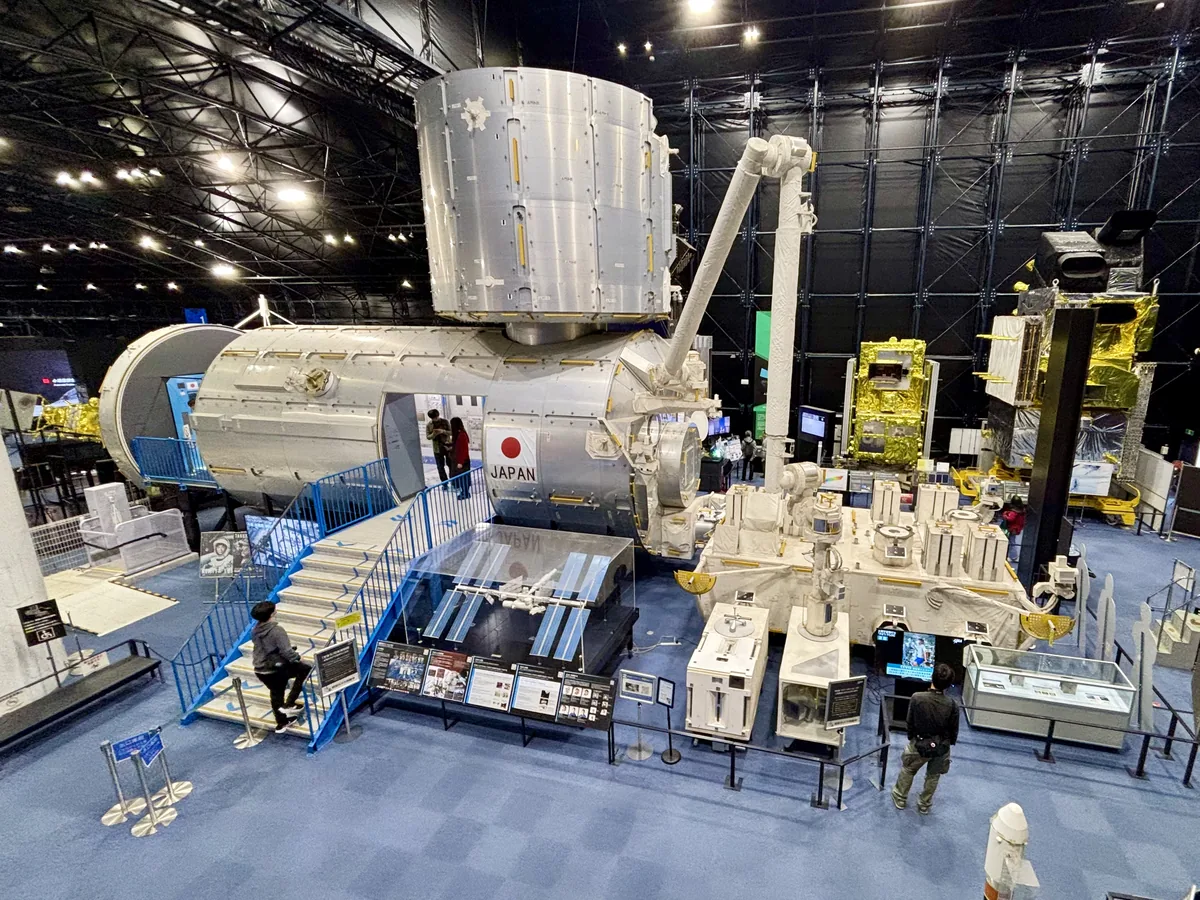
One of the largest exhibits was a full-size model of the Kibo module, complete with its robotic arm.
Unlike at the control room we had visited during the guided tour, here we could take photographs and have a proper look at the module’s different components.
Part of the exhibition covered plans for future lunar exploration in cooperation with other countries. One topic was the search for water on the Moon and how it might be used on future missions.
There was also a full-size model of a pressurised lunar rover, intended to let astronauts make longer journeys across the Moon’s surface without having to wear spacesuits all the time.
Personally, I do not really see the point of sending people back to the Moon and building a permanent lunar base, but that is a subject for another article.
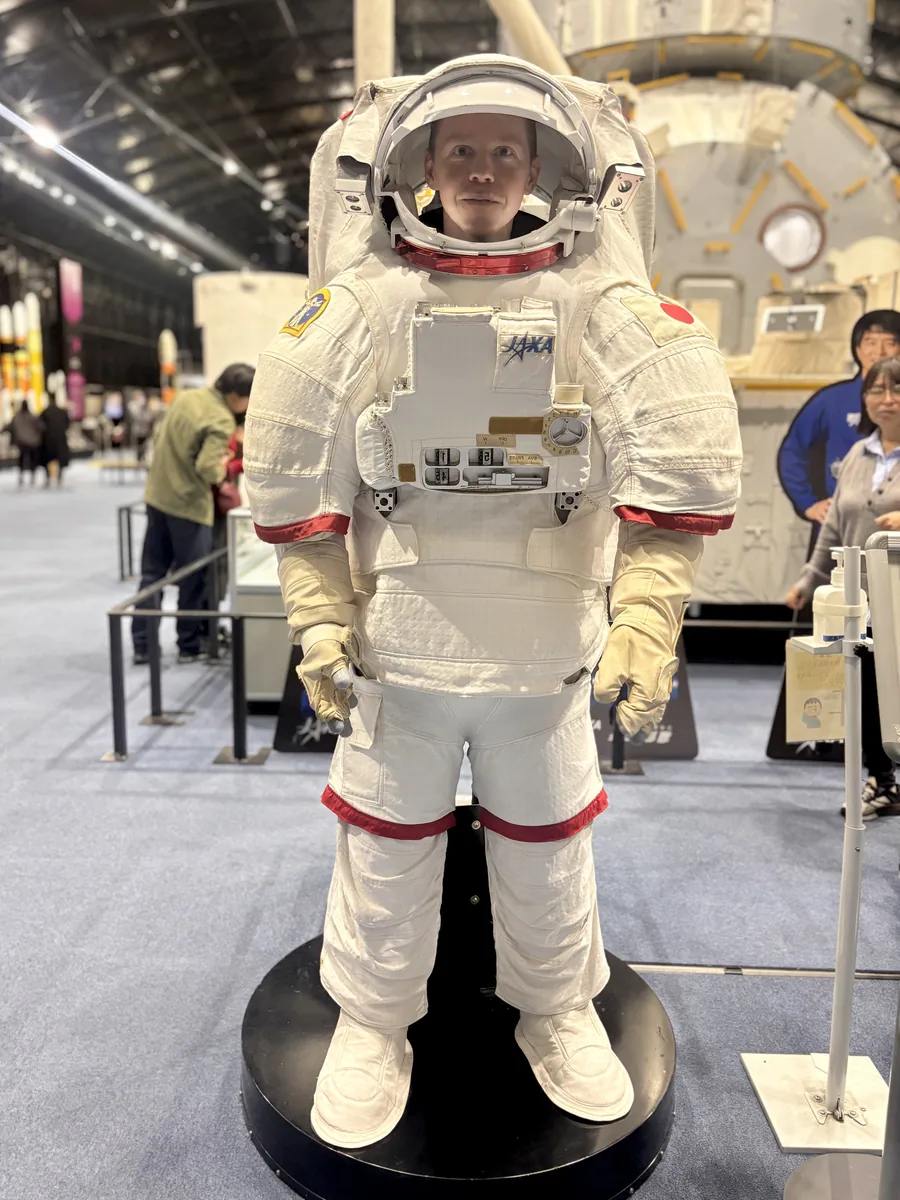
There were exhibits about Japanese astronauts too, along with the chance to have your photo taken in a mock-up spacesuit.
Japanese space food
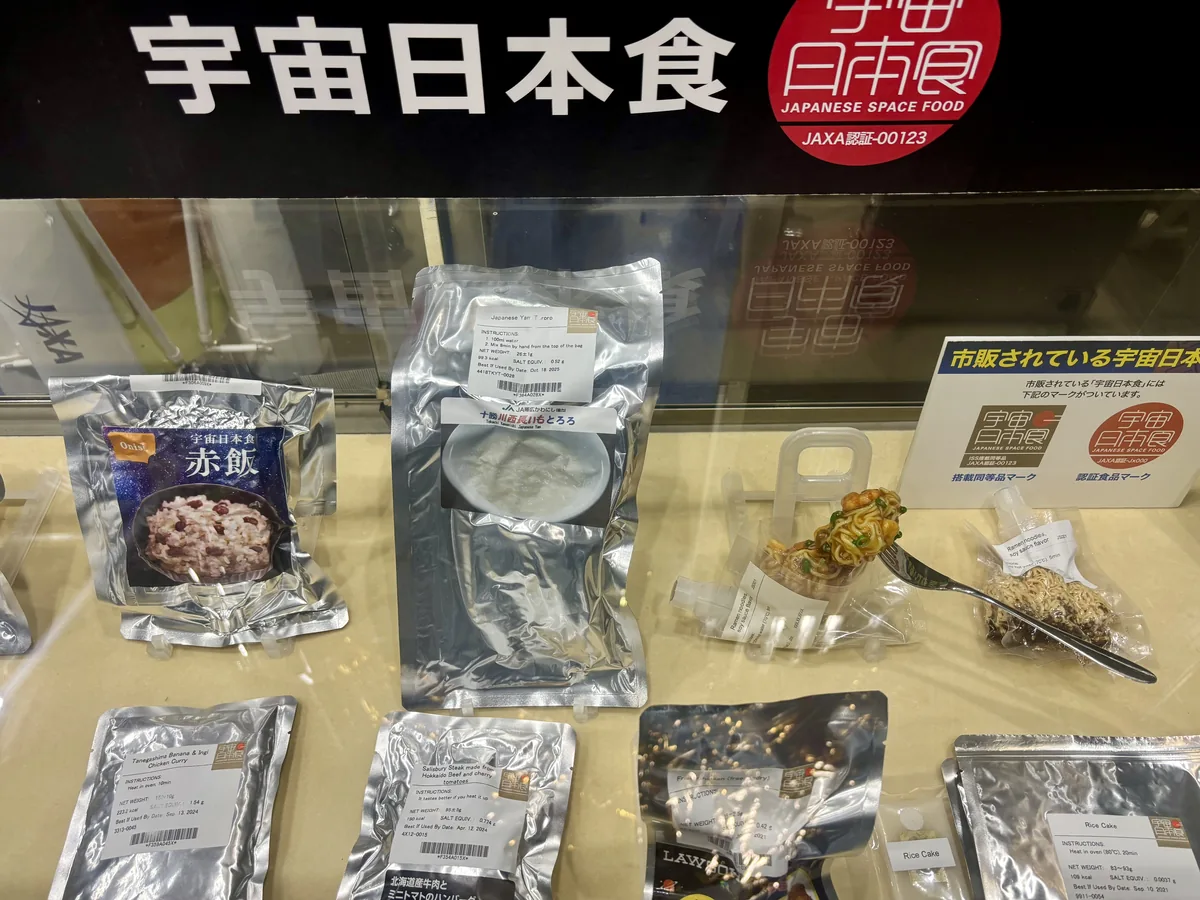
The display about Japanese astronauts’ food was interesting too.
The cases contained various kinds of Japanese space food, including rice with red beans (sekihan), grated yam, curry, fish and rice cakes. The selection seemed quite varied and noticeably different from the American space food I had seen at Kennedy Space Center.
I had even bought some so-called astronaut ice cream there, although it had little in common with actual ice cream.
I found the Japanese space food more interesting. It is a nice illustration of how national eating habits carry over into astronauts’ diets.
Some of the food on display was also available in the Planet Cube shop.
Returning to Tokyo
After exploring Space Dome, I headed back towards Tsukuba Station.
The timing of the bus from right outside the space centre did not work for me, so I decided to walk about ten minutes to another stop.
It looked like a rural bus stop back home in Slovakia. Just a pole with a timetable beside the road, with no other facilities.
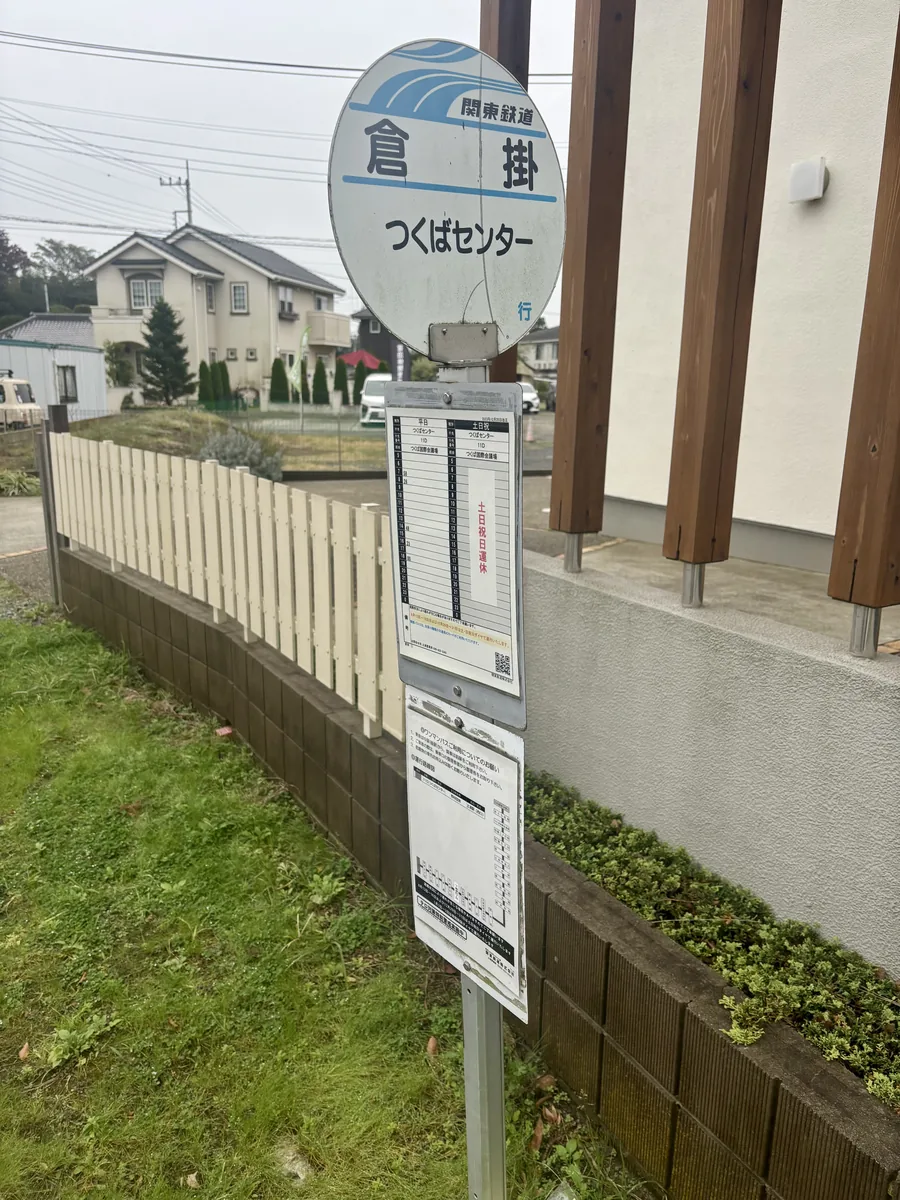
The bus arrived on time, though, and took me back to Tsukuba Station without any trouble. From there, I caught the Tsukuba Express back to Tokyo.
Was it worth it?
If you are interested in space exploration, I think Tsukuba is a good reason to take a day trip from Tokyo. The free Space Dome exhibition is worth visiting on its own. For an extra ¥500, though, I also got to see the control room that actually operates part of the ISS. That was the highlight of the day for me.
I also learnt a great deal about Japan’s space programme, something I had known surprisingly little about before my visit.
It was just a shame about the rushed pace of the guided tour and the photography restrictions, which felt excessive at times.
I am glad I finally made it to Tsukuba Space Center on my third trip to Japan. And as birthday presents go, it was not bad at all.
This post is part of the series Japan 2026. More posts in this series:
- How I photographed cosplayers at Tokyo's Halloween festival 🇯🇵 (November 11, 2026)
- Visiting JAXA Tsukuba Space Center 🇯🇵 (November 18, 2026)