My experience with Revolut and Curve
An increasing number of fintech start-ups now operate in Europe and offer their services to people in Slovakia and the Czech Republic. These companies use modern technology in an attempt to replace traditional high-street banks. Most are British, and their central idea is that everything can be managed from a mobile app.
I decided to try Revolut and Curve. N26 is another interesting option, although it does not offer its services to residents of the Czech Republic.
Revolut
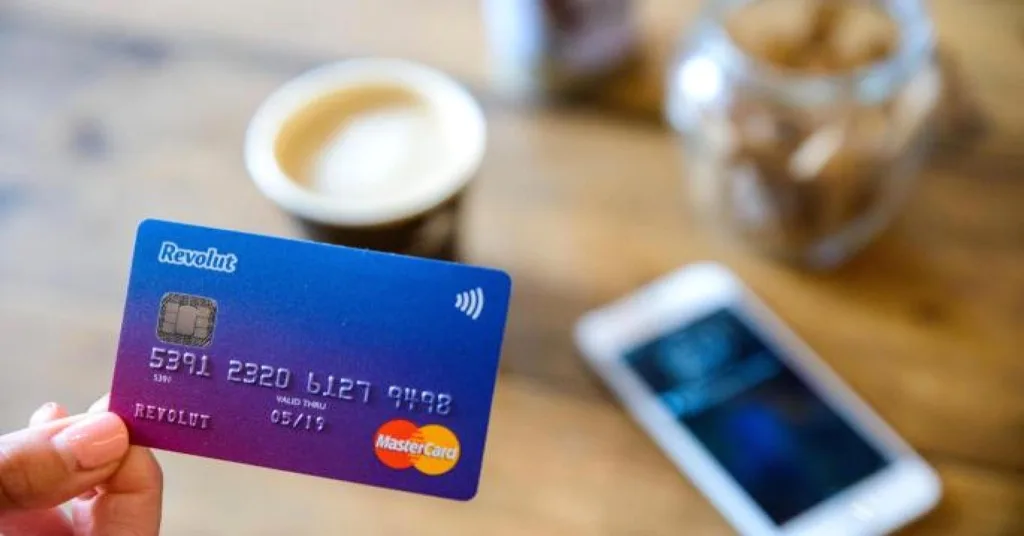
Revolut is probably the best-known fintech start-up. It revolves around a mobile app that you download and register for by entering some basic information. This gives you a Revolut account capable of holding several currencies, including EUR, GBP, USD and, more recently, CZK. The euro account includes an IBAN for sending and receiving payments, while the sterling account has a local British account number.
The next step is adding money. You can use an IBAN bank transfer, although banks in our region generally charge for these and process them slowly, or top up the Revolut account with another payment card for free. Transferring CZK 1,000 from a Czech-crown card to Revolut, for example, genuinely costs only CZK 1,000.
Money can be exchanged between currencies within Revolut at a very good rate, consistently better than the rate from a conventional bank. For me, this is Revolut’s main strength. When travelling somewhere that uses a foreign currency, the roughly two per cent saved on every payment for flights, hotels and other purchases compared with a local bank card soon adds up. The same applies to online payments in foreign shops.
There is one thing to watch out for: currency exchanges are 0.5–1 per cent more expensive at weekends. The foreign-exchange markets are closed, so Revolut protects itself against price movements. If you plan to spend in a foreign currency over the weekend, it is worth exchanging the money in the app during the week.
Revolut’s free account currently includes a contactless Visa card. Paid accounts offer a choice of contactless Mastercards in various designs. I registered more than a year ago, when Revolut provided only Mastercards and they were not yet contactless. The first card is generally free as part of a promotion, while a second card on the free account costs €5.99. In addition to a physical card, you can create a virtual card for online payments. Revolut even offers a virtual card whose number changes after every payment, significantly reducing the potential for misuse.
The card arrives within one or two weeks and is managed through the app, which provides many more controls than a traditional bank. You can disable online payments, cash withdrawals—which are free worldwide up to the relatively low limit of €200 per month—and magnetic-stripe payments, among other things.
Revolut also offers features such as Vaults. When enabled, every payment is rounded up and the difference is placed in the vault. You are effectively saving without noticing, which is particularly useful for people with weaker financial discipline.
I have used Revolut for more than a year for online purchases and card payments abroad. My card was declined only once, during a Revolut outage.
I use the free account. The paid Premium account adds benefits such as travel insurance, several cards, twice the cash-withdrawal allowance, and buying and selling cryptocurrencies including BTC, BCH, XRP and ETH.
Buying and selling cryptocurrency is not “real”, however. It is more like an IOU from Revolut, which I find slightly misleading. Revolut sells cryptocurrency at a worse rate than most exchanges, charges a fee of around three per cent that is not immediately visible, and does not let you transfer those assets outside Revolut.
Curve
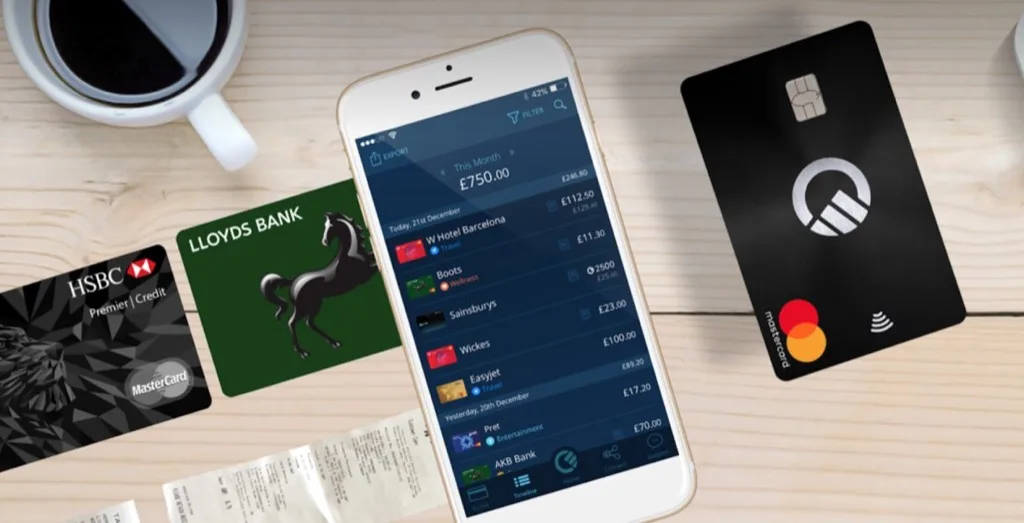
The British fintech start-up Curve works rather differently from Revolut. You again begin by downloading an app and registering with some basic information, then wait for the card to arrive. Curve provides a contactless debit Mastercard, and delivery takes more than a month—at least twice as long as Revolut.
Unlike Revolut, Curve does not hold money directly. Instead, you add one or more existing payment cards to its app. One of these cards is always active. When you pay with the Curve card, the charge is passed to whichever card is selected as active in the app.
You can switch between cards whenever you want, even before every payment and, remarkably, afterwards. If you pay in euros but realise that a CZK card was active, which gives you an unfavourable rate, you can change the card retrospectively. The money is returned to the CZK card and charged to the euro card instead.
Curve also charges a fixed one per cent currency-conversion fee, which is not remotely competitive with Revolut, and offers one per cent cashback at three selected, mainly British, shops. The list does include companies such as Lidl and Booking.com. The cashback appears to be only a promotion for the first 90 days, although this is not stated clearly anywhere.
This lack of information and the resulting lack of trust were my greatest problems with Curve.
When the card finally arrived and I tried to activate it, the app repeatedly claimed that I needed to add another card. I added my Air Bank card alongside the Revolut card that was already present, but the problem remained.
I contacted support and received no response for hours. Revolut support is not particularly fast either, but it always responds eventually. Curve replied only after I complained publicly on Twitter. They told me that my identity had not been verified, something the app had never requested, and sent a link where I could upload an identity document. The link was not even clickable in the iOS app.
When I removed the Air Bank card from the app, I received a notification congratulating me on adding my first card, even though I had just removed the second one. It was complete chaos.
Support again failed to respond, so I asked them to delete my account. I simply do not trust the company.